
US consumer prices saw a slight cooling in July, with the annualized inflation rate dipping to 3.4%. Despite this modest decline, price levels remain significantly higher than those recorded before the conflict with Iran began. The current economic climate follows a period of volatility, including a three-year high in May when annual inflation reached 4.2%, followed by a 0.7 percentage point decrease in June during a brief ceasefire that temporarily lowered energy costs.
Core inflation, a metric that strips out volatile food and energy prices, showed a slight increase of 2.5% over the past year and a 0.2% rise since the previous month. Meanwhile, the broader index for services and food—covering areas like transportation, shelter, and medical care—climbed 3% annually. Grocery prices saw a slight dip, notably influenced by a 16% drop in lettuce prices linked to an ongoing cyclosporiasis outbreak.
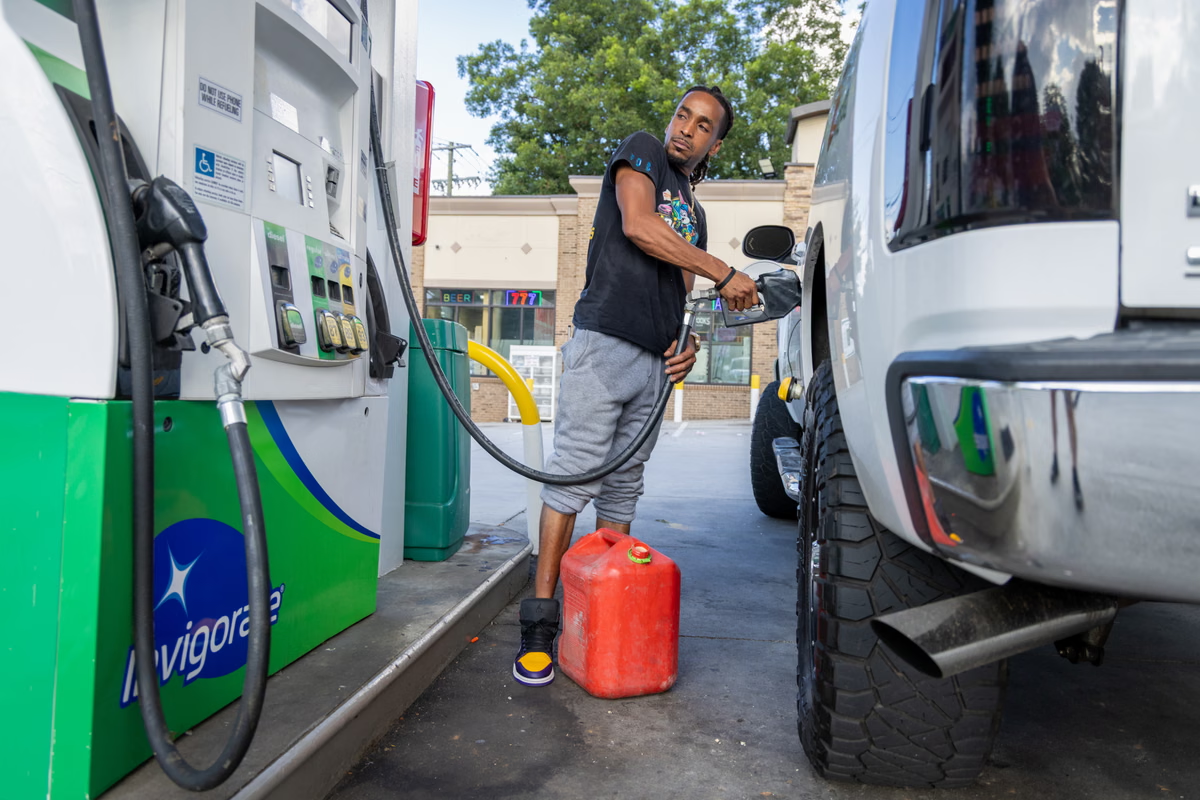
Energy markets remain a point of concern. While gasoline prices fell nearly 3% last month, they remain roughly 15% higher than a year ago. Brent crude prices fluctuated significantly, dipping in June following a short-lived peace agreement between the US and Iran, only to climb again when that deal collapsed in July. Although current energy costs are well below their late-April peak, gasoline remains nearly $1 per gallon more expensive than it was before the war, with the national average sitting at $4 per gallon according to AAA data.
Geopolitical tensions continue to weigh on the economy, as negotiations to reopen the Strait of Hormuz—a critical artery for global oil—remain at an impasse. Donald Trump has demanded that Iran provide compensation for the deaths of American soldiers and Iranian civilians as a condition for a deal, a requirement Iranian leadership is unlikely to accept.
The economic outlook is further complicated by a softening labor market. A recent report indicated that US employers shed 23,000 jobs in July, while employment gains for May and June were revised downward by 103,000. Consequently, hourly wage growth has been effectively erased by inflation, with real wages decreasing by 0.2% after adjusting for price increases.
These developments come as the Federal Reserve evaluates its interest rate strategy. During last month’s meeting, officials voted 9-3 to hold rates steady, marking the first time in a decade that three board members dissented. Fed Chair Kevin Warsh has reiterated his commitment to reaching the 2% inflation target, though he noted that interest rates would not be used “in isolation” to solve the crisis and cautioned against relying too heavily on single monthly reports.
However, some officials are pushing for more aggressive action. Lorie Logan, one of the dissenting bank presidents, argued that inflation is not trending toward the target fast enough. “More than five years after the post-pandemic surge, prices have continued to rise too rapidly,” she stated, adding that every month of above-target inflation places further strain on American households and businesses.
Despite the persistent economic instability, the latest inflation data is expected to reduce immediate pressure on the central bank to implement further rate hikes. With another round of employment and pricing data expected before the September meeting, the Federal Reserve faces a narrow path in its efforts to restore price stability. The report also notes that according to the AAA, more than $0.85 up from a year ago, gas at the pump is an average $4 a gallon in the US. The report also notes that wednesday’s release also follows a disappointing jobs report that showed American employers unexpectedly lost 23,000 jobs in July. The report also notes that labor market gains for May and June were also revised sharply down by a combined 103,000, painting a weaker-than-expected picture of the state of US employment. The report also notes that typically, the central bank fights inflation by raising rates and addresses unemployment by lowering them. The report also notes that but Warsh also appeared open to other options.






Comments