
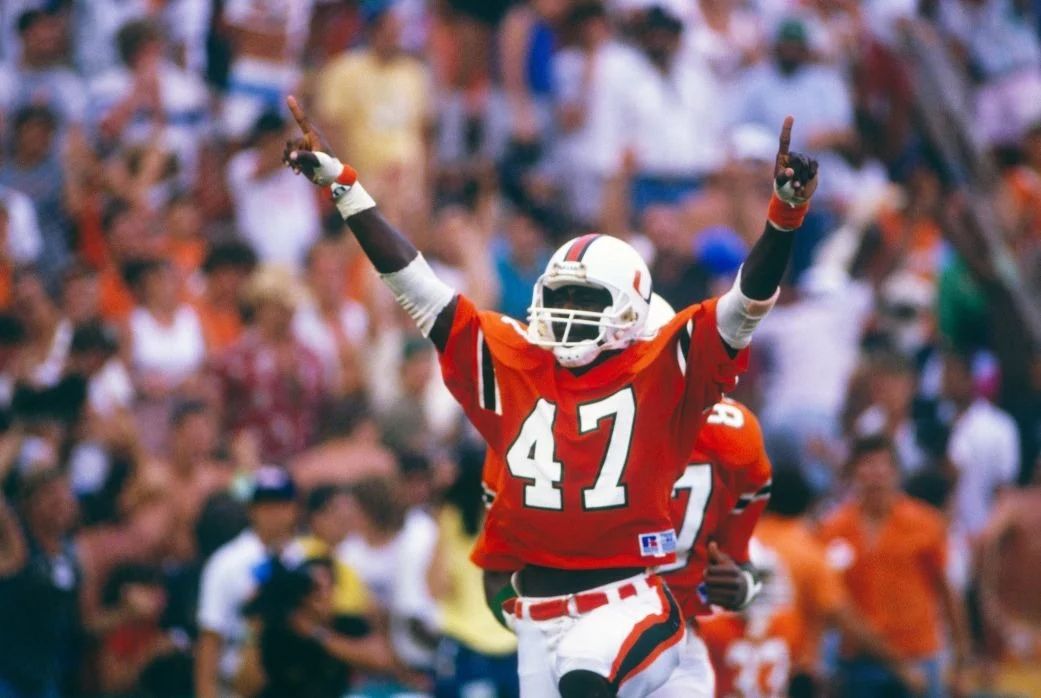
The 1980s Miami Hurricanes stand as one of the most significant and polarizing teams in the 150-plus-year history of college football. Their legacy, which is explored in original series “Decades in Sports,” goes beyond mere statistics, capturing a cultural shift that turned the gridiron into a theater of arrogance, swagger, and unparalleled dominance.
The Hurricanes were defined by their refusal to conform. Whether they were trash-talking opponents, dancing in the end zone, or sporting bright orange jerseys, their behavior was designed to provoke. Author John U. Bacon, who wrote “Fourth and Long: The Fight for the Soul of College Football,” notes that this bold style made them a true phenomenon. Their reputation as the “bad boys of college football” was so pervasive that the 1986 team was named the most hated squad of all time by Sports Illustrated.
This ranking placed them ahead of other notorious sports villains, such as the 1988-89 Detroit Pistons, the 2010-11 Miami Heat, and the 2007 New England Patriots. Despite the intense public disdain, the Hurricanes were immensely popular in their home city, arguably eclipsing the NFL’s Miami Dolphins even with star Dan Marino on the roster. Their antics were not just for show; they were backed by consistent, high-level performance that made them impossible to ignore.
The team’s defiance was on full display in September 1986 before a matchup against the top-ranked, defending national champion Oklahoma Sooners. In front of 70,000 fans at the Orange Bowl, the Hurricanes refused to participate in the traditional pre-game handshake, triggering a confrontation that forced officials to threaten penalties. Miami ultimately backed up their bravado by defeating Oklahoma 28-16. Later, for the 1987 Fiesta Bowl against Penn State, the team arrived in Tempe, Arizona, wearing military camouflage fatigues to intimidate their opponents, though they ultimately lost that title game 14-10.
This era of sports was marked by an “anti-hero” mentality, according to journalist and podcaster Van Lathan. In a post-Watergate landscape, the prevailing attitude shifted toward winning by any means necessary. This culture of dominance was fostered by head coach Jimmy Johnson. Arriving in 1984, Johnson took over for Howard Schnellenberger, who had built the program into an elite force and led the team to its first national championship by upsetting Nebraska 31-30.
Johnson elevated the program further, leading the team to a 34-2 record over his final three seasons. After an undefeated regular season in 1986, the team won the national championship in 1987 and secured another title the following year by defeating Oklahoma 20-14. Johnson’s genius lay in his management of the team’s personality. While other coaches might have suppressed the players’ expressive, boisterous nature, Johnson embraced it.
As sports commentator Bomani Jones explains, Johnson recognized that his players were authentic and simply told them, “As long as we win, you can do whatever you want.” This philosophy allowed the Hurricanes to thrive as the ultimate villains of the sport, forever changing the culture of college football. The series “Decades in Sports” examines these defining moments across six episodes, tracing the evolution of sports from the 1960s to the current social media era. The report also notes that editor’s note: Watch Original Series “Decades in Sports” on app. The report also notes that the series explores the defining moments, athletes and cultural shifts that shaped sports over the past six decades, from the television revolution and Civil Rights Movement of the 1960s, right up to the impact of social media on today’s biggest stars, across six episodes. The report also notes that but few have left a bigger mark on the sport than the Miami Hurricanes did during the 1980s, there have been plenty of dominant teams in the 150-plus-year history of college football. The report also notes that trash-talking in a way that constantly got under their opponents’ skin, celebrating wildly after big plays and dancing in the end zone after touchdowns with a swagger that stood out as much as their bright orange jerseys, the Canes were a team that went against the grain. The report also notes that for context, the 25-team list devised by Sports Illustrated featured some of the most polarizing teams in US sports history, such as the 1988-89 Detroit Pistons (widely known as the “Bad Boys”), the 2010-11 Miami Heat (universally recognized as the team that kickstarted the “superteam” era in the NBA ) and the 2007 New England Patriots (who became the ultimate villains of the NFL after the infamous “Spygate” scandal. The report also notes that however, what truly set them apart is how they embraced the role of the villain.
Comments