Television projects have attempted to recreate the notorious 1971 Stanford prison experiment before. Most notably, the BBC airedThe Experimentin 2002, marketing it as a more scientifically sound version of the original study where volunteers role-played as guards and inmates. Philip Zimbardo, who created the original trial, was quick to defend his own legacy, yet his core critique remained accurate: participants in these television adaptations are fully aware of the cameras and simply play up for the audience. The creator of the original 1971 experiment, Philip Zimbardo, would probably have criticised the new versions to preserve his own status, but the main point he made was valid.
Unlike the famous Milgram experiment, which integrated its artificial setup into the process by explicitly instructing volunteers that “the experiment requires that you continue,” reality television struggles with inherent credibility issues. Individuals who apply for television productions are not ordinary citizens; they actively seek media exposure. Netflix’s six-part seriesThe New Stanford Prison Experimentmerges these two flawed concepts by renting a section of a real Georgia county correctional facility and staffing it with 30 participants. He said, these people all know they’re on TV. Without that, the stooges may never act naturally; if they know the experiment is also a TV show, they definitely won’t. The obvious answer is always that they’re not ordinary people, reality TV has a similar credibility problem: although a show might say it’s found a group of ordinary people and put them in such-and-such a situation. And nobody thinks it is, none of it is real.
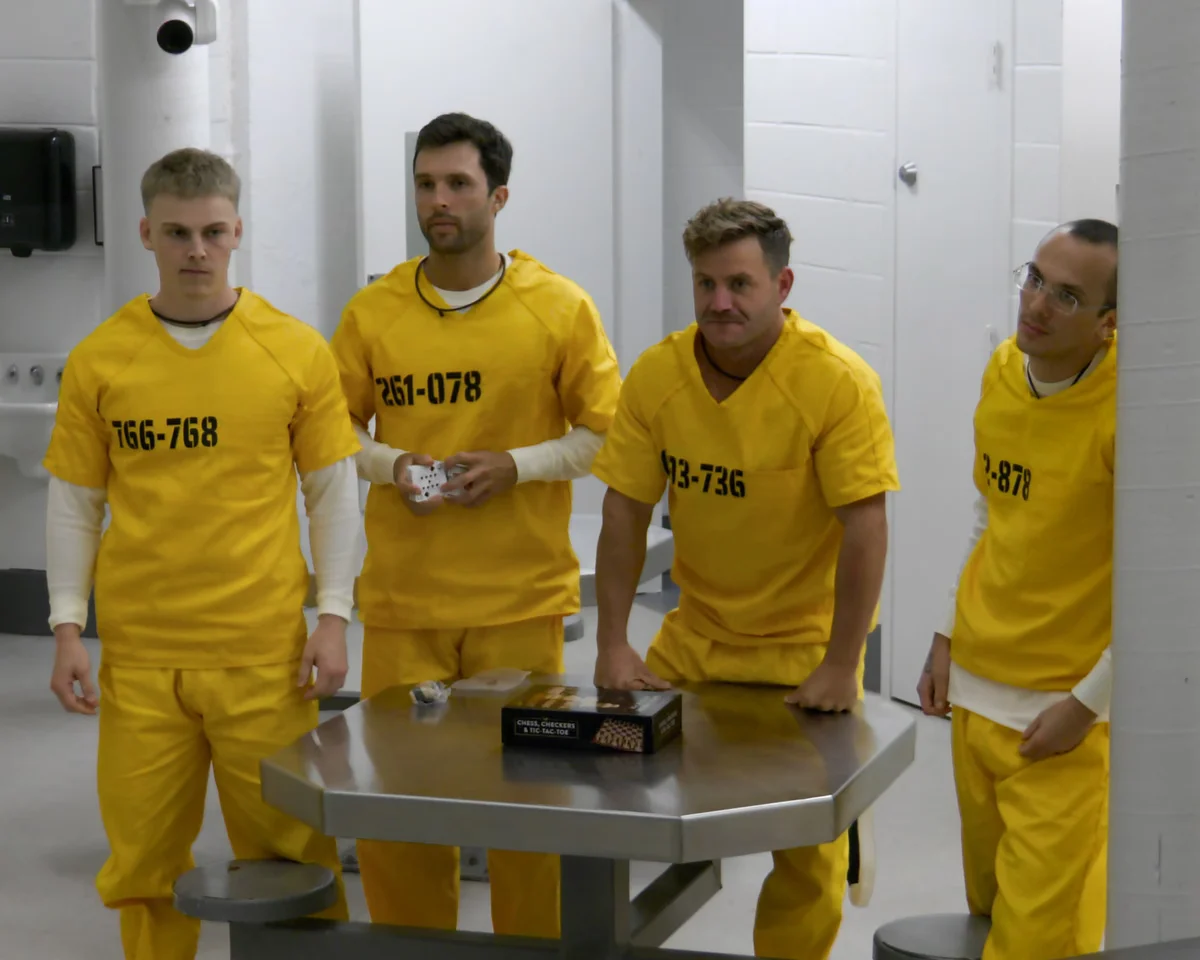
The production divides its cast into two distinct groups: eight guards, including three women, and 22 male prisoners. The guards wear sleek grey uniforms, establish the rules, and retreat to a comfortable hotel between their shifts. In contrast, the male inmates are given bright yellow jumpsuits, assigned scratchy bunk beds, and forced to eat bland meals under harsh strip-lighting.
Despite claiming to explore how institutional power corrupts individuals, the show operates entirely as a standard reality TV format. Participants detail their actions during obligatory post-filming interviews. Meanwhile, a trio of experts—a behavioural psychologist, a former federal correctional officer, and a journalist—watch the events from a monitor bank and offer commentary. The six-episode run, burdened by patronising recap segments, could easily have been edited down to four. We’re told about it by them in the obligatory to-camera interviews, filmed afterwards, as well as seeing what the prisoners and guards have done.
Inside the facility, the illusion of authentic behavioral science quickly falls apart. Participants constantly refer to the trial as an “experiment,” while producers employ classic reality TV tropes to force conflict every half episode. Guards are split into day and night shifts that sabotage each other’s efforts, asked to vote for a head guard to ignite jealousy, and forced to swap roles with prisoners at the series’ midpoint. Any hope that the TV prisoners and guards might forget where they are and start behaving like actual prisoners and guards is soon lost, inside the jail.
Because there are no tangible stakes, cash prizes, or clear objectives to work toward, the participants have little incentive to stay, prompting more than one person to simply walk off the set. The primary friction arises between contestants who want to rebel to create better television and those who prefer to follow the rules. Rather than demonstrating how correctional institutions strip away individuality, the project merely showcases media-hungry personalities clashing over how to shape their televised narrative arc. Paradoxically, only the expert panel in the viewing gallery seems to fall for the setup, analyzing manufactured drama as if genuine scientific dynamics were taking place. Where the faithfuls sometimes start genuinely seeing the traitors as duplicitous villains, the show doesn’t create any moments where the contestants suspend their disbelief – as in The Traitors.