
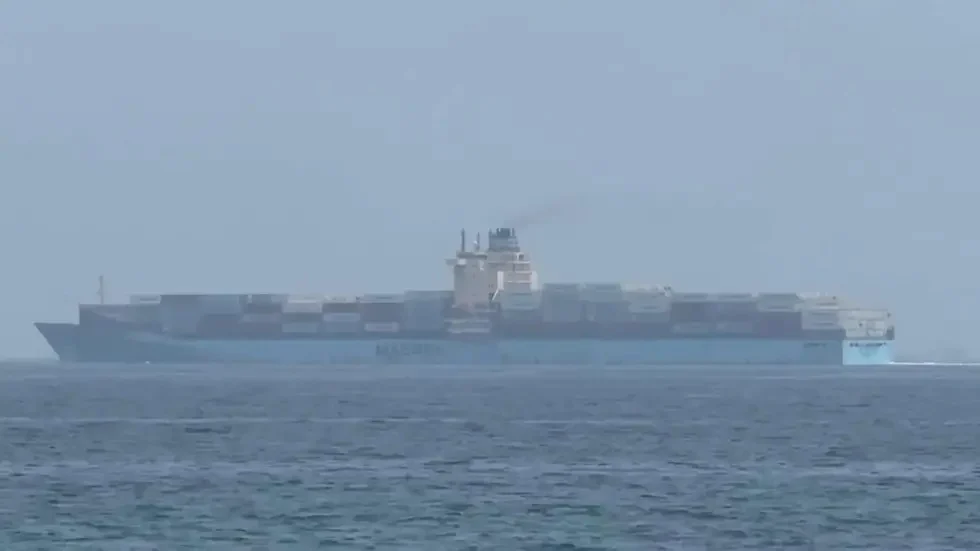
Six months into the ongoing war with Iran, the Trump administration is intensifying its financial strategy, pledging an “economic D-Day” against a nation that has endured nearly five decades of U.S. sanctions. President Donald Trump announced plans for an “unprecedented” level of economic isolation, aiming to compel Tehran to dismantle its nuclear program and fully reopen the Strait of Hormuz to international oil and gas transit.
The move comes as the administration faces a difficult political landscape, with an unpopular conflict dragging on just months before midterm elections that will determine the future of Republican control in Congress. Treasury Secretary Scott Bessent, speaking on CNBC, outlined the next phase of “Operation Economic Fury,” warning that the U.S. will leverage its full power against any nation or company that continues to conduct business with Iran. Bessent emphasized that the time has come for global allies to make a definitive choice regarding their commercial ties with Tehran.
Iranian officials have dismissed the threats. Foreign Minister Abbas Araghchi took to social media to criticize the policy, stating that the history of American sanctions is well-known and describing the latest measures as a familiar pattern of behavior. Esmail Baghaei, a spokesperson for the Iranian Foreign Ministry, added that Washington’s reliance on sanctions instead of diplomacy has proven futile, warning that such actions may ultimately undermine any chance for a stable resolution to the crisis.
Analysts remain divided on the potential impact of this renewed pressure. Richard Goldberg, a former coordinator for Iran-related diplomatic efforts during Trump’s first term, argued that the combination of previous military strikes on nuclear sites, the ongoing war, and a naval blockade has created a unique environment for potential regime capitulation. He noted that the United Arab Emirates’ recent decision to suspend trade with Iran following an alleged missile attack further isolates the Iranian government, as the UAE had previously served as a critical re-export hub that helped Tehran mitigate the impact of sanctions.
However, other experts warn that the administration may be repeating past mistakes. Ali Vaez, Iran director at the International Crisis Group, argued that the strategy ignores years of foreign-policy lessons, suggesting that pressure without a clear diplomatic path only hardens Iran’s resolve. Vaez noted that the Iranian leadership views surrender to U.S. terms as a greater danger than the economic hardship caused by sanctions, adding that a lack of trust in the administration has made the current diplomatic environment untenable.
Behnam Ben Taleblu of the Foundation for Defense of Democracies noted that the current strategy focuses on directly impeding Iran’s access to the formal international financial system. This approach necessitates a more aggressive stance in bilateral relations with European and Asian partners, including major oil buyers like China and India. As the administration moves forward, it faces the same challenges encountered during Trump’s first term, where the enforcement of secondary sanctions often risked harming U.S. interests, leading to the frequent issuance of waivers for countries dependent on Iranian energy. The report also notes that the Trump administration is touting a crushing financial campaign against Tehran, promising an “economic D-Day” against a country that has withstood nearly five decades of punishing American sanctions, nEW YORK (AP) — Nearing the six-month mark of the Iran war and facing diminishing stockpiles of key weapons. The report also notes that the president is refocusing America’s might on bringing Iran to its knees through an accelerated sanctions campaign against one of the most economically penalized countries in the world, whether out of desperation or strategy. The report also notes that while other analysts warn that Trump is refusing to learn the lessons of his predecessors, the immediate reaction from Iran hawks has been praise and a call for patience as it plays out. The report also notes that which earlier had focused on entities and people who buy oil from or bank with Iran, he did not reveal who would be targeted as part of this next phase of the administration’s Operation Economic Fury. The report also notes that “If you insist on doing business with them, then the U.S. The report also notes that some experts see ‘uncharted waters’ that could force Iran’s hand. The report also notes that “I think we’re watching a strategy, whether it takes a short time or a long time, that is very much about fundamentally changing the future of the world by seeing the end of this regime,” said Goldberg, who is now at the hawkish Washington think tank Foundation for Defense of Democracies, or FDD. The report also notes that “I caution everyone — including myself, who has worked on sanctions, who’s worked on financial warfare — to have the humility to admit that we are in uncharted waters,” he said.






Comments