
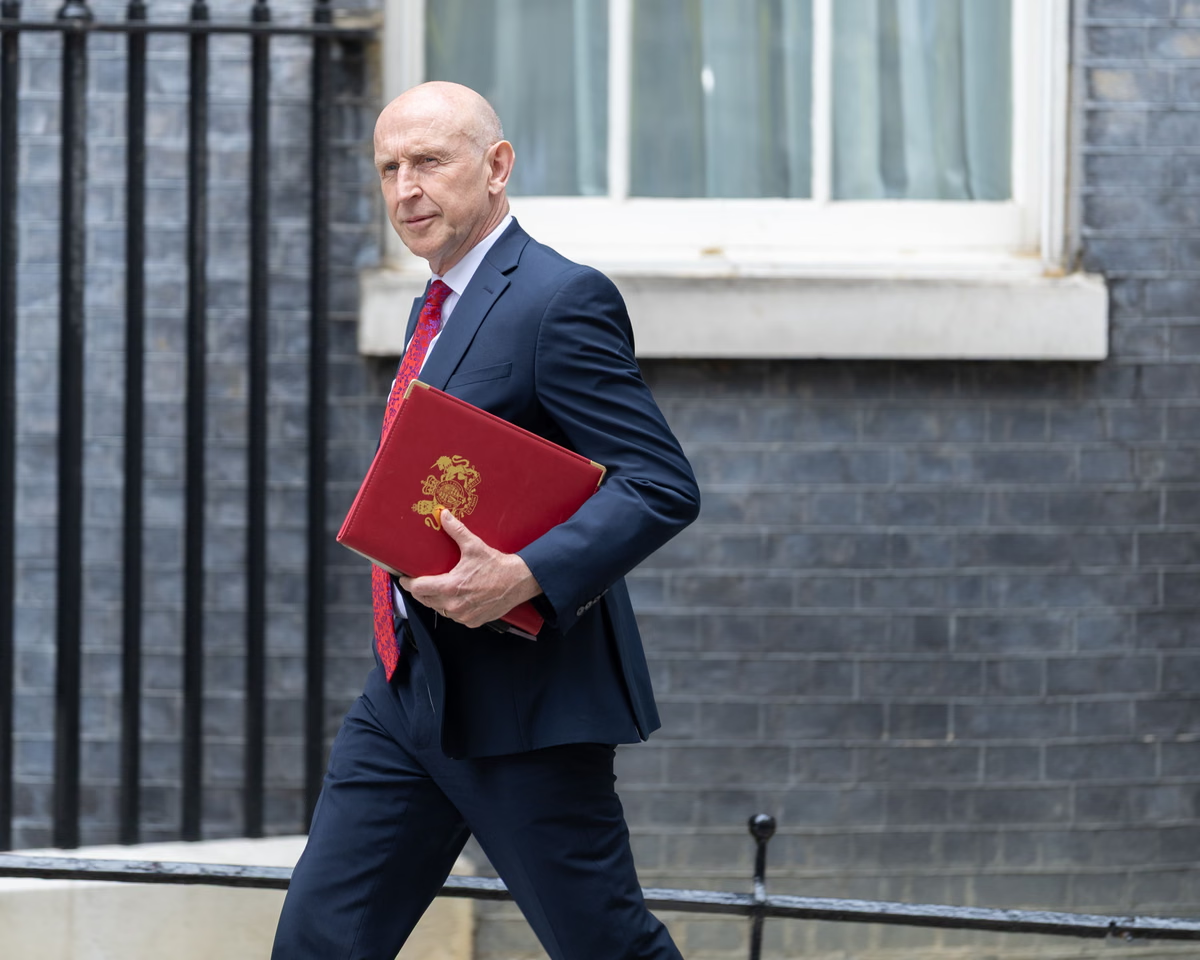
The United Kingdom recorded a larger-than-anticipated budget deficit of £1.8 billion in July, presenting a significant challenge for Chancellor John Healey as he prepares to deliver his inaugural budget on 28 October. While July typically sees a boost in Treasury receipts from self-assessment income tax payments—which reached £17.1 billion this year, an increase of £1.7 billion compared to the same period last year—the Office for National Statistics (ONS) confirmed that overall spending growth outpaced these revenues.
For the first four months of the current financial year, the cumulative deficit has reached £56.7 billion. Although this figure remains lower than the previous year, it is still £2.3 billion higher than the projections set by the Office for Budget Responsibility. Economists had previously anticipated a balanced budget for July, making this deficit an unexpected hurdle for the government.
Public finances are currently under more pressure than anticipated during the spring statement in March. At that time, the government held a £23.6 billion fiscal buffer, but analysts warn that this headroom is being eroded by rising bond yields, slower economic growth, and persistent inflation. Recent volatility in global bond markets has pushed up the interest rates on government debt, complicating the Chancellor’s fiscal planning.
Martin Beck, chief economist at WPI Strategy, noted that ten-year gilt yields exceeding 5% reflect inflation concerns linked to energy prices. He warned that these costs will gradually increase the debt-interest bill as existing obligations are refinanced, while the government simultaneously faces pressure to address unfunded defence commitments and public service needs.
Total public debt climbed to £2.98 trillion in July, equivalent to 94% of GDP and an increase of £96 billion over the past year. The government maintains that this borrowing aligns with its strategy to invest in infrastructure projects. Addressing the latest figures, Healey emphasized that fiscal discipline remains the foundation of national economic stability, adding that the government is committed to meeting its fiscal rules while maintaining a buffer against global uncertainty.
Healey further stated that the UK is reducing its deficit faster than any other G7 economy, while focusing on cost-of-living support and employment initiatives for young people. However, the Chancellor faces the specific task of securing an additional £1.2 billion annually for a defence investment plan—a commitment that led to his resignation as defence secretary in June over concerns regarding insufficient resources.
Despite these fiscal pressures, there are signs of economic momentum. A survey by S&P Global suggests the economy could grow by approximately 0.3% in the third quarter. Purchasing managers reported that private sector output in August expanded at its fastest rate since April, largely driven by strength in the services sector. The report also notes that when the Iran war had only just begun, the public finances are expected to be gloomier than forecast at Rachel Reeves’s spring statement in March. The report also notes that the UK’s large debt pile means small moves in interest rates can be costly over time. The report also notes that or 94% of GDP – up £96bn on a year earlier, july data shows total public debt was £2.98tn.








Comments