
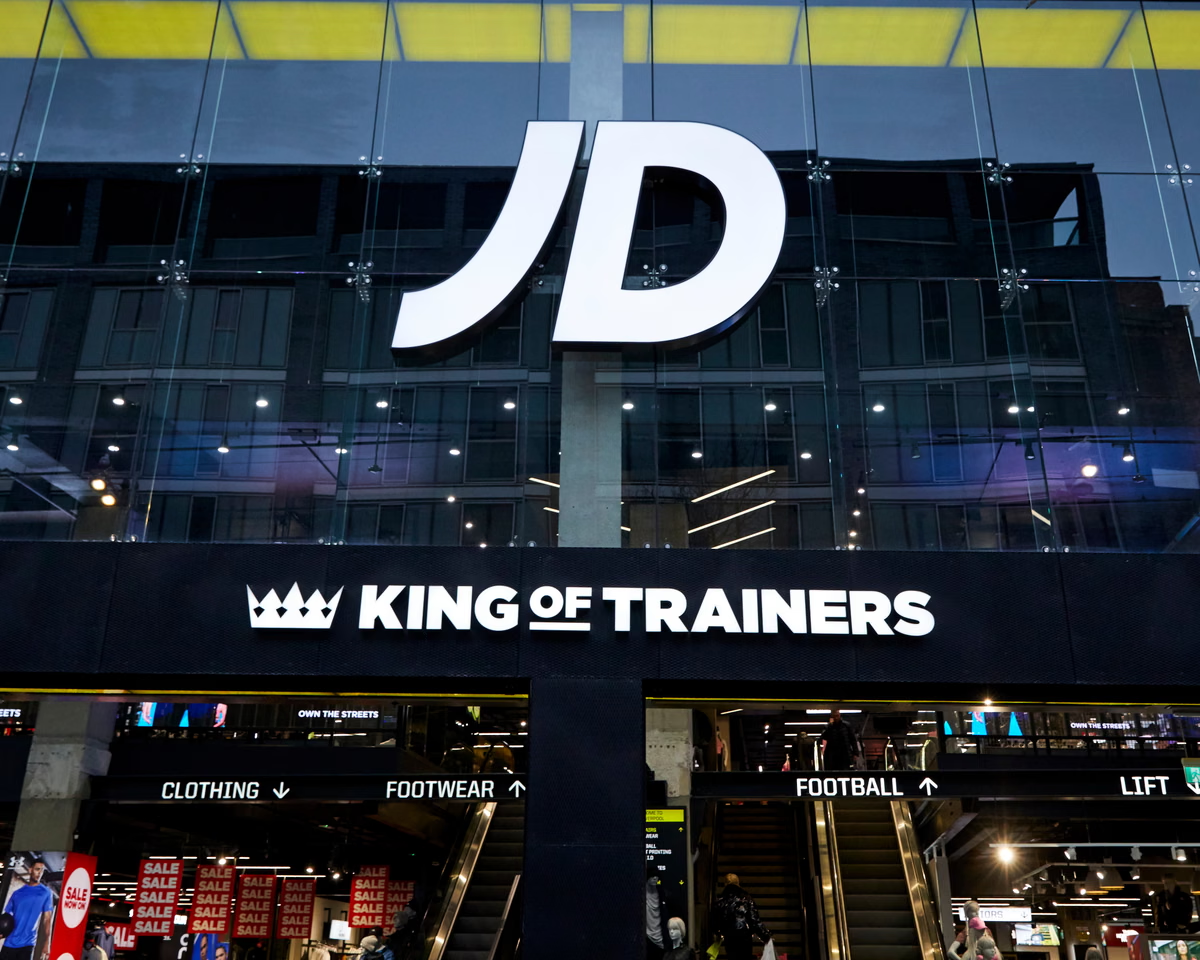
JD Sports has issued a profit warning, cutting its annual forecast by £50 million as mounting cost-of-living pressures weigh on consumer demand. The retailer, which operates 4,800 stores globally including the Blacks and Millets chains in the UK, now anticipates pre-tax profits between £700 million and £800 million for the year, down from its previous guidance of £750 million to £850 million.
Chief executive Régis Schultz noted that the second quarter remained challenging, forcing the company to implement price cuts and promotions to maintain volume. He stated that the firm’s core demographic has been significantly impacted by incremental financial pressures, including rising fuel costs driven by the US-Israeli war on Iran, which has disrupted tanker traffic through the Strait of Hormuz.
The market reaction was swift, with JD’s London-listed shares falling 14% by Thursday afternoon to reach their lowest point since May. Overall like-for-like sales declined by 3.1% during the second quarter. North American operations experienced the sharpest downturn with a 6.8% drop, while European sales fell by 2.7%. Conversely, the UK market showed resilience, bolstered by outdoor gear sales and demand for football replica kits during the World Cup.
Industry analysts point to a combination of broader economic instability and specific brand challenges. Susannah Streeter of Wealth Club suggested that JD’s performance reflects darkening clouds over the US economy, where shoppers are becoming increasingly cautious. She described the sneaker market as a “canary in the coalmine” for consumer confidence, noting that shoppers are becoming more selective as household budgets tighten.
Chloe Tedford-Jones, an analyst at GlobalData, highlighted that JD’s reliance on Nike has become a liability due to an “innovation drought” in the brand’s footwear. While the retailer has introduced popular alternatives like On and Hoka, these brands have yet to reach the volume required to compensate for the decline in heritage sales. Tedford-Jones added that the company must pivot more aggressively toward performance sports and outdoor equipment to align with shifting consumer trends.
Internal leadership changes have also marked a period of transition for the retailer. Following a disagreement over strategy, chair Andrew Higginson exited the company last month. Darren Shapland, formerly of Poundland and Topps Tiles, is currently serving as interim chair. He previously stepped in to replace long-term boss Peter Cowgill, who departed in 2022 after the competition regulator issued a £4 million fine regarding undisclosed meetings with the head of FootAsylum.
Looking ahead, the company is preparing for further management shifts, with former Ikea boss Peter Agnefjäll set to become the group’s fourth chair in just over four years when he takes the role next month. Despite these leadership adjustments, management warned that the current decline in consumer spending is expected to persist throughout the second half of the year. The report also notes that jD Sports, which sells brands including Nike and Adidas, said widespread inflation had hit shoppers’ wallets, particularly its core young shoppers, resulting in a drop in sales across important markets such as the US, where it struggled to shift trainers and other footwear. The report also notes that bosses went on to warn that the wider fall in consumer spending was likely to continue into the second half of the year. The report also notes that which are shifting towards outdoor gear and performance sports rather than casual “athleisure” clothing, tedford-Jones said JD needed to move faster to adapt to changing trends. The report also notes that which is not surprising when the jobs market is weakening and inflation is still such a concern, more consumers are resisting the lure of hyped brands. The report also notes that especially in the US, says high street chain, inflation fuelled by Iran conflict deterring shoppers.







Comments