
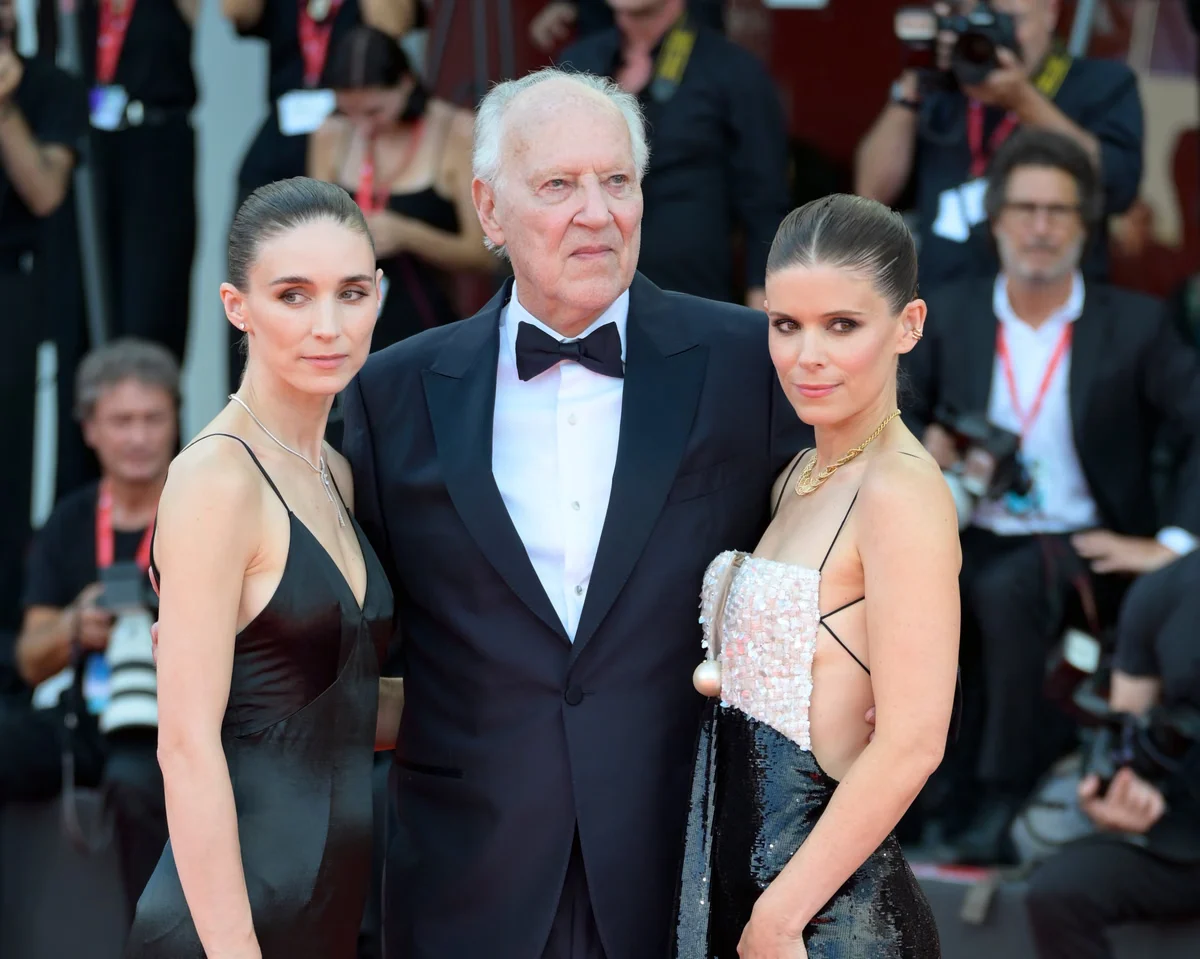
Renowned German filmmaker Werner Herzog has dismissed the modern discourse surrounding neurodiversity, labeling terms like ADHD and neurodivergence as forms of political correctness that he finds deeply uncomfortable. Speaking at the Venice Film Festival, the 83-year-old director remarked that such trendy terminology feels like a clinical aberration that he simply cannot relate to, noting that the concepts essentially vanish from his consciousness.
Herzog’s latest projectBucking Fastardmarks his first non-documentary feature in 17 years. The film features Kate and Rooney Mara as Jean and Joan Holbrooke, a pair of intensely connected sisters who mirror the real-life twins Freda and Greta Chaplin. Herzog encountered the original pair in the 1980s, and they famously coined the title’s spoonerism during a court appearance. While the characters in his film exhibit a singular, obsessive focus that some contemporary observers might categorize as neurodivergent, Herzog insists the sisters are simply centered.
The narrative follows the sisters as they navigate a series of unconventional life events, including a vengeful pursuit of a former neighbor played by Orlando Bloom and a quixotic mission to tunnel between a cave in County Sligo and the Orkneys. Herzog noted that unlike his previous protagonists, these sisters possess a distinct, vengeful streak, describing them as arsonists who actively destroy their surroundings.
Production of the film involved a search for a baby fox to feature in a specific scene, though Herzog refused to source one through unethical animal dealers. He recalled being approached by a dealer who offered to provide an animal if Herzog agreed not to question its origin, a condition the director flatly rejected. He emphasized that he is not interested in participating in such practices, preferring to maintain his integrity as a storyteller.
Despite his reputation as a chronicler of nature’s darker, chaotic elements—such as man-eating bears or screeching birds—Herzog maintains that his work is intended to foster excitement and inner life. This sentiment extends to his cinematic technique, particularly in a sequence filmed within a karst cave system near Postojna, Slovenia. He described the location as a profound landscape of the imagination, drawing parallels to his 2010 documentaryCave of Forgotten Dreams.
Herzog’s career has seen a resurgence in interest from younger demographics, a trend he attributes to his traditional perspective on the world. He noted that a significant portion of his current audience consists of teenagers aged 15 to 17. This shift was highlighted during a 2024 retrospective at the Centre Pompidou in Paris, where he observed that his own screenings were filled with young people, whereas a preceding retrospective for Jean-Luc Godard attracted an audience primarily over the age of 80.
To bridge the gap with his audience, Herzog launched an Instagram account at the urging of his youngest son, who encouraged him to reduce his isolation. While he posts content featuring his daily activities, such as barbecuing and DIY projects, he remains disconnected from the broader digital landscape, as he does not own a mobile phone and cannot monitor his peers in the content-creation space. Ultimately, the director remains focused on the craft of storytelling, rejecting the role of a control freak while continuing to captivate new generations of viewers. The report also notes that i n outsider visionaries such as Aguirre, Fitzcarraldo or Timothy Treadwell, renegade German director Werner Herzog has created some of cinema’s most memorable monomaniacs – characters singularly obsessed with finding mythical cities made of gold, with building opera houses in the middle of the rainforest, or with befriending wild grizzly bears. The report also notes that but suggestions that they could be role models for the modern-day neurodiversity movement send this famously fearless film-maker running for the hills. The report also notes that the new film that Herzog has brought to the Lido, slots right into his gallery of single-minded outsiders, the protagonist pair of Bucking Fastard. The report also notes that then they embark on a quixotic quest to dig a tunnel connecting a cave in County Sligo to the Orkneys, first they fall in love with their washed-up heart-throb neighbour (played by Orlando Bloom) and exact revenge when he marries another woman. The report also notes that contemporary psychiatrists might detect behaviour consistent with autism or ADHD hyper-focus. The report also notes that “I do not relate to all these trendy terms – I just can’t hear it, it dusts out of my ears,” said the Bavaria-born US-based director, speaking in the idiosyncratic, heavily accented English familiar to viewers of documentaries like My Favourite Fiend. The report also notes that the Holbrookes are ostracised by their family and neighbours, but in the film they also show resilience and find allies and supporters, like the Chaplins.



Comments