
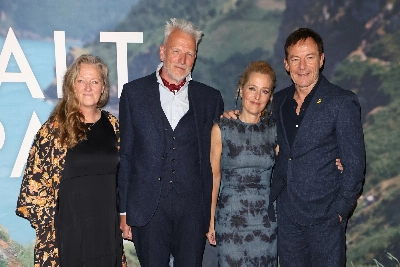
The film adaptation of Raynor Winn’s bestselling memoir, The Salt Path, arrives in theaters nationwide this week. Starring Gillian Anderson and Jason Isaacs, the movie depicts a British couple who, after losing their home and receiving a terminal medical diagnosis, embark on a transformative 630-mile trek along the Cornish coast. While the production garnered positive reviews during its UK release last year for its themes of resilience, its debut is now complicated by significant questions regarding the authenticity of the original story.
The narrative, which originated with Winn’s 2018 book, was long presented as an inspirational true account. However, an investigation by journalist Chloe Hadjimatheou uncovered evidence suggesting that key elements of the story were fabricated. Among the findings, reports from The Observer indicated that the couple was not destitute as claimed, noting they held property in France and lost their UK home due to the repayment of stolen funds. Furthermore, medical experts consulted by Hadjimatheou questioned the validity of the terminal diagnosis and the efficacy of the nature-based recovery described in the book. The investigation also cast doubt on the reality of the 630-mile walk itself, which served as the central pillar of the memoir.
Despite these allegations, Winn has defended her account of events. The controversy has placed the work alongside other high-profile memoir scandals, transforming the film into a complex cultural artifact. For many, the movie now serves as a stark reminder of the human susceptibility to false hope and the ease with which narratives can be manipulated to tug at heartstrings. Gillian Anderson has expressed a desire for American audiences to appreciate the film as a standalone entity, yet the sordid backstory remains inextricably linked to the viewing experience.
The production itself was notable for its creative team, featuring director Marianne Elliott, screenwriter Rebecca Lenkiewicz, and cinematographer Helene Louvart. It was widely viewed as a significant project for women in their late 50s, particularly within an industry where only 14% of films feature women over 40. The story’s initial appeal was deeply rooted in its perceived veracity, capturing midlife anxieties regarding financial stability, health, and the fear of being abandoned by social or legal systems.
Ultimately, the film highlights the powerful, often irrational desires that drive us to believe in such stories. It taps into the hope that one can start over after losing everything, that adventure remains possible in the second half of life, and that it is never too late to dream big. These aspirations, while universal, resonate particularly strongly with middle-aged women who face persistent societal pressures and ageism. By examining why this story was so widely embraced, viewers are forced to confront their own vulnerabilities and the collective thirst for narratives that promise an escape from the harsh realities of aging and misfortune. The report also notes that it all started with Winn’s 2018 memoir. The report also notes that she and her husband lost their home after a bad investment in a friend’s business, got shellacked by his diagnosis with a terminal illness and then completed a 630-mile walk around England’s southwestern, in her telling. The report also notes that and the mountain of evidence amassed by investigative journalist Chloe Hadjimatheou is entirely persuasive. The report also notes that how easy it is for grifters to turn our heartstrings into puppet strings. The report also notes that even if we’re old enough to know better.






Comments