
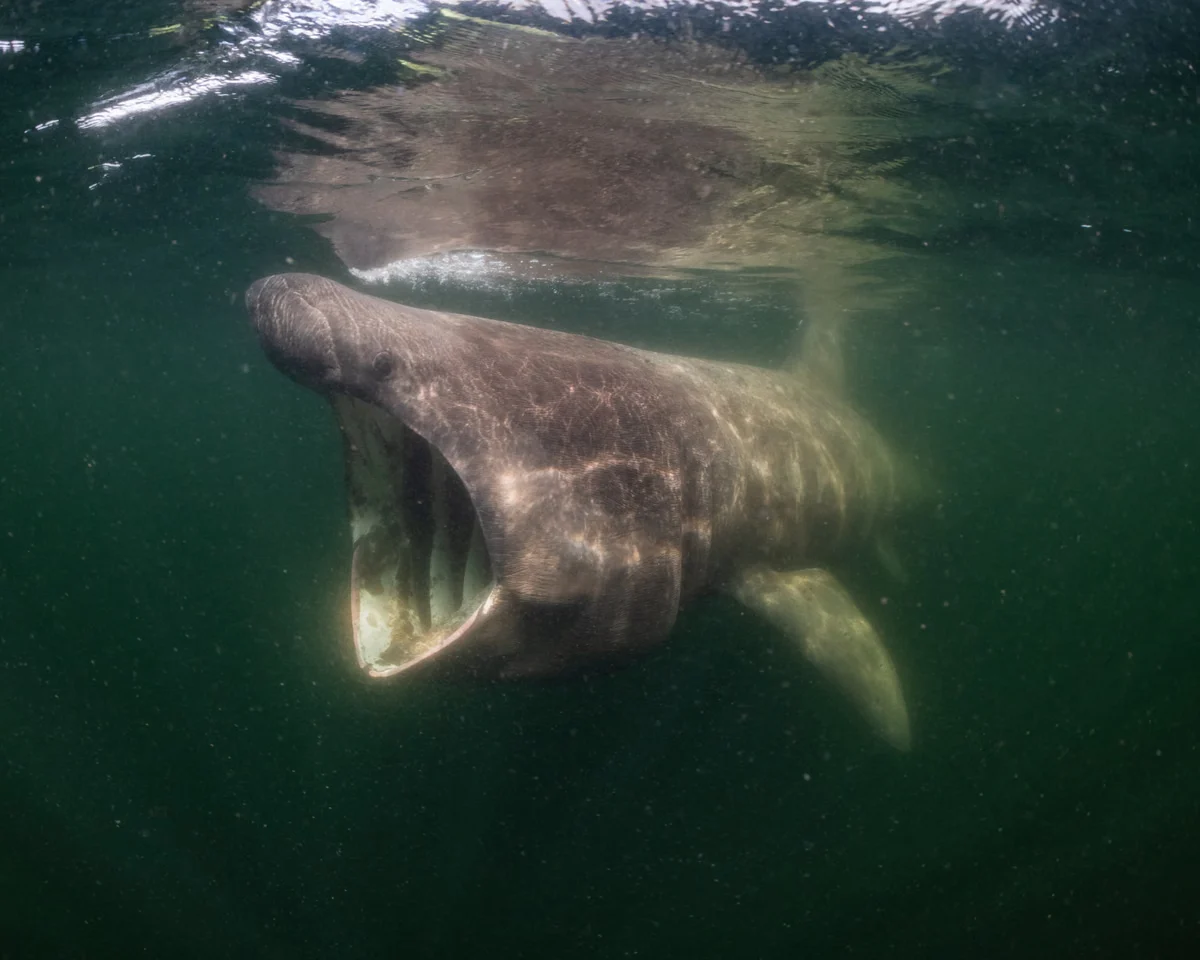
For years, friends and family of Dutch cinematographer Peter van Rodijnen questioned why he dedicated so much time to exploring what many considered a “murky bowl of soup.” Over two decades, as camera technology advanced, Van Rodijnen captured increasingly remarkable footage of marine life along the Netherlands coast. Nearly ten years ago, he partnered with director Mark Verkerk to transform this collection into a feature film. “We started with the idea,” Van Rodijnen explains, “that if somebody can make a movie about the North Sea, it’s got to be us.”
The resulting documentary, “North Sea, Nature Untamed,” offers a startling look at the shallow sea shared by north-west European nations. Despite intensive industrial activity, including fishing and oil extraction, the film reveals a ecosystem teeming with life, from orcas and bluefin tuna to shorthorn sculpins that guard neon-pink eggs. Verkerk notes that the film’s primary goal is to illustrate the entire system at work, highlighting that the presence of large predators like orcas depends entirely on the massive, foundational support of the smaller marine life beneath them.
Filming in the North Sea is notoriously difficult due to epic plankton blooms, strong currents, and cold, shallow waters. Van Rodijnen describes the physical limitations of diving, noting that scuba equipment often restricts filming to 20 or 30-minute windows. “It’s about patience but it’s more about persistence,” he says. “You need to just keep pushing to get the shots.” The production faced significant hurdles, including frequent cancellations of trips to document fishing vessels or windfarm construction sites.
Unlike many traditional natural history films that depict wildlife in isolation, this documentary frames humans as central engineers of the ecosystem. The filmmakers document the impact of sand eel decline on puffins and the industrial efficiency of mackerel fishing. Van Rodijnen admits that witnessing his “film stars”—small sharks and rays—discarded as bycatch is upsetting, yet he emphasizes the importance of understanding the fishers’ perspectives through shared experience. He notes that while he does not always agree with them, he has found that current fishing quotas appear to be effective in this specific fishery.
The film also examines the complex relationship between the North Sea and offshore energy. While the directors avoid direct coverage of oil and gas extraction, they highlight the unintended benefits of offshore windfarms. By preventing bottom trawling, these areas function as de facto marine parks. Van Rodijnen points to a dive near rocks that fell from a ship 30 years ago as proof of nature’s resilience, noting that these structures have become thriving artificial reefs. “Give nature a chance and it responds,” he says.
Beyond the visual spectacle, the documentary explores the sensory environment of the sea. Verkerk points out that the ocean is not only a hidden world but a noisy one. “The sound is pretty deafening above the water but underwater it can be 20 times louder,” he explains. This acoustic reality is part of the broader, often ignored, narrative of the North Sea.
The documentary has found an unexpected global audience, with screenings across Europe and growing interest from countries including Japan, Italy, and Argentina. Both filmmakers believe the project resonates because the North Sea serves as a microcosm for the challenges facing oceans worldwide. “It’s very much out of sight out of mind, isn’t it?” Verkerk asks. “A lot of the problems facing seas and oceans all around the world are at their most acute here.”
Ultimately, the filmmakers hope to move beyond the “out of sight, out of mind” mentality that plagues public perception of the region. “There’s a lot of parties wanting to get something out of the oceans,” Van Rodijnen adds, “and there are a lot of discussions about the North Sea. What we’re trying to do with the film is spark wonder by showing what’s down there. Then you bring about a bit of love.” The report also notes that as even its greatest admirers will concede, often glowers an unappetising grey or brown, t he North Sea. The report also notes that and we assume that its dull exterior is matched by sediment-filled waters where little life dwells. The report also notes that but, inspired by a childhood of watching Jacques Cousteau’s adventures in rather more enticingly temperate waters, Van Rodijnen’s dedication to North Sea diving gradually revealed its hidden wonders. The report also notes that oil extraction and multiple other exploitations, parts of the North Sea are still alive with luminous pinks, purples and greens; starfish, lobsters, brittle stars, kelp forests, seals and basking sharks, despite decades of intensive fishing. The report also notes that even if the Great Barrier Reef, where Van Rodijnen began his diving career, is much more accessible, this hidden wilderness may be almost as spectacular as a tropical reef. The report also notes that combined with the shallow waters and big tides, frequently make underwater visibility too poor to film, these annual eruptions feed its whole pyramid of marine life but. The report also notes that “This is really one of the first big attempts.







Comments