
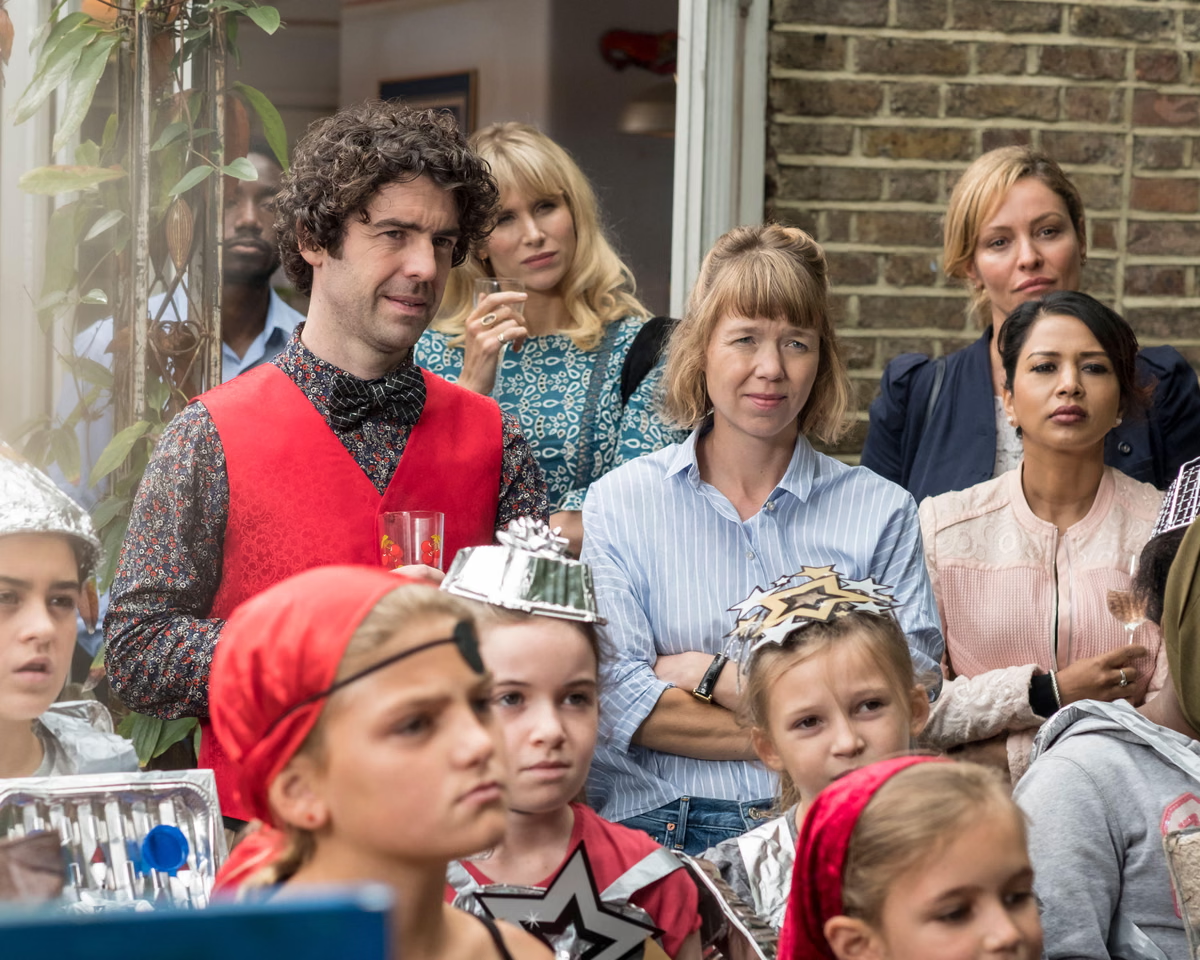
If the high-stakes tension of the film Uncut Gems were applied to the daily school run, the result would look remarkably like the BBC sitcom Motherland. It has been ten years since the series first began fraying the nerves of parents everywhere, transforming Anna Maxwell Martin into the definitive face of television exhaustion as she skewered the realities of middle-class motherhood.
Whether she was desperately pleading for a shoe shop to stay open the night before term started—“Don’t be closed. Pleeeeeaaaaase don’t be closed”—or suffering a breakdown at traffic lights while driving to a school drop-off that proved unnecessary because she had forgotten it was half-term, Maxwell Martin’s character, Julia, often seemed to be enduring a more stressful existence than the characters in the high-pressure kitchen drama The Bear.
Created by Sharon Horgan, Holly Walsh, Helen Serafinowicz, and Graham Linehan—with Barunka O’Shaughnessy joining after the first series—the show arrived when television was moving away from idealized parenting tropes. While predecessors like Outnumbered and Malcolm in the Middle had explored the humor in domestic life, they largely centered on the children. Motherland shifted the focus entirely to the adults, treating motherhood like a workplace comedy defined by passive-aggression, intense competition, and the constant need for wine.
The show captured the uncomfortable reality that parenting can often feel like a battle to maintain one’s own identity. The children were rarely the focus; they were merely background figures, leaving the spotlight on the adult dynamics. Alongside Julia, the cast featured the unflappable Liz, played by Diane Morgan; the token dad, Kevin, portrayed by Paul Ready; the long-suffering Anne, played by Philippa Dunne; and the quintessential alpha-mum, Amanda, played by Lucy Punch, who has since become the subject of the spin-off Amandaland. The addition of Tanya Moodie’s high-achieving Meg in the second series provided a broader perspective, though the show remained hyper-focused on the specific, often absurd, pressures of a well-off west London demographic.
The series thrived on depicting the specific horrors of PTA fundraisers, joyless sports days, and high-pressure birthday parties. It highlighted the panic that sets in when a parent realizes they have made a social blunder, such as misinterpreting World Book Day and sending a child to school with an umbrella to represent the Will Self novel of the same name. It explored the strange, competitive nature of trying to bond with other parents who happened to have children at the same time, all while navigating the judgment of the school gates.
Motherland never shied away from the idea that having children does not erase a person’s flaws; rather, it often magnifies them. The show understood that motherhood frequently involves a sense of dissociation, where a parent might find themselves reciting Latin gibberish to secure a spot at a Catholic school while internally screaming, “How did it come to this?”
As the characters’ relationships evolved into genuine friendships, the show maintained its focus on the relentless nature of parenthood. Even when faced with serious life events like divorce or illness, the mundane tasks—like packing lunches—remained. The series captured the specific dread of social obligations, such as when Julia remarked during an afterparty at Anne’s house, “This is my worst nightmare come true – surrounded by mums at night.”
While the show might be too close to home for some to serve as a relaxing watch, it offers a form of catharsis. It reassures viewers that even when they are trying their best, mistakes are inevitable. It stands as a messy, triumphant monument to a chaotic stage of life, acting as a reminder that parenting is often less about laughing until you cry and more about laughing to prevent yourself from doing so. It remains a companion for those trying to navigate the endless cycle of doctor’s appointments and school obligations. The report also notes that it is now 10 years since the BBC sitcom jangled the already frayed nerves of all parents watching and turned Anna Maxwell Martin into the most frazzled woman on television in the name of skewering middle-class motherhood. The report also notes that the experience of mothering on television was still mostly centred on the kids themselves: tantrumming toddlers, precocious primary schoolers and stroppy teenagers, but while the likes of Malcolm in the Middle and Outnumbered had embraced the humour in the warts and all of child-rearing. The report also notes that while it had been considered progress to see women on television who were more than just mothers, Motherland acknowledged an uncomfortable truth: that the mothering bit can really take over, at least for a while there. The report also notes that that being a mother sometimes – often – feels like a constant fight against being flattened into two dimensions. The report also notes that joylessly non-competitive sports days and skin-crawling swimming pool birthday parties (devastatingly, not a drop-off situation), the horrors here took place at interminable PTA fundraisers. The report also notes that impress and one-up a group of people who just happen to have given birth around the same time as you, the show gamely took on the utter weirdness of mother-to-mother relations: attempting variously to bond with.







Comments