
For years, the appearance of female celebrities has been picked apart online, with fans, commentators and cosmetic experts debating whether a smoother forehead, sharper jawline or more youthful complexion is the result of Botox, fillers, surgery or simply good skincare. Increasingly, however, that scrutiny is no longer reserved for women. Hollywood’s leading men are now facing the same intense attention.
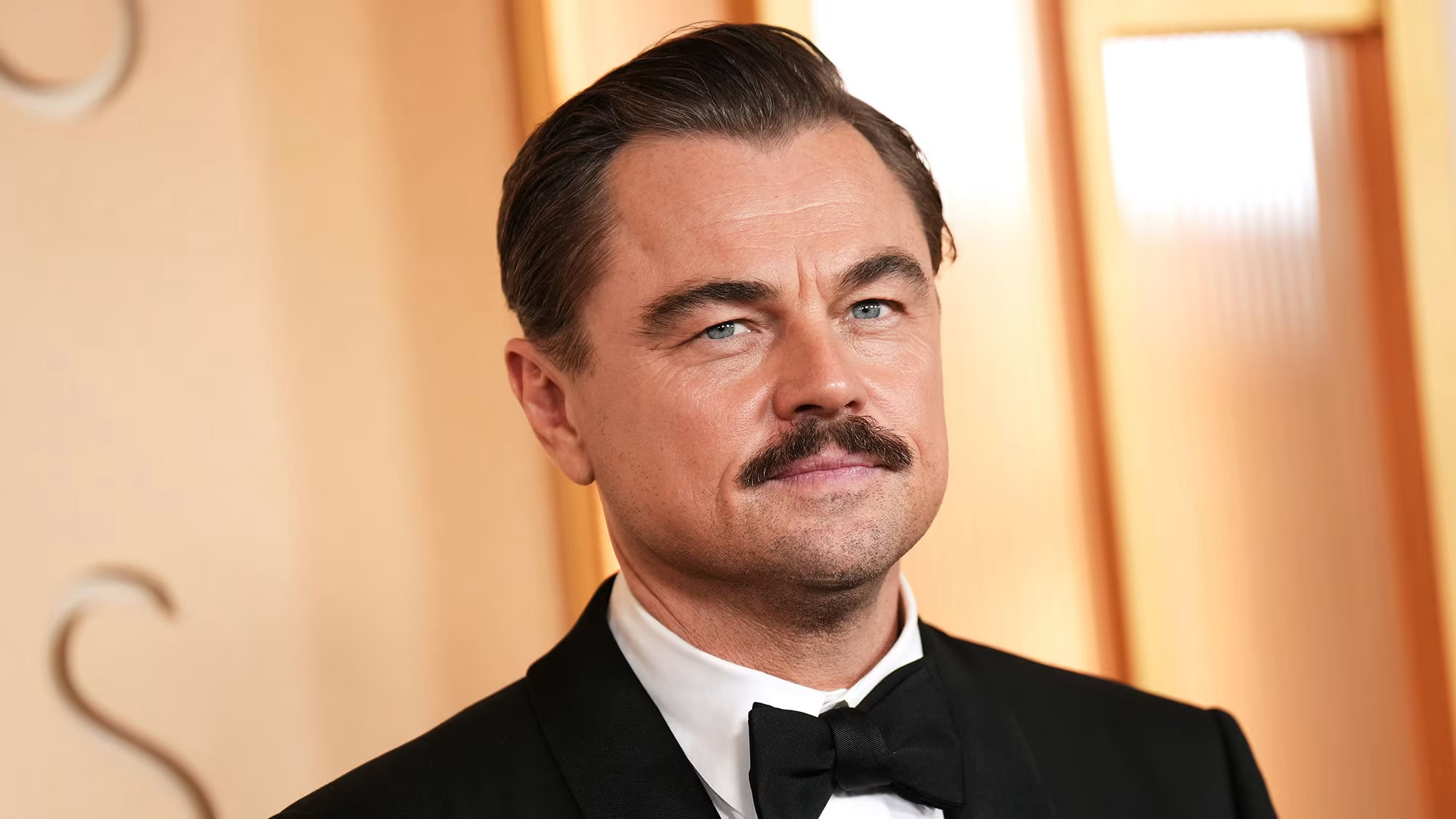
Leonardo DiCaprio became one of the latest examples after appearing at this year’s Academy Awards with a noticeably fresher and less puffy look. The 51-year-old actor quickly became a talking point on social media, where users joked about everything from skincare routines and healthier habits to his new Tom Selleck-style mustache.
The discussion soon moved beyond casual internet commentary. Cosmetic surgeons began offering theories about whether DiCaprio might have undergone aesthetic treatments, while photos of him wearing a baseball cap and face mask in public prompted jokes that he was concealing recent cosmetic work.
Much of the reaction to DiCaprio’s apparent transformation was complimentary. The response to Jim Carrey, however, was considerably harsher.
Carrey, 64, appeared at the César Awards after spending several years largely away from the spotlight. Known throughout his career for his highly expressive face and physical comedy, the actor surprised some viewers with an appearance they described as noticeably tighter and less animated.
His changed look sparked widespread discussion online, with some people even pushing conspiracy theories that a body double had attended the event in his place. The speculation intensified after celebrity impersonator and makeup artist Alexis Stone posted an image on Instagram with the caption, “Alexis Stone as Jim Carrey in Paris.”
Carrey and DiCaprio are far from the only male stars whose appearances have generated speculation.
Earlier this year, Bradley Cooper denied having plastic surgery after revealing on the SmartLess podcast that strangers had approached him asking what cosmetic work he had undergone.
Ryan Gosling also found himself at the center of online speculation after manipulated images circulated claiming to show changes to his cheeks. That discussion came only months after some social-media users had criticized him as being “too old” to play Ken in Barbie.
Barry Keoghan has faced similar scrutiny over apparent changes to his lips and cheeks. Speaking recently on SiriusXM, the actor said repeated online criticism of his appearance had affected him deeply, making him reluctant to leave the house.
The growing attention toward male appearance reflects a broader shift in attitudes toward cosmetic treatments.
Some male celebrities have openly acknowledged using Botox or similar products, sometimes jokingly referred to as “Brotox.” Joe Jonas became a spokesperson for Xeomin, an FDA-approved injectable alternative to Botox, in 2022. He has previously spoken about cosmetic treatments as part of a wider approach to looking and feeling his best.
Other high-profile men, including Robbie Williams, Gordon Ramsay, Gene Simmons, Tom Sandoval and Simon Cowell, have also discussed their experiences with Botox or other cosmetic procedures.
The trend is not limited to celebrities.
Figures from the British Association of Aesthetic Plastic Surgeons show that men now account for 6.5% of cosmetic surgery procedures in the UK. Although the overall number of surgeries fell slightly between 2023 and 2024, face and neck lifts among men increased by 26%, pointing to growing demand for anti-aging treatments.
A similar pattern can be seen in the United States. According to the American Society of Plastic Surgeons, men accounted for around 6% of injectable cosmetic treatments last year, including products such as Botox and Xeomin.
For decades, Hollywood has operated with an obvious double standard around aging. Women were often expected to remain youthful while male actors were allowed to grow older visibly, with wrinkles, gray hair and other signs of age sometimes even adding to their appeal.
That distinction now appears to be weakening.
As more men undergo cosmetic treatments—and as social media becomes increasingly comfortable analyzing male faces with the same intensity traditionally directed at women—the pressure to appear younger is becoming less gender-specific.
Whether that represents greater equality or simply means that men are now being subjected to the same unrealistic beauty standards long imposed on women is another question entirely.
What seems clear is that aging in Hollywood is no longer just a conversation about women.
Comments