
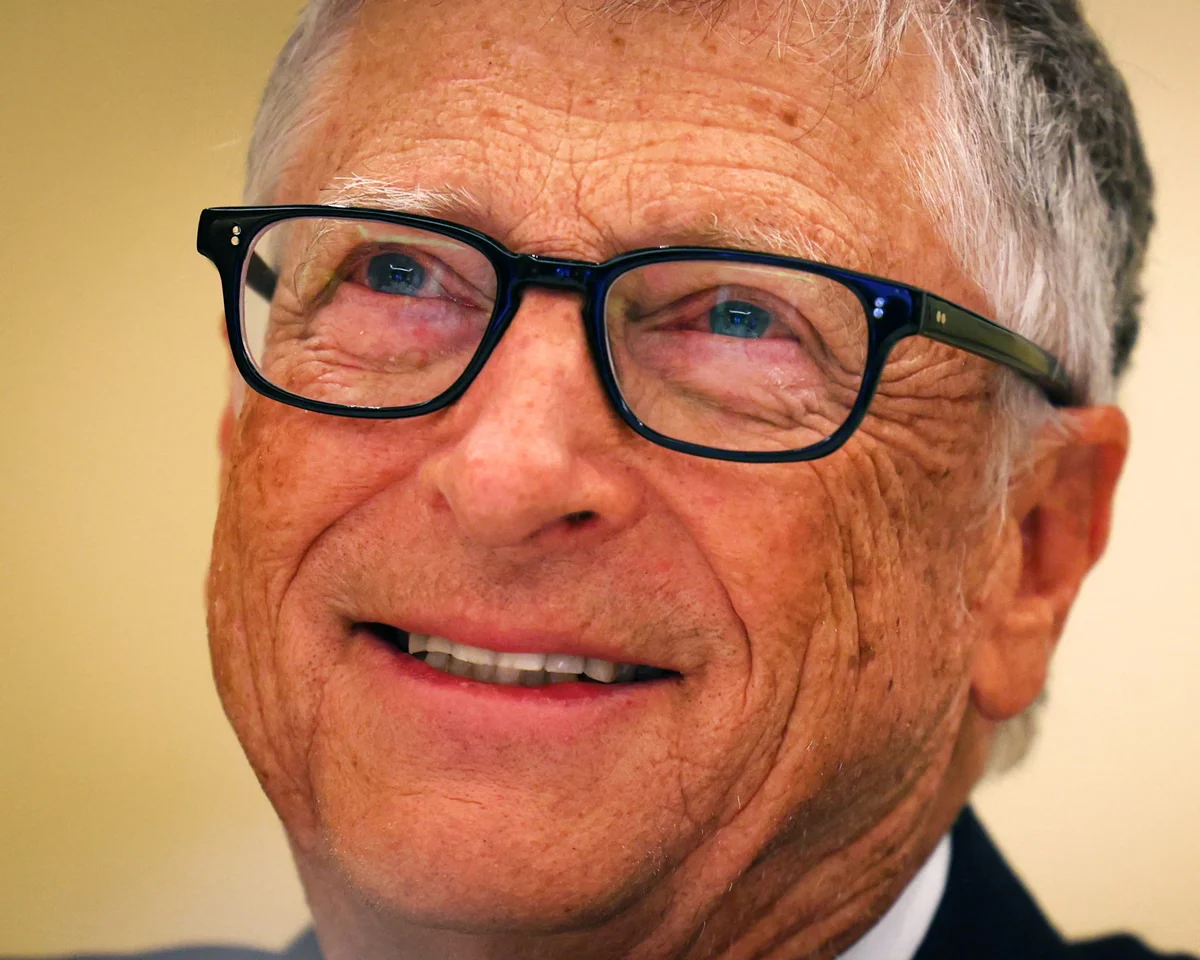
Microsoft co-founder Bill Gates is urging federal lawmakers and law enforcement officials to establish rigorous oversight for artificial intelligence. In an interview with NBC’s Meet the Press host Kristen Welker, set to air this Sunday, Gates warned that unchecked AI development could lead to extreme global outcomes, noting that the technology is “certainly powerful enough to drive events that, you know, cause a billion deaths.” Gates otherwise is generally regarded as optimistic about humans’ future.
Gates emphasized that industry self-regulation is insufficient to manage these risks. He argued that while mandatory safety monitoring and government-led safeguards will impose some operational costs on tech companies, these requirements will not significantly impede industrial progress. He further cautioned that there has never been a tool as dangerous as the combination of advanced AI and individuals acting with malicious intent. Using a term meant to describe an expense required to run a business, Gates continued: “It will be a little bit of overhead for the industry – but not a dramatic slowing of what they’re doing.”.
This call for oversight aligns with warnings from other prominent figures, including Elon Musk and Sam Altman, who have expressed concerns that unmanaged AI could facilitate nuclear war or the creation of biological weapons. Gates’s recent warnings follow a detailed 6,000-word essay he published in late August, which addressed the potential for large-scale, lethal threats posed by AI. Many reporting or commenting on his conversation with Welker noted that it occurred in the wake of a nearly 6,000-word essay that he published in late August warning about AI and the potentially lethal ills it poses to humanity on a large scale.
Despite his calls for caution, Microsoft continues to face criticism regarding its own role in AI deployment. Activists and employees under the “No Azure for Apartheid” group have campaigned against the company’s ties to the Israeli military, alleging that AI tools have been used in lethal operations in Gaza and, alongside US forces, in Iran. The group’s representatives, Mohamed Hussein and Granate Kim, also noted that AI tools, such as Microsoft’s Azure, are utilized by the US Department of Homeland Security for domestic monitoring and deportation operations. Meanwhile, Microsoft itself has been challenged for having a role in stoking some of the dystopian concerns surrounding AI.
Background and Personal Context
- Organization: Gates Foundation; the $89bn charity remains under his leadership as chair.
- Epstein Connection: A July external review found that Gates participated in approximately 30 meetings with Jeffrey Epstein between 2011 and 2014.
- Personal Stance: Gates maintains that he regrets the time spent with Epstein, who died by suicide in 2019 after being charged with sex trafficking.
- AI Usage: In the interview, Gates noted that he does not consult AI for personal matters or social interactions, quipping that he prefers to maintain his reputation as a serious person.
The interview marks one of Gates’s primary public engagements since the findings of the external review regarding his association with the disgraced financier were released. Gates has not been accused of any criminal wrongdoing in connection to Epstein’s activities. Gates’s essay in August and interview on Sunday were two of his first major forays into the public since becoming ensnared in the scandal surrounding Jeffrey Epstein, the disgraced financier who pleaded guilty in 2008 to procuring a minor for prostitution before dying by suicide while incarcerated on sex-trafficking charges 11 years later. An external review commissioned by Gates’s philanthropic foundation and released in July determined that he was among a number of organization staffers and leaders who had collectively held about 30 meetings with Epstein from 2011 to 2014.
Key Job Details
- Gates, with a chuckle and a smile, replied: “Well, I’m not using it for my personal relationships. I’m not like: ‘Hey, do you like me? Hey, am I a nice guy?’.
- “So I just never went down that path, because I’m lucky in terms of my family, friends and everything. I don’t socialize with the AI. It knows I’m a very serious person.”.






Comments