
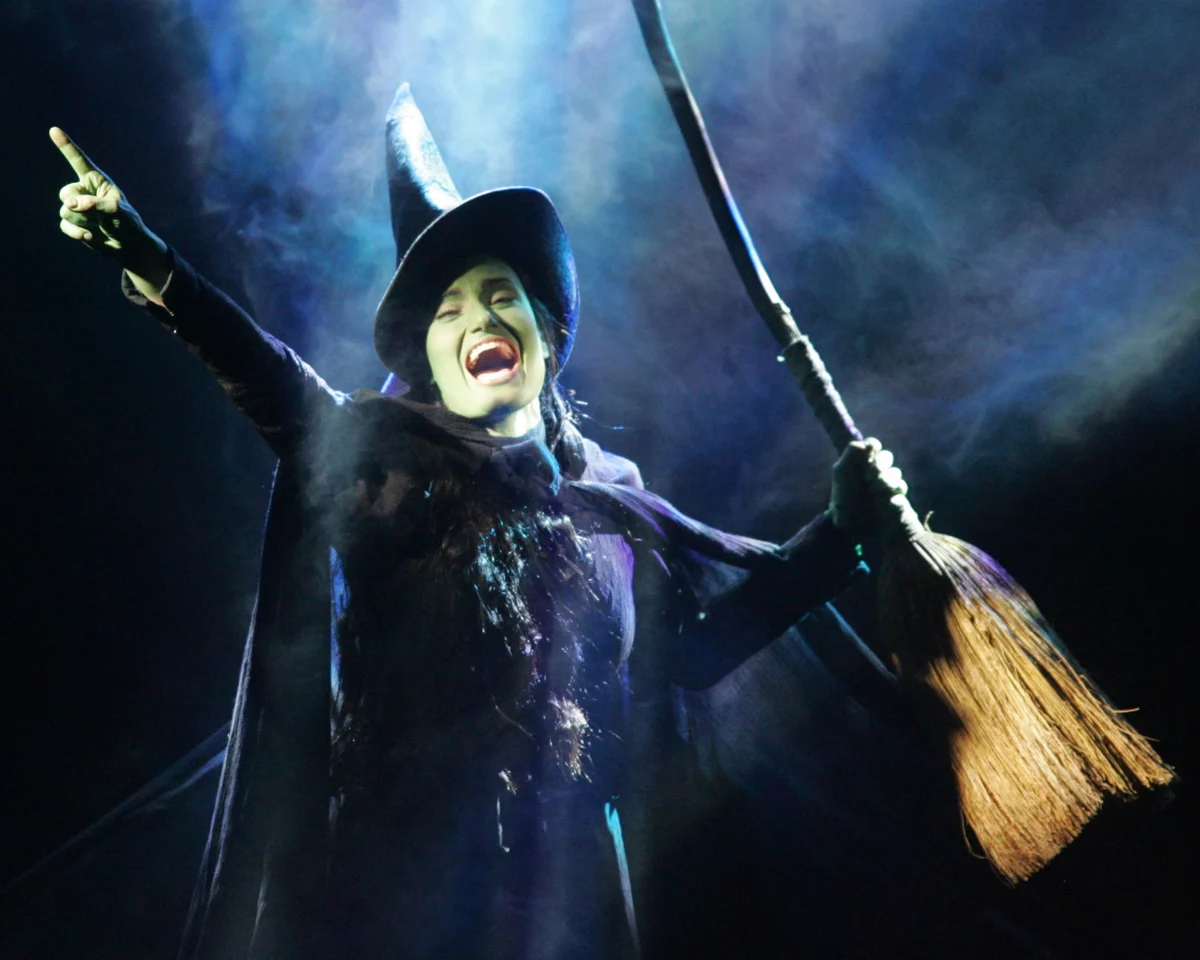
Idina Menzel, who originated the role of Elphaba on Broadway and later performed in the West End production, remembers the first time she sang Defying Gravity during a dress rehearsal as an exhilarating milestone. With the smoke machines active, the lights set, and the orchestra in full swing, the experience of rising above the stage remains a vivid memory. Having worked alongside composer and lyricist Stephen Schwartz throughout the show’s four-year development, Menzel noted that he tailored the music to fit her vocal and emotional range. Starred in the West End run and made a cheeky cameo in the recent film version, she won a Tony on Broadway.
Technical precision plays a massive role in Menzel’s performance. While she finds the final note a liberating release, she admits that singing on an “E” vowel in the line “Bring meeeee down” is a significant challenge. During her call-back audition, she botched the note but maintained her composure by looking at the accompanist and declaring, “I’m going to do that again.” Director Joe Mantello later told her that moment of ferocity and power convinced him she was the right choice for the role. To have that incredible moment and to see how the audience leapt to their feet – I felt so proud but I also just wanted to cry. He came to really understand my voice. And then I just took all this angst and frustration at not being perfect and nailed it.
Zizi Strallen, currently playing Glinda the Good in the West End, finds that Wicked consistently strikes a chord with audiences regardless of their personal circumstances. She draws on her own life experiences, including times she has made mistakes or expressed herself poorly, to channel genuine emotion into her performance. For Strallen, the song Thank Goodness represents Glinda’s complex internal struggle as she balances the pressure of public fame with her desire to support her friend, Elphaba.
Musical supervisor Stephen Oremus emphasizes the nuance in how the songs were crafted. He points out that Stephen Schwartz wrote the music to mirror natural speech patterns, complete with subtle pauses such as “There’s a kind of a sort of – cost,” which requires performers to master intricate, spoken-word-style rhythms that initially proved difficult to learn. So I asked Stephen if I could take it up an octave – the whole song is soaring, I said, and I have it in me to go up there: “Looook to the western skiiiiiiy. There are other notes I find much harder.
Jordan Litz, who has performed as Fiyero more than 1,700 times in the United States and is now making his West End debut, highlights the evolution of the song Dancing Through Life. Originally titled Which Way Is the Party?, the track was cut from a version that featured “sleazy” lyrics about kegs of beer before being refined into its current, more carefree form. Litz admits that playing Fiyero was initially difficult because he struggled to project the confidence of a popular student, a stark contrast to his own high-school experience as a choir member in oversized trainers.
The creative process for other songs was equally iterative. The Wizard and I, intended to kickstart Elphaba’s journey, went through several versions before Schwartz settled on the final iteration. The song’s orchestration was designed to reflect Elphaba’s internal thought process, transitioning into a dreamlike, expansive quality when she hits the “unlimited” bridge.
The show’s emotional core was built around the final interaction between the two leads. Composer Stephen Schwartz recalls collaborating with Winnie Holzman on the ending. While discussing the characters’ profound impact on each other, Holzman remarked that they had “changed each other for good,” providing the title for the show’s concluding anthem. Schwartz approached the song with the intent of creating something completely vulnerable and heartfelt, diverging from Glinda’s usual public-facing persona.
The adaptation of Gregory Maguire’s novel was not considered feasible for the stage until Schwartz suggested transforming it into a musical. This decision catalyzed a production that has become a global phenomenon, leaving a lasting mark on the theatre world. I was locked into my safety belt and I started to rise up over the theatre.

Comments