
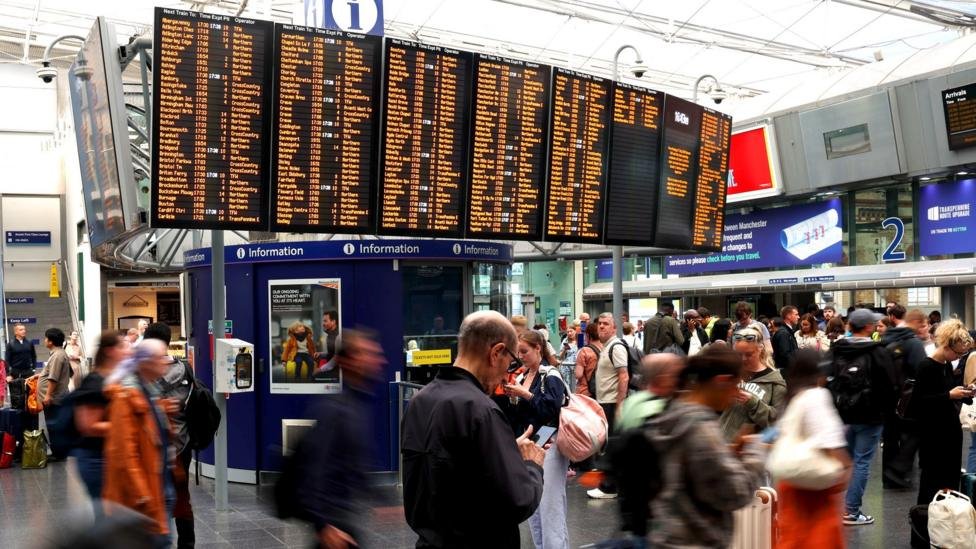
A rare power failure at a Network Rail operations centre in Manchester has sparked significant travel disruption, prompting urgent questions about the vulnerability of the nation’s rail infrastructure. The incident, which occurred at a facility responsible for managing large sections of the North West, highlighted the potential for localized technical issues to cause widespread network instability.
Network Rail is the publicly-owned body whose job it is to operate and maintain Britain’s railway infrastructure, including tracks, signals, embankments, and major stations. The Manchester centre, which opened in 2014, serves as a critical hub for safe train operations across the region.
The facility was hit by a power cut in the area, which was resolved within 90 seconds. Given the centre’s importance, backups are in place to ensure continuity. However, questions have been raised about how the systems responded to the outage.
Chris Wright, north-west route director at Network Rail, told the, “we didn’t experience a 90-second interruption,” insisting its systems were back online sooner. But he acknowledged that some of Network Rail’s communications systems “did not respond how we would have expected, and then needed reconfiguring and replacing.”
“We’ve got to work really hard very quickly now to understand why that’s the case,” he added. Because signalling—the traffic lights of the railway—was affected, trains were forced to stop. Systems required a full reboot, but damage to signalling control components necessitated time-consuming part replacements.
Thinking about how busy parts of the rail network are, and how many trains and crews were left out of position across the North West of England and beyond, helps explain why the impact was so big. Network Rail has since apologized to customers and launched a formal investigation into the failure.
Bosses say engineers have been working hard to “build additional resilience into our signalling systems to ensure that this doesn’t happen again.” The incident has drawn attention to the organization’s shift toward having 12 so-called Rail Operating Centres across Great Britain, replacing a previous structure of hundreds of older signal boxes.
These centres are intended to be high-tech hubs that centralize control of the network. However, experts have warned that consolidating operations in this way means that if one centre is badly affected, the impact is much broader than it would have been under the old system.
Rail writer Christian Wolmar noted that the problem created by this model is that “if one thing goes wrong, it can wipe out, as we saw, quite a lot of the network.” He added, “So really they’ve got to start thinking about both resilience, but also whether the centralisation of all the signalling and communications into a very small number of places is the right thing to do.”







Comments