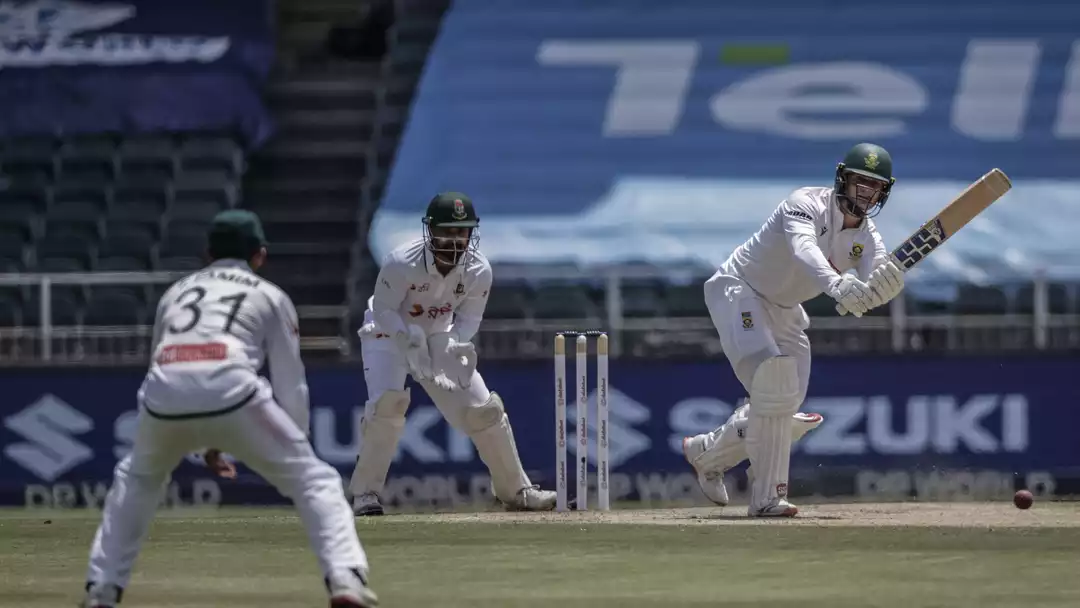
A severe thunderstorm hit the Wanderers on Tuesday, forcing play to be abandoned shortly after the scheduled tea break during the third day of the first Test. The disruption occurred as the match remained finely balanced, with South Africa trailing Bangladesh by 14 runs with only three wickets left in their innings. Fully electric, furiously hectic display of nature at its most forceful that reminds us mere and meek humans just how mere and meek we are, a Joburg thunderstorm is a beautiful and wondrous thing; a fabulously pyrotechnic. The storm that descended on the scene during Lunch on the third day of the first Test was determined to swamp the place with its superiority. The sky bristled with gnarled blue-black clouds and darkly muttered oaths long after play was called off 24 minutes after what would have been the end of the tea interval. Those who only cricket know will grimace at that. Those strokes didn’t need to be played.
The weather conditions in Johannesburg were intense, featuring lightning, heavy rain, and hail that made further play impossible. Forecasts suggest similarly volatile conditions for Wednesday, which could significantly impact the remainder of the contest. The interruption halted a critical passage of play where South Africa had hoped to secure a lead.
Ryan Rickelton, who remains unbeaten on 56 from 104 deliveries, is currently the central figure for the home side. He has occupied the crease for over two hours and is vital to South Africa’s chances of building a substantial advantage. Reflecting on the day, Rickelton described the situation as pretty even, noting that the team suffered a setback by losing several wickets to the second new ball. Asked to summarise the 28 overs, Rickelton said, “The day was pretty even.
The South African batting order struggled significantly when the second new ball was introduced just three overs after it became available. Wiaan Mulder, Marco Jansen, and Simon Harmer were dismissed in quick succession, contributing only 15 runs across 20 deliveries. All three players were caught behind after chasing wide balls from Bangladesh’s Taskin Ahmed and Hasan Mahmud. Sharing 76 off 145 deliveries, when the new ball entered the narrative three overs after it became due, he and Rickelton had batted together for 99 minutes. It would have been ideal if he could have hung in there for another 10 overs to take the shine off.”.
The collapse was compounded by the departure of captain Temba Bavuma, who left the field for treatment on his right calf shortly before the new ball was taken.
Bavuma had been struggling with his left leg previously and, despite attempting to continue after receiving medical attention, eventually retired to the dressing room. Regarding his captain’s status, Rickelton expressed optimism, stating, “I think it was cramp, maybe a bit of tightness. But I am aware he will be coming back to bat before the end of the innings.” Bavuma rose, lowered the bottom half of his trouser leg, strapped his pad back into place and seemed ready to continue. Then asked about his use of the last word in the above sentence, Rickelton walked it back: “I was being a bit harsh.
Rickelton admitted that the timing of Bavuma’s exit was particularly unfortunate, as it exposed less experienced batters to the challenges of a fresh ball. He remarked that it would have been ideal for the captain to remain at the crease to soften the ball, though he acknowledged that wickets were expected given the conditions at the Wanderers. At a press conference Rickelton rued the impact of Bavuma’s withdrawal: “It was unfortunately timed; on the doorstep of the new ball and exposing a new batter.
Looking ahead to the resumption of play, Rickelton emphasized the necessity of securing a lead before attempting to maximize their advantage. He believes that even if the process requires two sessions, building a lead of around 100 runs will be crucial to wearing down the pitch. Such a cushion would allow the South African seamers to target the stumps more effectively as the surface potentially stays lower over time. “If we can get a 100-run lead and put some more wear and tear onto the pitch our seamers can pitch it up more, which will bring up-and-down [bounce into play] and put pressure on them.
The game now hinges on the mental battle as much as the physical one. Rickelton noted that the challenge is very much “between the ears,” asserting that whichever team dominates the first hour upon returning will likely dictate the course of the match. For now, both teams wait for the skies to clear while keeping a close watch on the weather outlook. If you haven’t felt this power up close and personal you have not lived. All of us will appreciate that the match was exquisitely poised before the weather decided to raise hell.