
The European Leagues umbrella organization has officially expanded its ongoing legal challenge against FIFA to include allegations of “abusive conduct” regarding the women’s international match calendar. This move builds upon a complaint originally filed with the European Commission in October 2024, which initially focused on protecting men’s players and challenged FIFA’s decision-making process for the 2023 international match calendar.
The organization, which counts the English Premier League and the Scottish Professional Football League among its members, recently incorporated 14 European women’s leagues into its ranks this past June. This inclusion covers prominent competitions such as the Women’s Super League in England and the Scottish Women’s Premier League, both of which are now central to the expanded legal argument.
In a statement released on Tuesday, the group asserted that FIFA’s regulatory decisions regarding the women’s game threaten the long-term financial sustainability and growth of professional leagues while posing risks to player health and wellbeing. The leagues argue that the European Commission must intervene to ensure that EU law is upheld and that the future of women’s professional football is not dictated unilaterally by the global governing body.
The submission highlights a recurring pattern of behavior, alleging that FIFA maintains conflicting roles as both a regulator and a competition organizer. According to the European Leagues, this structural conflict of interest allows FIFA to consistently leverage its regulatory power to prioritize its own commercial interests at the expense of national leagues and the broader development of women’s football.
FIFA has previously maintained that the calendar announced at its 2023 Congress was the result of extensive consultation with all relevant stakeholders, including the leagues themselves. The governing body has also asserted that it remains fully within its rights to define the parameters of its own competitions, such as the Club World Cup, provided they adhere to the agreed-upon calendar framework.
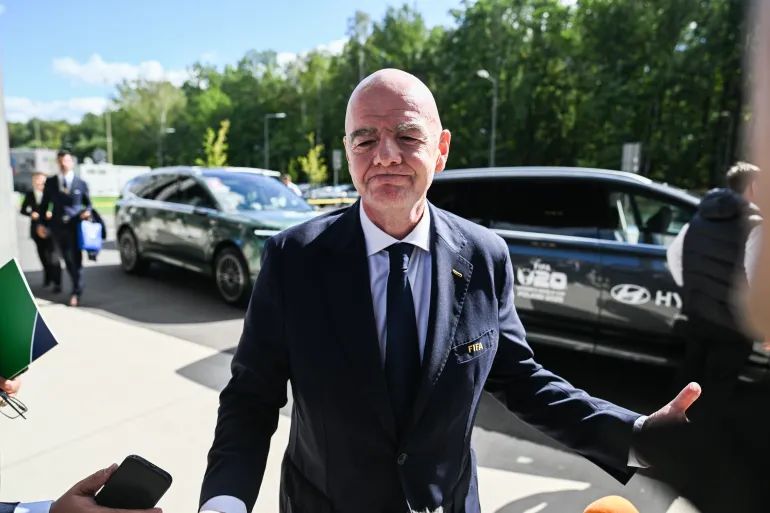
This escalation in legal pressure coincides with ongoing scrutiny surrounding FIFA President Gianni Infantino. He has faced significant criticism from three continental confederations regarding a previously proposed plan to seek private investment for a company intended to manage various FIFA competitions, including the World Cups. Although that specific plan—which involved a project known as FIFA Forward Enterprise that would have been 20 percent owned by private investors—has since been abandoned, the controversy remains a point of contention.
The European Leagues noted that the debate over the proposed company highlighted a structural conflict between FIFA’s regulatory duties and its commercial ambitions. The group stated that the episode vividly illustrates how profit-driven motives continue to taint FIFA’s regulatory processes and decision-making, further justifying their call for formal oversight by the European Commission. The report also notes that the complaint claims that FIFA abused a dominant position under European competition law in allegedly failing to properly consult with leagues over the men’s international match calendar announced in 2023.






Comments