
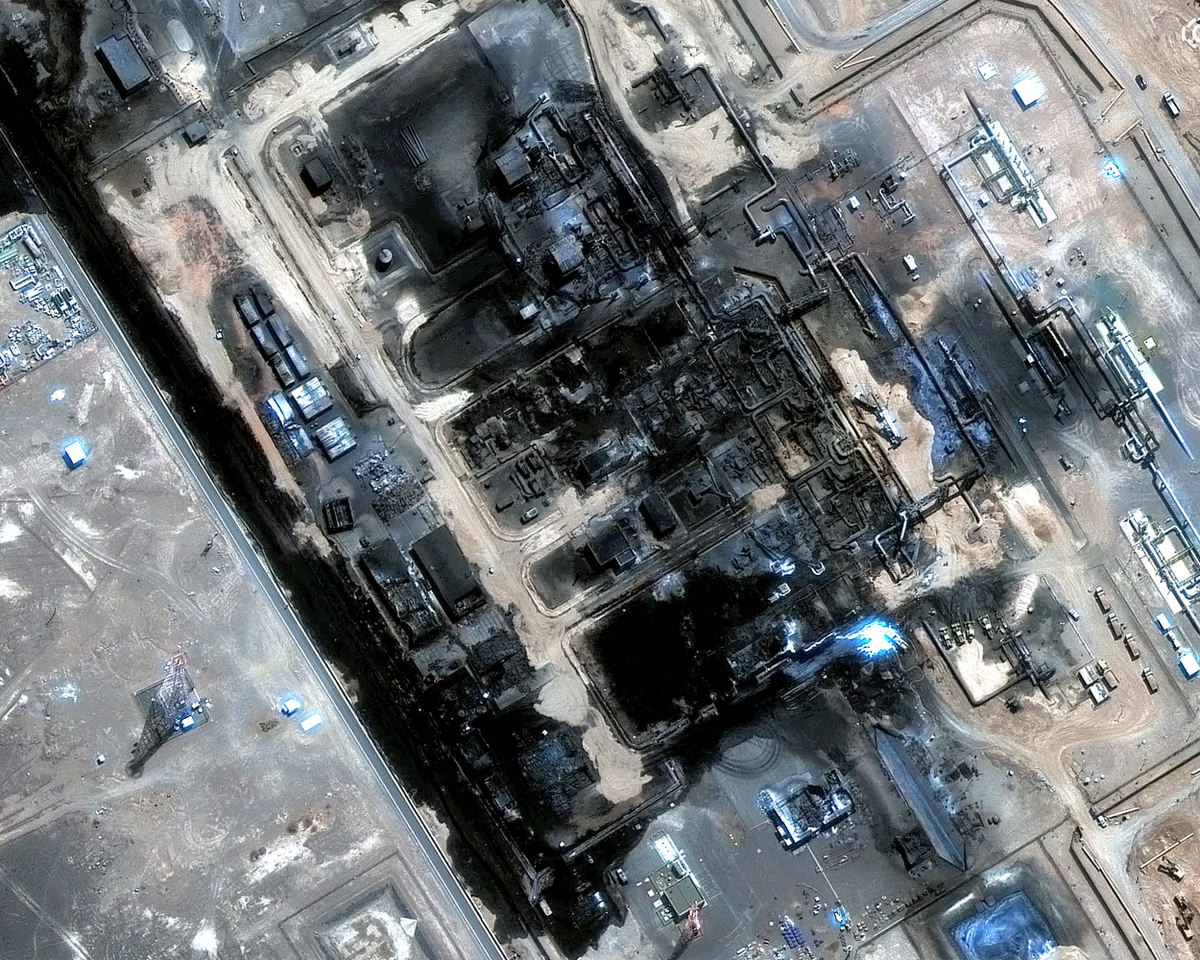
Oil prices saw a sharp increase on Monday as Brent crude surged past $108.50 per barrel, marking a 3.7% gain. The rally was triggered by a series of drone strikes that forced Saudi Arabia to shut down its primary east-west crude pipeline. Traders in the kingdom have warned that export stocks could be exhausted within days if the infrastructure is not reopened.
The regional conflict intensified after Yemen’s Iran-aligned Houthi forces launched attacks on Saudi targets and seized Perim Island in the Bab al-Mandab strait. This expansion of control over a vital maritime chokepoint coincides with the decision by Gulf states to postpone negotiations with Tehran regarding a temporary shipping corridor through the Strait of Hormuz, a conduit for nearly 20% of global oil and gas supplies.
Energy costs are also climbing elsewhere, with the UK benchmark for gas prices reaching 208.73p per therm, the highest level recorded since December 2022. According to the RAC, this shift in wholesale energy markets has pushed UK petrol prices to an average of 169.68p, while diesel has climbed to 191.68p.
The broader economic fallout from the US-Israeli conflict with Iran has been significant throughout the year. Oil prices have fluctuated wildly, rising from prewar levels of approximately $72 per barrel to an April peak of $126 before moderating during a short-lived summer ceasefire. Markets began to tighten again after the collapse of a memorandum of understanding between the US and Iran, pushing prices back above the $100 threshold last week.
Market analysts are noting a trend toward spring highs as geopolitical instability combines with a lack of diplomatic progress. Chris Beauchamp, an analyst at broker IG, warned that oil markets are facing multiple pressures simultaneously, including infrastructure attacks and the threat of disrupted shipping lanes.
“The major surprise is how calm markets remain in the face of all this, but if prices breach the March highs, things could get ugly very quickly,” Beauchamp added. He noted that the risk of disruption is spreading beyond the Gulf, creating deep uncertainty regarding global energy and trade routes.
Financial markets are bracing for further volatility as investors digest the combination of rising energy costs and impending interest rate decisions. Both the US Federal Reserve and the Bank of England are expected to weigh in on policy this week, following the European Central Bank’s recent rate hike.
This uncertainty has led to renewed selling pressure in bond markets, forcing up government borrowing costs. The yield on 10-year US government debt has climbed nearly a full percentage point over the past year to reach almost 5%. Meanwhile, 30-year UK government yields have hit their highest point since March 1998.
Saudi production capacity is also currently constrained, with data provided by the kingdom to the Opec cartel indicating that August crude output dropped to its lowest level since 1990. Capital.com analyst Daniela Hathorn summarized the situation by noting that markets are entering the week on a defensive footing, pressured by both Middle East escalation and hawkish expectations for central banks. The report also notes that the yield – in effect the interest rate – on 10-year US government debt has risen by almost a percentage point from 4% to almost 5% in the past year amid mounting investor concern.









Comments