
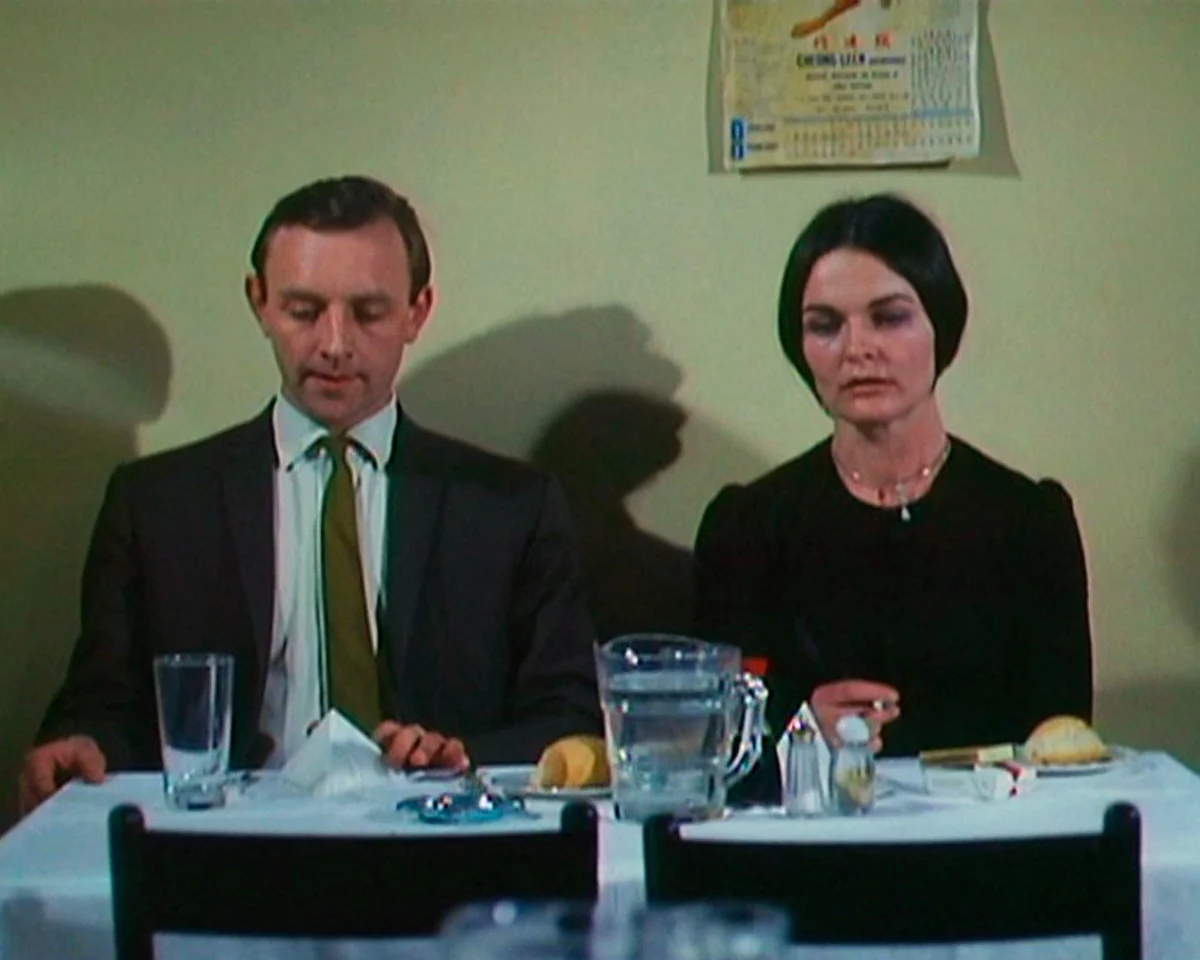
Contemporary Films, the pioneering British distributor that introduced audiences to the works of global auteurs such as Ingmar Bergman, Satyajit Ray, Andrzej Wajda, and Yasujiro Ozu, is marking its 75th anniversary with a series of special screenings. Founded in 1951 by Charles Cooper, the company initially focused on short films for the thriving film society circuit before expanding into features with the 1952 Japanese production Children of Hiroshima. While competitors like Kenneth Rive’s Gala were also active, Contemporary was a primary force in bringing sophisticated international cinema to the UK.
The company’s historical significance is being honored by prominent figures in the industry, most notably director Mike Leigh. Leigh’s debut feature, the 1971 film Bleak Moments, was acquired by Contemporary, a move the director remembers as a major validation. “It was a great honour,” Leigh says. “One was used to seeing ‘Contemporary Films’ on all the movies one saw that weren’t just Hollywood crap.” Leigh, who grew up in Manchester watching only British and Hollywood productions, credits the distributor with opening his eyes to the cosmopolitan world of Russian cinema and Italian neorealism once he moved to London.
Charles Cooper, the driving force behind the company, was an East End native and the son of a Ukrainian butcher. A committed communist, he viewed cinema as a tool for social awareness. Before the second world war, he managed the film section of the Workers’ Theatre Movement, known as Kino, and later directed a film unit for the International Workers Order in New York. Following his deportation from the US in 1950, Cooper returned to Britain to supply films to an estimated 200 film societies, focusing on Eastern European and underclass-oriented narratives that aligned with his intellectual and political interests.
Cooper’s daughters recall a childhood where the boundaries between professional and personal life were porous. His daughter Adi Cooper, now a board member of Social Work England, notes that her father was adept at identifying a market for arthouse cinema and taking risks on emerging talent. Her twin, Sue Cooper, a founder of the 1970s punk group Poison Girls, describes her father as a humanist and internationalist who was deeply motivated to expose audiences to diverse cultures. Their upbringing included everything from watching Alexander Nevsky in their Wembley home to performing administrative tasks at the company’s Frith Street office for pocket money.
A critical factor in the company’s success was Cooper’s partnership with George Hoellering, the Hungarian émigré who managed the prestigious Academy cinema on London’s Oxford Street. “They were joined at the hip,” says Pete Lawley, the current managing director of Contemporary. “They were the gold standard of the time.” By the time Hoellering died in 1984, Cooper had established his own exhibition venues, including the Paris Pullman and the Phoenix cinema in London, as well as a second Phoenix in Oxford.
The company’s market dominance began to wane in the early 1990s due to shifts in industry practices. Lawley, who joined the organization in 2023, explains that as Cooper’s health declined in the late 1980s, management passed to his second wife, Kitty Furstenberg, who subsequently sold the firm to their friend Eric Liknaitzky. Although the company acquired notable independent titles in the late 80s and early 90s—such as Jane Campion’s Sweetie, Patricia Rozema’s I’ve Heard the Mermaids Singing, and Hal Hartley’s The Unbelievable Truth—it struggled to adapt to the rise of home entertainment formats. Following Liknaitzky’s death in 2023, the company has focused on licensing its archive and re-releasing classics.
Today, Contemporary Films continues to operate by licensing clips from its extensive catalogue. Lawley is currently cataloging the company’s vast documentation and remains committed to its future. “It’s very important to me,” Lawley says. “I really want to keep it going. It can’t be about the money, let’s put it that way.” The upcoming anniversary season will feature a selection of the company’s most iconic titles, including Miloš Forman’s A Blonde in Love, Bergman’s Wild Strawberries, and Jack Hazan’s David Hockney documentary, A Bigger Splash. The report also notes that contemporary, and its founder Charles Cooper, weren’t the only game in town – Kenneth Rive’s Gala was a fellow traveller – but Contemporary got there first, setting up shop in 1951, first with short films for the then po. The report also notes that when it was a victim of changing industry practices, its marketplace clout faded rapidly in the early 1990s. The report also notes that still riding high on his 1960s acting successes, it was financed by Albert Finney. The report also notes that vital pieces of the cultural jigsaw disappear without anyone really noticing, o ccasionally. The report also notes that a studiedly funny and weird film based on Leigh’s own stage play, is about a woman living an isolated life with a sister with a learning disability and a boring job, bleak Moments. The report also notes that off-kilter feature, it was a slightly unusual item for Contemporary to pick up, as a homegrown. The report also notes that “We were fresh on the block and innocent,” says Leigh, “and you take everything for granted in some way.



Comments