
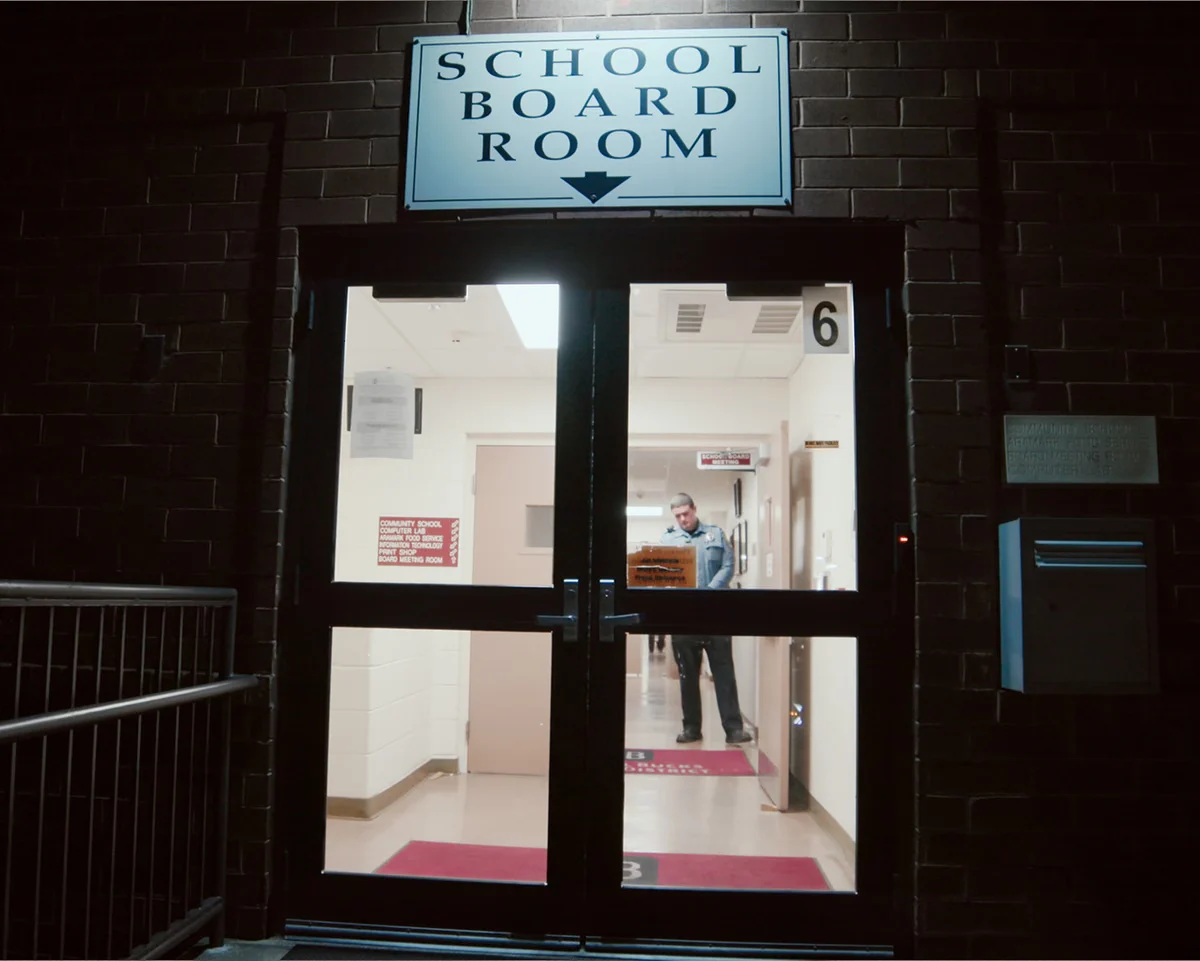
Teenagers Evi and Vanessa, best friends from Doylestown, Pennsylvania, serve as the heart of a new five-part docuseries titled Bucks County, USA. The series, directed by Robert May and Academy Award-winning filmmaker Barry Levinson, explores how the affluent Philadelphia suburb became a flashpoint for American cultural and political strife following the Covid-19 pandemic. While the two girls remain close, their families represent the deep ideological chasm that has transformed their community.
Evi’s mother, Lela, supports LGBTQ+ students and advocates for inclusive history lessons, whereas Vanessa’s father, Paul Martino, is a conservative venture capitalist. Martino famously bragged about spending $500,000 on local school board campaigns to counteract what he perceived as harmful school closures during the pandemic. The series, filmed over four years, captures the resulting fallout as parents, students, and educators became embroiled in heated debates regarding book bans, masking policies, critical race theory, and Diversity, Equity, and Inclusion (DEI) initiatives.
The filmmakers arrived in late 2021, spurred by coverage from the New York Times’ The Daily podcast. By that time, the Central Bucks school board was already fractured. The influx of political spending via a PAC introduced aggressive attack ads, while local meetings became notorious for intense shouting matches. The narrative features a wide array of voices, from board members wearing pride symbols to parents aligned with the Florida-based group Moms for Liberty, which has gained national influence through book-banning efforts.
Director Robert May emphasized that the project was not designed to take sides or settle political scores. Instead, the crew conducted hundreds of hours of interviews, often promising subjects they would not be interrupted. May noted that in today’s political environment, it is rare for individuals to speak for 30 seconds without a counter-argument shutting down the dialogue. The goal was to provide a platform for various viewpoints and allow the audience to reach their own conclusions, framing the town as a microcosm for communities across the United States.
Addressing potential criticism regarding false equivalency, Levinson argued that those who view the series through a partisan lens, wanting to see their opponents called out, miss the fundamental point of the project. The documentary highlights the personal tensions within families, such as the dichotomy between a student fighting for acceptance and a parent viewing that acceptance as child grooming, or the clash between those who see DEI as essential and those like Aarati Martino, who argue that equity is not a core American principle.
Ultimately, the documentary serves as a study of how good intentions and misinformation can lead to paralyzing stalemates. While May and Levinson did not witness many residents changing their core political persuasions, they did see moments where individuals agreed to navigate their disagreements. Through the experiences of Evi and Vanessa, who have since graduated, the filmmakers suggest that the only path forward is through active listening and refusing to accelerate every issue into a binary left-versus-right conflict. The report also notes that l ike many teenage best friends, Evi and Vanessa have a penchant for finishing each other’s sentences. The report also notes that one, a red-headed musical theater nerd with a personality nearly as boisterous as her signature puffy skirts, collides with the other, darker in hair and disposition, their speech bubbling with indecipherable affirmations and giggles, whether enmeshed on a couch or telling a story. The report also notes that you!”, it can be difficult to tell where one girl ends and the other begins, in a heady chorus of “duuude” and “no. The report also notes that except, that is, at their respective homes. The report also notes that on Zoom and in the meeting room – in lobbying their local school district board, and frequently call out the other by name, that their parents do not see eye to eye is an understatement; both are actively involved – on social media. The report also notes that concerns that simmered in various social media forums and side chats – the legality of masking, critical race theory, DEI, slavery, election conspiracy theories and viral fixations over transgender students and bathrooms – concentrated in perhaps the one unifying place in town: the school, and in particular its governing board, whose public meetings frequently ended in ugly shouting matches, seemingly overnight. The report also notes that the series, directed by Robert May and Oscar-winning film-maker Barry Levinson, of Rain Man glory, and filmed over four highly contentious years, plays out a roving gallery of 2020s US politics in miniature – a “microcosm for communities around the country”, said May, where concern for one’s children morphs and mutates into hardline stances.


Comments