
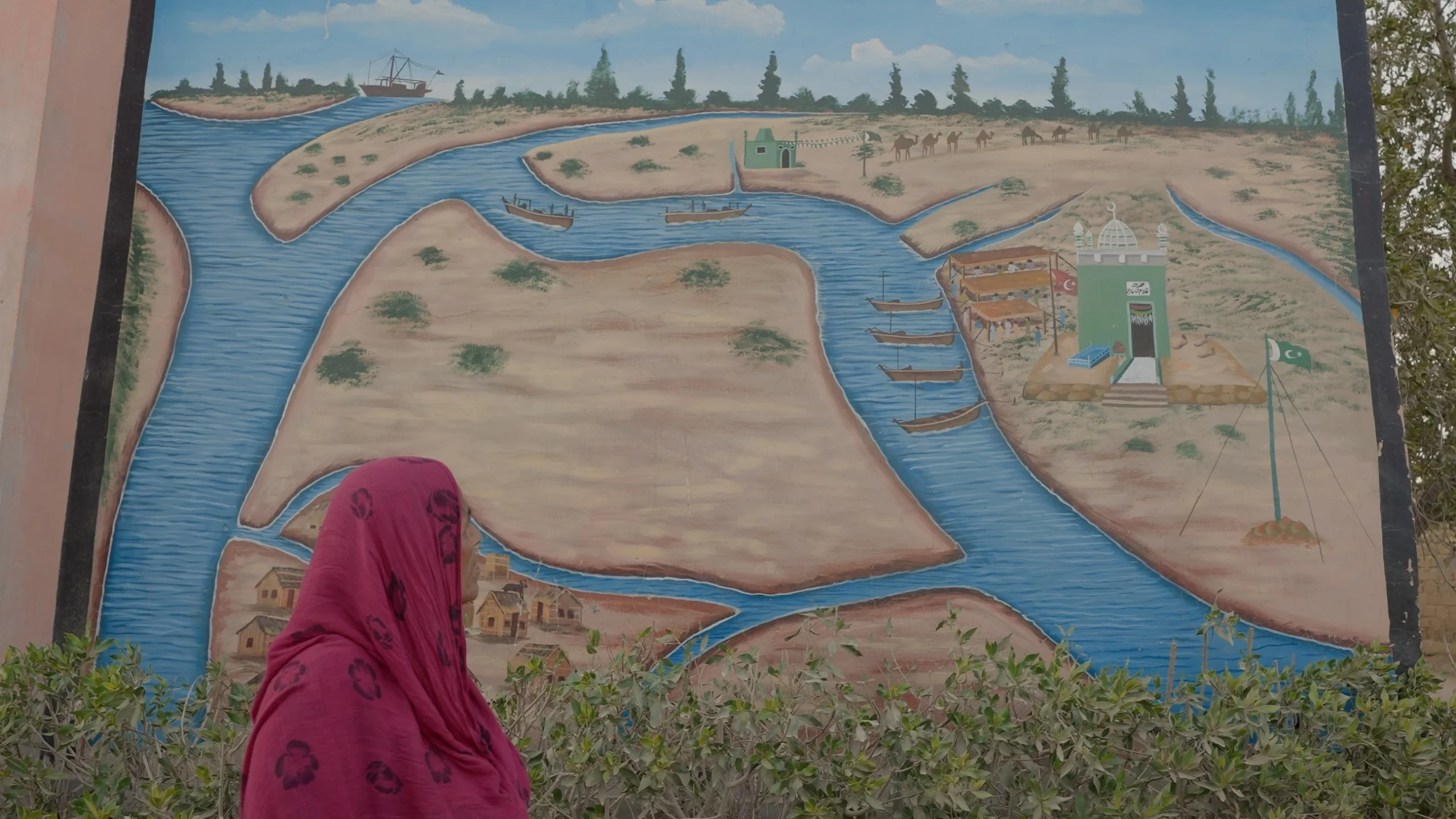
The Ishara Art Foundation is set to host a new exhibition titled “The sky held it, the earth remembered,” running from September 11 through December 15. Developed in collaboration with the Han Nefkens Foundation, the show highlights significant contributions from three artists: Shahana Rajani, the inaugural recipient of the South Asian Video Art Production Grant; Rohini Devasher; and Sarker Protick.
The exhibition investigates how the natural world—encompassing land, water, and the cosmos—functions as a living repository for history and memory. By utilizing photography, film, and installation, the works challenge human-centric perspectives, arguing instead that humanity and non-human forces are deeply interconnected. The collection posits that the environment acts as a witness to ecological change, preserving material traces of history across vast timescales.
Shahana Rajani, a multi-disciplinary artist born in 1987, explores the intersection of development, militarism, and ecological resistance in Pakistan. Her featured work, “Lines That World a River,” examines the Indus River as a site of contested memory. Through a three-channel film, she documents displaced delta communities who use murals and paintings to memorialize villages submerged by hydraulic dams. The installation includes an enclosure modeled after a “dargah,” or shrine, symbolizing the structures that often remain standing in inundated areas, providing a temporary space for those unable to access their ancestral sites.
Rohini Devasher, born in 1978, brings a research-intensive approach to the exhibition that bridges the humanities and sciences. Named the 2024 Deutsche Bank Artist of the Year, Devasher utilizes her background as an amateur astronomer and residencies at institutes like CERN to create “Latent Fields.” This installation features three monumental habotai silk panels, each measuring 3 by 5.5 meters, suspended from the ceiling. The panels display images of solar phenomena, such as sun spots, layered with delicate tracings that represent the atmosphere as a record of cosmic time.
Sarker Protick, born in 1986 and based in Dhaka, contributes a selection from his series “Dhaka 1217.” This collection of 135 black-and-white photographs, captured between 2011 and 2026, documents the evolution of a one-square-mile area near his childhood home. The images capture the encroachment of urban development on nature, from railway lines obscuring foliage to palm trees buffeted by rain. Protick’s work also touches on personal and social loss, including scenes from the 2024 Monsoon Revolution, positioning Dhaka as a terrain where individual, ecological, and social histories converge.
By bringing together these diverse perspectives from Pakistan, India, and Bangladesh, the exhibition highlights shared experiences of ecological decline that transcend national borders. The artworks, on loan from Gallery Wendi Norris in San Francisco and Shrine Empire in New Delhi, invite viewers to engage with stories of resilience and dispossession.
The project is supported by the Han Nefkens Foundation – South Asian Video Art Production Grant 2023, in partnership with the Prameya Art Foundation, New Delhi; Ishara Art Foundation, Dubai; Nottingham Contemporary; Museum of Contemporary Art Tokyo (MOT); Museum of Contemporary Art Antwerp (M HKA); and Para Site, Hong Kong. Additional support for the exhibition has been provided by Emirates Insurance. The report also notes that the works document the transformation of a one-square-mile radius around the neighbourhood where the artist was born and continues to live, captured between 2011 and 2026. The report also notes that protesting lost livelihoods, demonstrators of the 2024 Monsoon Revolution come together. The report also notes that the earth remembered engages with contemporary critiques of the Anthropocene, rejecting a human-centred vision of the world, in favour of the view that people and non-human forces are irrevocably intertwined, the sky held it. The report also notes that the earth embodies the effects of environmental destruction and infrastructural violence, rather than a passive witness to history. The report also notes that for example, erased by flooding, turn into brushstrokes on a mural painted from memory; and celestial phenomena become repositories of information invisible to the naked eye, the banks of the Indus River. The report also notes that winding creeks, boats and ‘dargahs’ or shrines dedicated to Islamic saints, the artworks become acts of memory and resistance against both ecological destruction and state neglect, depicting clusters of houses. The report also notes that an enclosure evoking a ‘dargah’ – often the only structure that remains standing amid inundated settlements – sits in the centre of the three screens.






Comments