
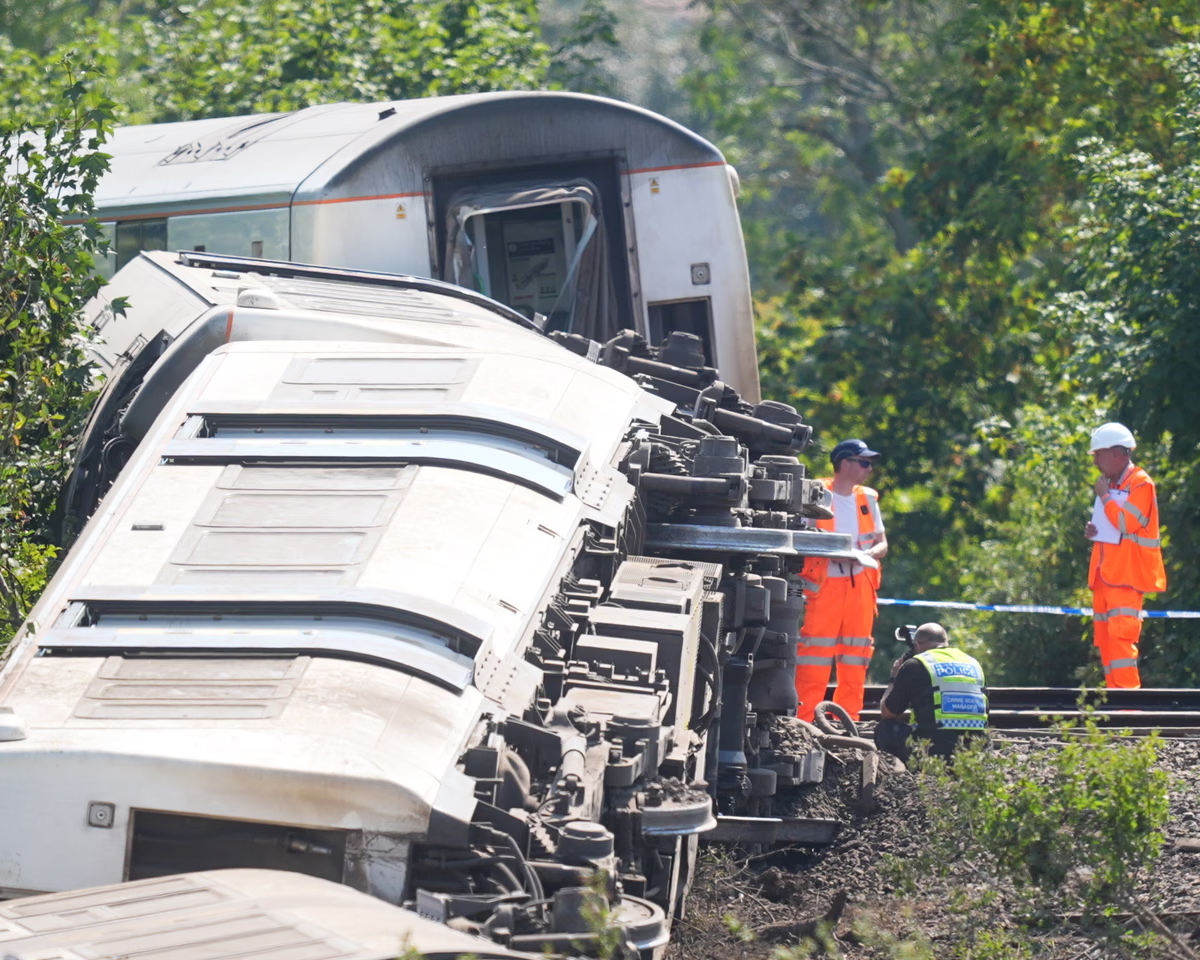
Network Rail and GTR, the operator of Southern, have issued a formal apology following an interim report into last Thursday’s train derailment in East Sussex. The Rail Accident Investigation Branch (RAIB) identified a “track geometry irregularity” on the approach to the site, where the incident occurred during the hottest day of the year so far.
CCTV footage reviewed by investigators indicates that the fault was present before the derailment took place near Lewes. The RAIB has released an image suggesting the track may have buckled, a phenomenon often associated with extreme heat. According to the nearest weather station, the ambient air temperature reached approximately 27C, following a sustained period of hot and dry weather.
In a joint statement, Lucy McAuliffe, Sussex route director at Network Rail, and John Whitehurst, chief executive at GTR, expressed their regret, stating they were “very sorry that this happened on our railway.” They acknowledged the significant impact the event has had on passengers, local communities, and railway staff, emphasizing that while Britain’s rail network remains among the safest globally, they are committed to identifying the root causes and learning from this incident.
The accident, which occurred on 13 August, involved a train carrying roughly 150 passengers. While the train was traveling at approximately 65mph—within the 70mph speed limit—three carriages derailed and ended up on their sides. This resulted in 30 injuries, with 20 individuals requiring hospital treatment. The watchdog noted that both the train and the surrounding railway infrastructure sustained significant damage.
The RAIB is currently examining several factors, including the condition of the track, the embankment, the train itself, and the effectiveness of existing hot-weather mitigation measures. Investigators also noted they had received “several reports of rough riding” from passengers who had traveled through that specific location previously.
The embankment near the site is composed of clay, which the RAIB described as “sensitive to variations in water content” and prone to movement as moisture levels shift. While the agency stated there is currently no evidence of a major embankment slip occurring immediately before the crash, they confirmed there is evidence that some movement had taken place previously.
This incident occurred during the UK’s fifth heatwave of the summer, a period that saw a second derailment within 24 hours. On Friday, the rear carriages of a Greater Anglia train came off the tracks at Wickford station in Essex, though no injuries were reported in that instance.
The railway line between Lewes and Haywards Heath is expected to remain closed until at least the end of service on 26 August. This closure is necessary to allow for the complex recovery of the derailed carriages by crane and to ensure that all evidence is properly preserved for the ongoing investigation. The report also notes that the watchdog published an image that appeared to show the track had buckled – something that can happen in high temperatures. The report also notes that “Safety is and will always remain our highest priority. The report also notes that when incidents like this occur it is essential that we understand exactly what happened and identify any lessons that can be learned.”, while Britain’s railway is one of the safest in the world.







Comments