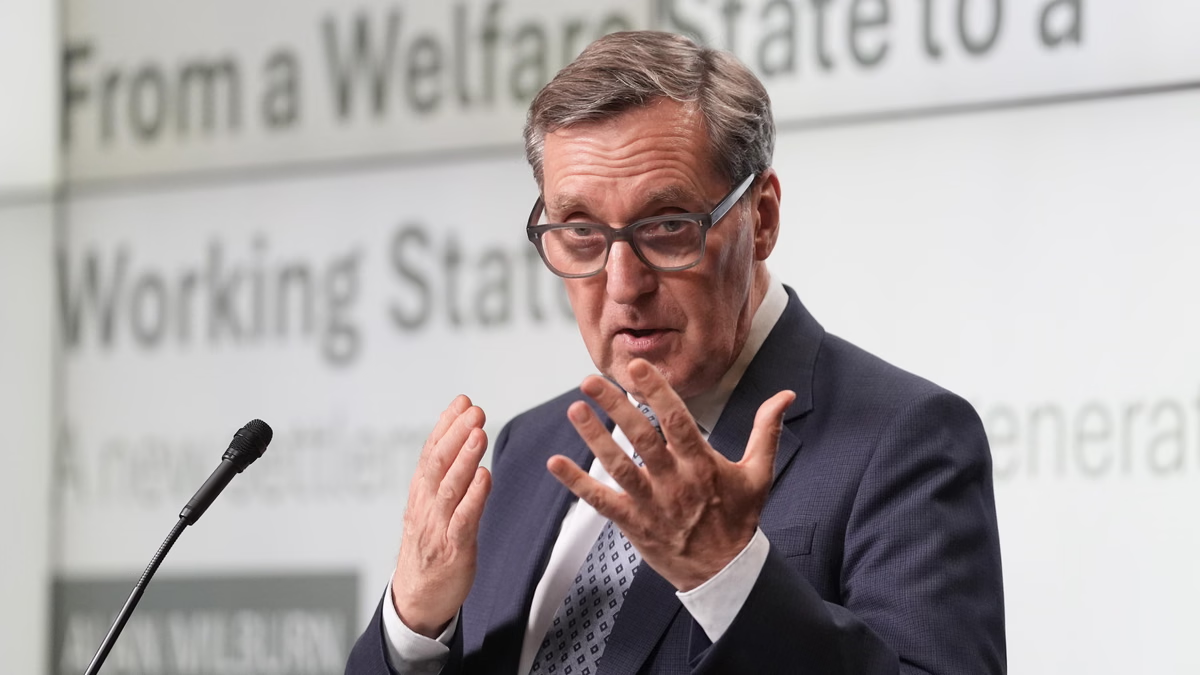
Alan Milburn has urged the government to implement business tax cuts and regulatory relief as a strategy to incentivize youth hiring, a move that threatens to ignite friction with trade unions and the Labour left regarding employment standards. The former health secretary unveiled his comprehensive year-long review on Wednesday, an initiative Prime Minister Andy Burnham described as a watershed moment for the younger generation. Telling cabinet colleagues it represented a “comprehensive vision” for how to change the welfare, health and education systems for young people to help them into work, burnham welcomed Milburn’s report on Tuesday. In a humiliating retreat that arguably set in motion his eventual departure from office, the former prime minister backed down in the face of opposition from his own MPs. According to andrew Griffith, the shadow chancellor,, Labour was pressing ahead with an “unemployment act” that would hit youth jobs. “You cannot solve a youth jobs emergency without jobs, and this government has spent two years destroying them.”.
Although ministers have expressed support for the central proposal to redirect sickness and benefit payments toward robust employment services, Milburn’s suggestions concerning national insurance, minimum wage hikes, and workers’ rights present significant political challenges.
In his 278-page report, Milburn advocated for national insurance reductions for firms that employ young people, recommended applying a cautionary principle toward the prohibition of zero-hours contracts, and advised a slower approach to increasing youth minimum wage rates.
Milburn framed the strategy as a necessary bargain, stating that employers should provide initial opportunities while the government makes those hires less risky. Despite the call for expanded state support to assist the nearly 1 million young people not currently in education or training, trade unions have voiced concerns over several of these proposals. “ A new bargain needs to be struck between employers and government: employers should create more first chances; government should make it easier and less risky for employers to do so,” he wrote. “That is the give and the get.”. With several of the architects of last year’s rebellion speaking in favour of the proposals, early signs suggest the outreach efforts have been successful. Maxine Bligh, the interim chief executive of the Recruitment and Employment Confederation, said: “Tackling the Neet [not in education, employment or training] crisis gives ministers the perfect opportunity to reconsider. With a central estimate of £1.1bn, government analysis published this year showed estimated costs to employers could range from £350m to £2.9bn a year.
Trades Union Congress general secretary Paul Nowak urged the government to proceed with guaranteed hours rights, arguing that the past fifteen years have disproven the theory that insecure, low-paid work benefits the economy or young people’s career prospects. Meanwhile, shopworkers’ union Usdaw general secretary Joanne Thomas emphasized that critical policies regarding fair, secure, and dignified work must remain protected.
Under the proposed plan, approximately £2bn annually would fund a youth opportunity service, offering tailored support for a guaranteed pathway into training or work. An additional £2bn would support vocational training and apprenticeships, supplemented by £1bn in direct corporate incentives. To fund this, the report proposes replacing existing disability and sickness benefits for 18-to-24-year-olds with a single youth allowance, restricted to those with significant, ongoing conditions. Which would be replaced by a new allowance available only to those whose conditions are “well established, significant and ongoing”, people aged 18-24 would no longer be able to claim personal independence payments.
While this restructuring could save £3.6bn in benefits and generate £2.4bn in tax receipts by 2036-37, these funds would largely cover the £5.8bn cost of the new system. Ministers are keen to avoid the backlash that accompanied previous failed attempts to modify disability payments, which contributed to a major political retreat for the former administration. That money would be almost entirely swallowed by the £5.8bn cost of the new system, Milburn said. Ministers and Milburn have worked hard to avoid the response that greeted Keir Starmer’s attempts last year to cut the benefits bill by £5bn by restricting access to disability payments.
Initial reactions indicate some success in consensus-building, as notable former critics have offered qualified support, with work and pensions select committee chair Debbie Abrahams calling the review a generational opportunity. Nevertheless, Burnham and Work and Pensions Secretary Pat McFadden stopped short of endorsing the specific national insurance or zero-hours contract recommendations.
McFadden stated that the government would carefully evaluate the financial implications of employment costs.
On the matter of the minimum wage, Milburn urged continued caution regarding rapid increases to youth rates, citing potential unintended consequences of current policy trajectories. Business leaders have largely welcomed the recommendations, particularly the proposed tax breaks for companies hiring under-25s, as they continue to lobby against provisions in the government’s Employment Rights Act. On the minimum wage, Milburn urged ministers to continue applying “caution” when judging how quickly to increase the youth rate, after Labour promised in 2024 to raise it to the same level as the adult rate. He warned: “There is a risk that in trying to address a legitimate challenge, the solution has unintended consequences, and on banning zero-hours contracts. With bosses finding a warm reception from Kemi Badenoch’s Conservatives, industry chiefs have intensified their lobbying against the government’s Employment Rights Act.