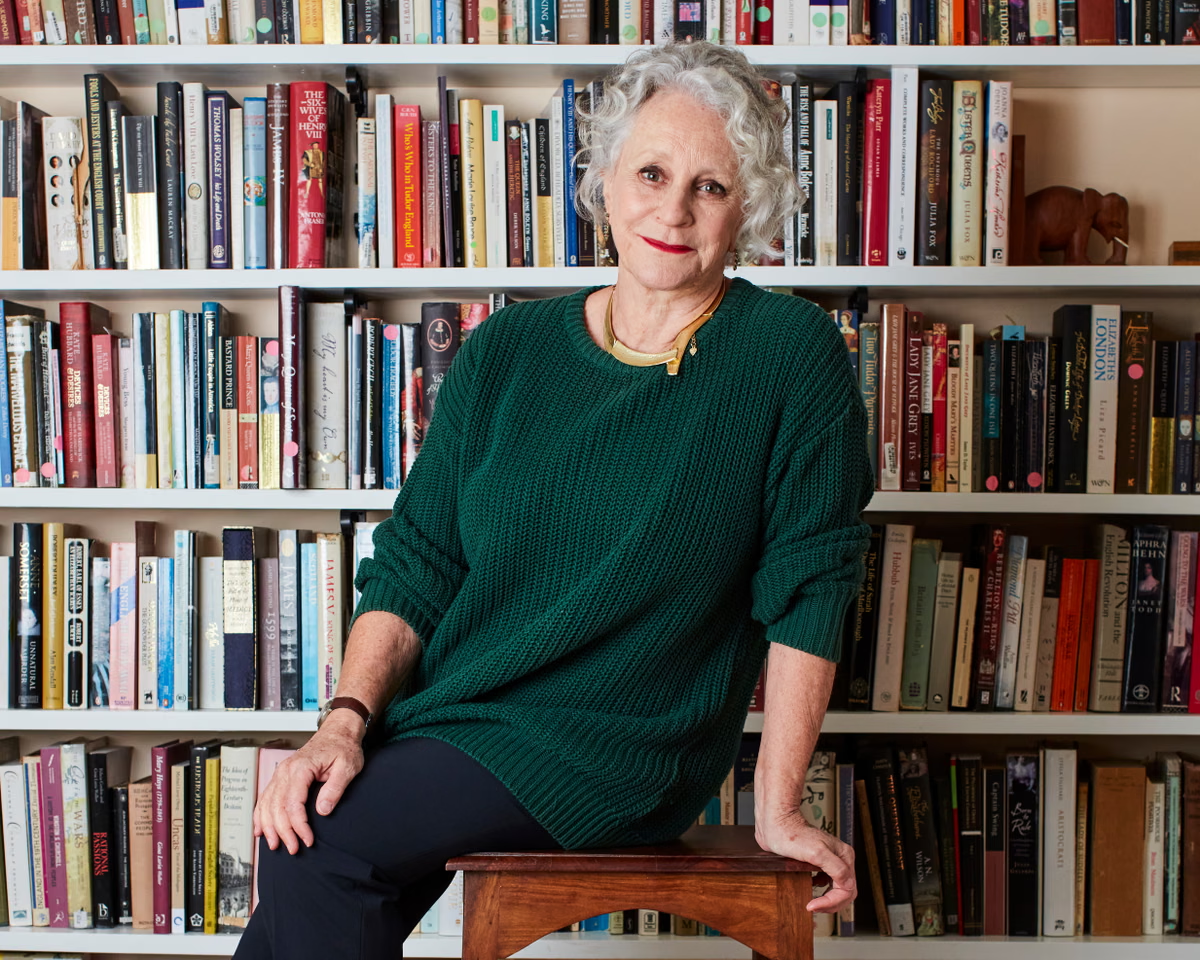
Author Philippa Gregory traces her lifelong engagement with literature back to her early childhood, noting that she began reading text independently by the age of three. During her youth, she was a prolific library user, often borrowing four books every week. Her foundational appreciation for historical fiction was ignited by Alison Goudge’s The Little White Horse, a book she praised for its blend of gothic fantasy and history, which she later introduced to her own children.
As a teenager, Gregory was an avid reader who explored a wide range of genres. She cited Rudyard Kipling and historical fiction writers like Georgette Heyer as major influences. Among the authors she studied, Jane Austen holds a position of prominence; Gregory considers her the most refined writer in the English language due to her precise and economical prose style.
The study of history also played a pivotal role in shaping Gregory’s professional outlook. She recalled the profound impact of reading EP Thompson’s The Making of the English Working Class. The work acted as a revelation, illustrating the power of historical narrative and demonstrating how writers can uncover hidden stories. This perspective serves as a guiding model for her own historical writing today.
Reflecting on her later reading habits, Gregory admitted that her appreciation for Charles Dickens developed in adulthood. She now views him as a master of the substantial novel, specifically highlighting Dombey and Son. She noted that the book expertly balances the sentimental depiction of a vulnerable child with the cynical ambitions of a social climber, creating a narrative that remains consistently unpredictable.
For comfort and rereading, Gregory turns to Iris Murdoch’s The Sea, the Sea. She finds the novel’s exploration of vanity, greed, and human connections deeply engaging, despite its focus on an elderly theatre director living at the coast. More recently, she has discovered the works of the Anglo-Irish novelist Molly Keane. Gregory expressed admiration for Keane’s ability to use the lives of the wealthy elite in books like Good Behaviour to highlight the underlying injustices of a bygone society, praising the author for her significant charm and storytelling capability.