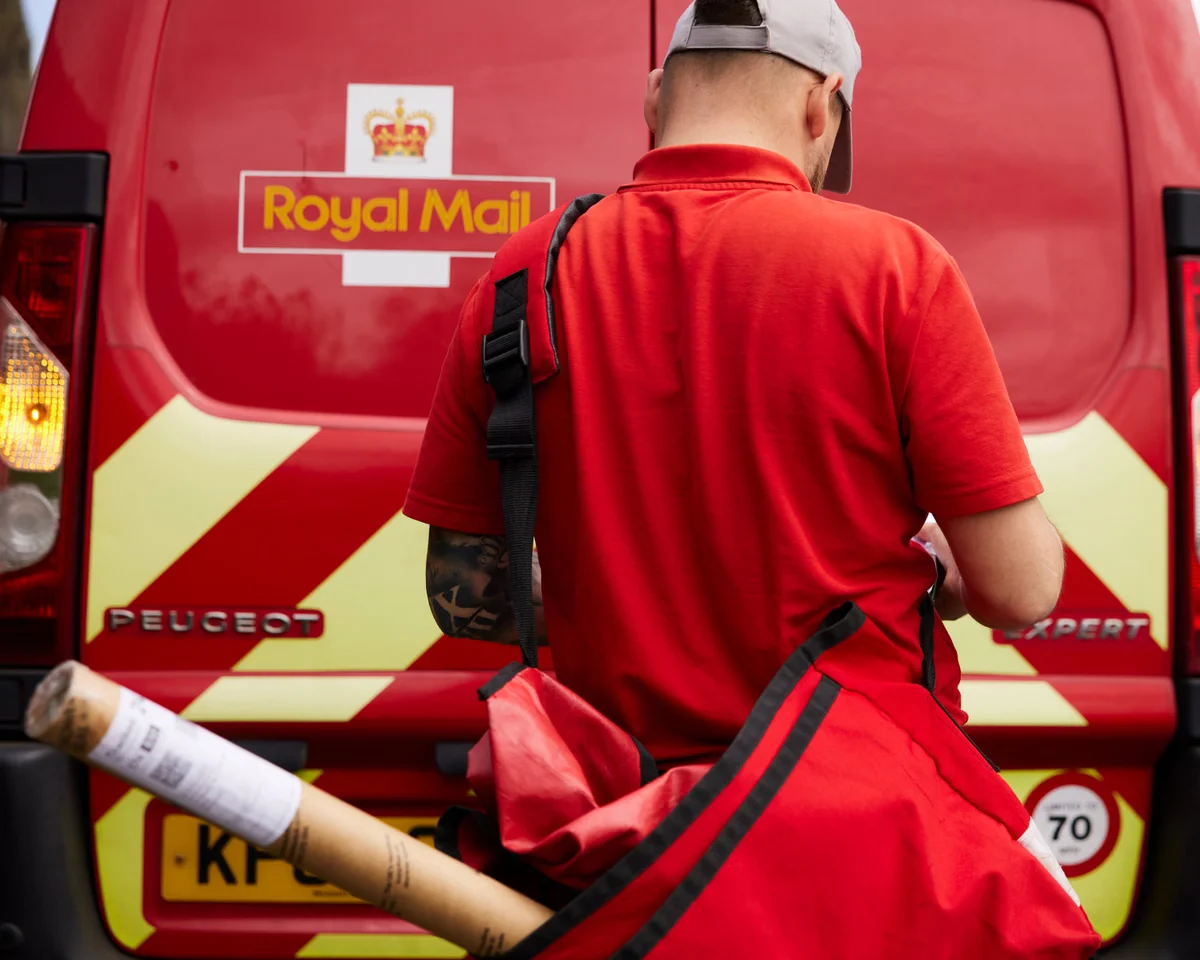
Royal Mail has announced plans to reduce its workforce by up to 2,500 positions as it embarks on a major business restructure. The company is responding to intense market competition and a steep, long-term decline in letter delivery volumes. These planned reductions represent less than 2% of the company’s total workforce of more than 131,000 employees.
Alistair Cochrane, chief executive of Royal Mail, stated that the organization is working to simplify internal processes and reduce costs to remain competitive. He noted that the changes aim to remove operational duplication, though acknowledged they will be difficult, describing them as a necessary step to build a more sustainable future for both customers and staff. “The proposed changes will not be easy, but they are an important part of building a stronger, simpler and future-ready Royal Mail for our customers and colleagues.”.
Management confirmed that the restructuring, which is scheduled to conclude by the end of next year, will prioritize head office and “support function roles.” The company emphasized that there will be no compulsory redundancies, with the total reduction achieved instead through a voluntary exit programme and “natural attrition.” Importantly, frontline operational roles, including delivery staff, processing personnel, and drivers, will not be impacted by these cuts.
The announcement follows a challenging period for the service, which has faced £37m in fines from the regulator Ofcom since 2023 for failing to meet delivery targets. Further data highlights that letter volumes have dropped more than 70% from their mid-2000s peak. Ten years ago, Royal Mail delivered 20 billion letters annually; that figure has fallen to 6.7 billion and is projected to shrink to 4 billion within four years, even as the number of addresses the company serves has increased by 4 million. In June, the postal regulator launched an investigation into Royal Mail for once again missing its annual delivery targets, with almost a quarter of first-class mail arriving late.
Labor unions have reacted with sharp criticism. Martin Walsh, deputy general secretary of the Communications Workers Union (CWU), noted that approximately 200 of their members in administration and revenue protection departments are affected. He described the move as evidence of a company demoralizing its staff and called on the government to intervene to protect the institution. Sharon Graham, general secretary of Unite, warned that without urgent action regarding gig economy competition and regulatory issues, the company will continue to fail customers and shed more jobs.
This restructuring comes shortly after the completion of a £3.6bn takeover of Royal Mail’s parent company, International Distribution Services, by Daniel Křetínský’s EP Group. It marks the first significant round of job losses since 2022, when the company sought to eliminate up to 10,000 roles. Despite the overall staff reductions, Royal Mail recently confirmed it will hire 22,000 temporary workers to manage the surge in mail and parcels during the upcoming Black Friday and Christmas seasons. “The answer cannot simply be another round of job cuts. Last week, the company announced it was to hire 22,000 temporary workers – in roles including sorting, delivery and collection and HGV and MGV drivers – to cover the seasonal jump in mail volumes, including online purchases over Black Friday and Cyber Monday in November, and Christmas deliveries.
Financial pressures remain a central concern. In April, the cost of a first-class stamp rose by 6% to £1.80, a price that has more than doubled since 2020, while second-class services increased to 91p. Royal Mail attributed these hikes to the rising costs of delivering individual letters. Additionally, in July of last year, Ofcom granted permission to loosen the universal service obligation, allowing the company to drop second-class Saturday deliveries and shift to an alternate-day schedule for the remainder of the week. Or for second-class mail since 2020, royal Mail has not hit its Ofcom-mandated delivery target for first-class post since 2017. Or 5%, to 91p, the cost of the second-class service rose by 4p.