
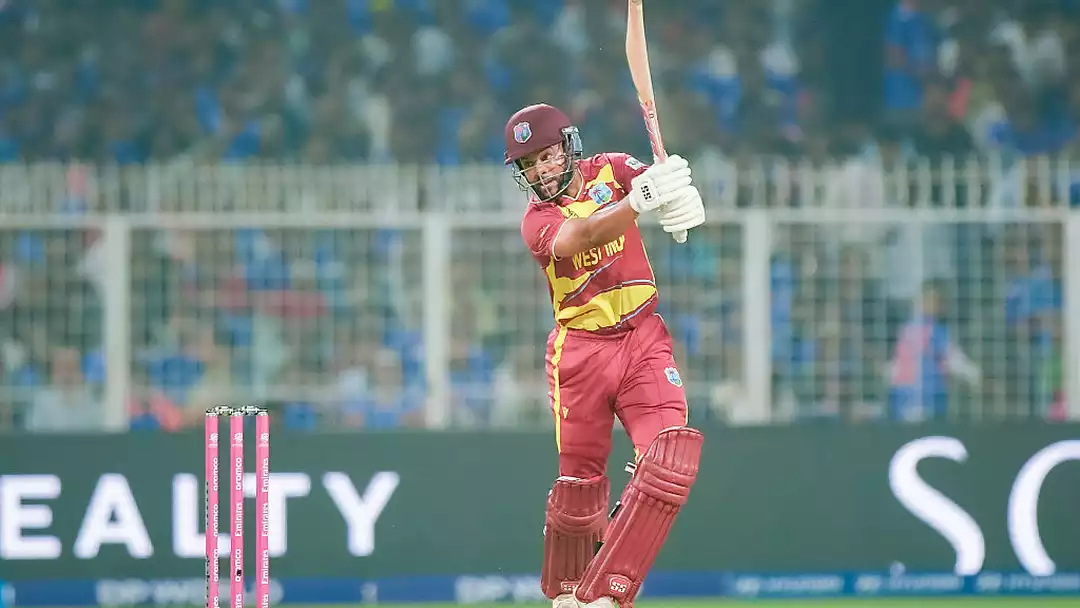
Shai Hope knows firsthand how unforgiving touring India can be. Reflecting on his initial 2018 visit as a 25-year-old, the West Indies captain recalls a rollercoaster of form that began with a match-saving unbeaten century in a tied game and a follow-up 95, only to be immediately undone by two consecutive ducks. One of those failures occurred at the Greenfield Stadium, where the current series opener is set to take place. As a 25-year-old in 2018, his ODI returns ranged in the extremes, the first time Shai Hope toured India. Incidentally, one of those two ducks in 2018 came at the Greenfield stadium, then hosting its debut ODI. There are others in Hope’s position from 2018, looking to make a dent as first-timers in India. It’s one that we definitely need to grasp and embrace”.
Now a veteran leader, Hope is eager to guide his younger teammates through the unique pressures of the subcontinental challenge. Recalling his youth, he noted, “When I was younger in my career as well, for the tour, I was expecting a lot from myself. I wanted to see where I was at.” He successfully applied those lessons during his subsequent India tour, where he averaged over 150 with two further unbeaten centuries, and he hopes to see his squad replicate that growth. But playing India in their backyard is always a challenge.
The central theme for the touring side is consistency, a quality that has historically proven elusive. Since 2025, the team has struggled to string results together, winning just one of seven bilateral series. With a 27.27% win rate—the second-lowest globally—the tenth-ranked West Indies face an uphill battle, having missed automatic qualification for the World Cup. For Hope, the series against top-tier India represents the perfect litmus test to measure the squad’s actual progress. “Consistent performance will keep us in good stead for the preparation for the World Cup. I just think the consistency factor will allow us to be a lot better as a team going forward in the ODI”.
“We’ve seen great sparks from different series and from different people in West Indies cricket,” Hope observed. “It’s about repeating that, trying to get those performances rather than one or two games, just try to extend that for two, three, four series.” He remains pragmatic, noting that while the team has narrowed the gap by approximately 19-20 points relative to higher-ranked opponents, they must perform more reliably to reach the elite tier of the sport.
The historical context remains daunting, as West Indies have not claimed an ODI series victory in India since 2002, with India winning all 13 series encounters since 2006. While Hope acknowledges the statistical weight of these numbers, he maintains that the team is making commendable strides. He views the upcoming matches as a critical opportunity for self-improvement rather than just an intimidating fixture.
Tactical changes have been necessary, particularly as the team struggles to find stability at the top of the batting order. Since the 2023 World Cup, the side has utilized eight different openers and 11 distinct opening pairs, averaging a league-low 23.4 runs. Hope, who has shifted down the order, emphasized that adapting to local conditions is vital for the newer generation of players like 19-year-old Jewel Andrew and 29-year-old Amir Jangoo.
The bowling unit appears to be finding a more stable rhythm. Jayden Seales has shown promise in the ODI format, while Matthew Forde and Alzarri Joseph both finished as joint-top wicket-takers in the 2026 CPL. The spin attack has also seen positive developments with the form of Gudakesh Motie and the addition of 19-year-old Vitel Lawes, who impressed during the recent New Zealand tour.
Hope remains wary of the “bright sparks” that often fail to catch fire consistently. He cited the recent New Zealand series, where the team surrendered a 1-0 lead to lose three straight matches. Following a narrow one-wicket loss in the fourth ODI, teammate Amir Jangoo had even suggested the squad did not deserve their World Cup Qualifier spot, highlighting the team’s internal frustration with their own lapses.
Despite these challenges, the captain remains focused on the long-term goal. “If you want to be the best, No.1, No.2, No.3, you’ve got to do it more consistently,” he said. By emphasizing rigorous preparation and high-level training, Hope hopes the squad can transform those fleeting moments of brilliance into a sustained competitive edge on the international stage.

Comments