
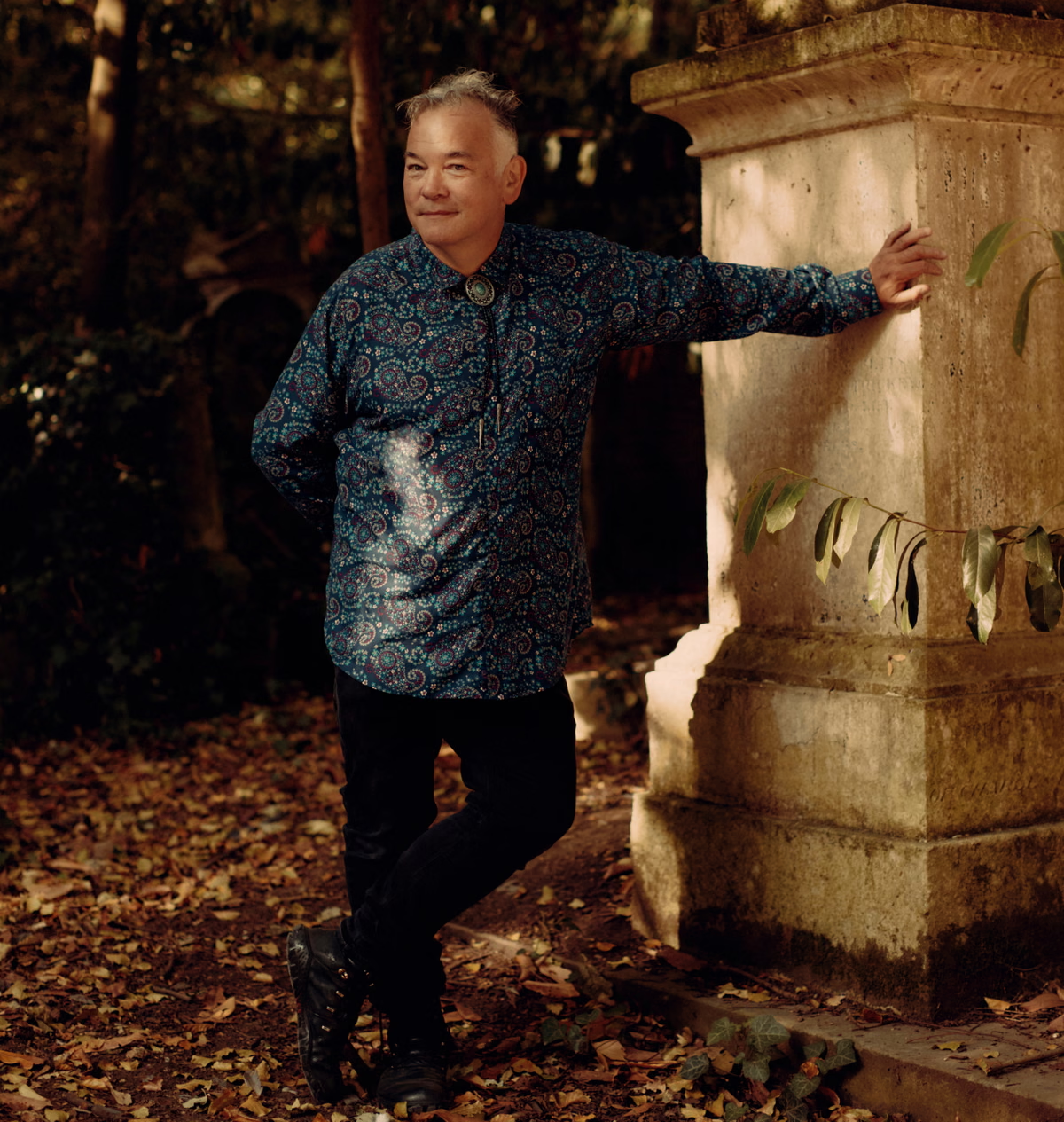
Stewart Lee is currently navigating the domestic chaos of returning from tour, fretting over a collection of records that require alphabetizing. His home is a dense archive of his interests, filled with posters for spaghetti westerns, avant-garde Welsh harpists, and the band The Fall. Now 58, the comedian is nearing his 60th birthday, a milestone that has prompted him to consider compiling his life’s work into a cohesive physical collection of 13 numbered DVDs.
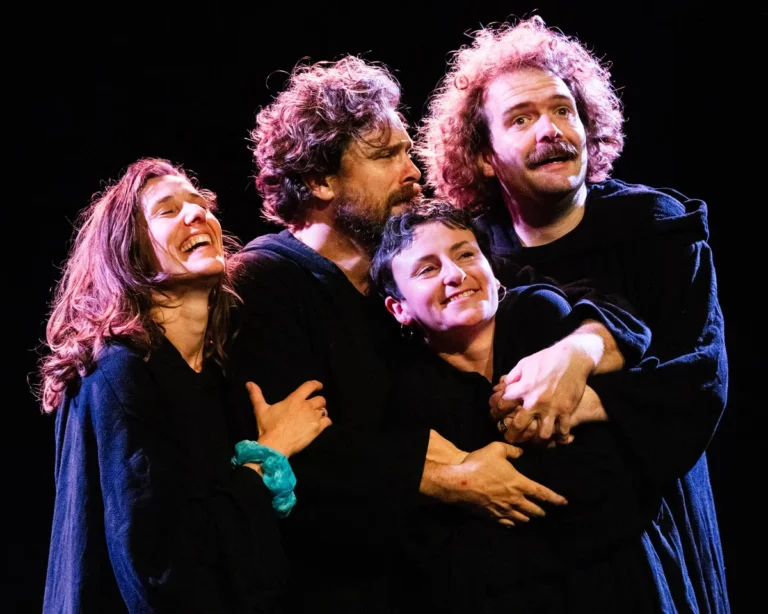
His latest showStewart Lee vs the Man-Wulffeatures the comedian engaging in a complex dialectic with a werewolf representing toxic masculinity. Lee notes that the political climate has only grown more difficult during the 18 months he has been performing the piece. He admits to a modern dilemma: the struggle to satirize right-wing politics without inadvertently causing the very distress that such figures thrive upon. He remains careful not to alienate his audience, aiming for a balance that avoids genuine upset.
Reflecting on his personal life, Lee discusses the period following his 2021 separation from his wife, comedian Bridget Christie, whom he married in 2006. He has found himself living in close proximity to his old haunts from the 1990s, including a spot near a shop where he once lived in such dire poverty that he had to dispose of his waste in plastic bags. Despite the hardships of that era, he finds his current situation surprisingly comfortable.
Lee’s life has been marked by a search for identity, rooted in his adoption at the age of two after spending his infancy in foster care. He describes himself as being from the “exact centre of society,” having been supported by a masonic charity that provided educational assistance to orphans. This background eventually led him to Oxford. He only began to deeply contemplate his origins when he and Christie were expecting their own child in 2006.
His recent travels included a trip to the west of Scotland to join his half-sisters in scattering their birth father’s ashes in a river. During this trip, he stayed in a treehouse booked via Airbnb, which turned out to be a genuine structure requiring a slide for exit—a detail he finds amusing given his own self-perception. He also reflects on his connection to the 1973 filmThe Wicker Mannoting that the film’s iconic wicker feet are the same age as him, 53, and that he feels a strange, significant link to the landscape where it was filmed.
His career trajectory has been equally unconventional. After a successful start in the 90s with his double act with Richard Herring and the television seriesFist of FunLee hit a low point by 2000. He had become disillusioned with the industry, feeling that his perfectionism and his desire to treat standup as a serious craft were at odds with the commercial demands of the time. He recalls a period of intense struggle between 2005 and 2015, during which he wrote roughly 15 hours of standup material, a process he describes as “going round the bend.”
A major inflection point occurred with his musicalJerry Springer: The Opera. Despite the controversy and subsequent bans that followed, the show was a significant critical success, winning numerous accolades including Laurence Olivier and Evening Standard awards. The experience taught Lee that comedy could be silenced, reinforcing his belief in the importance of pushing boundaries. Since then, his work has remained surreal and resistant to simple political categorization, though he notes that Brexit served to re-radicalize his perspective, leading to his work as a columnist.
Currently, Lee is revisiting his past throughPea Green Boata book based on a show he first devised in 2001. The project, which saw a pared-down radio adaptation in 2004, has been revived with illustrations by David W. He views this as a way to find meaning in his earlier work, acknowledging that the “road to Damascus” moment for his career occurred at 16, when he saw a comedian supporting The Fall. That performance shattered his preconception that a comedian had to be a high-energy, confident performer.
As he looks toward the future, Lee observes the current landscape of comedy, noting the rise of figures his children might label as “edgelords.” He remains focused on his own craft, finding that audiences today are generally supportive and appreciative of his work. Despite the “rocky few decades” he has endured, Lee appears to be finding a sense of contentment as he approaches his 60th year. The report also notes that s tewart Lee is somewhat fretfully tidying his kitchen. The report also notes that plus, he says, “I’ve come back with a load of records that need to be alphabetised, and that’s really stressing me out.” His house is miles from minimalist – posters everywhere, for spaghetti westerns, avant-garde Welsh harpists, the Fall (who he said in an interview in 2005 were the love of his life ) – but if anything was an inch out of place, he’d notice. The report also notes that like a guy doing an impression of a guy who needs things just-so, for the comic effect of how absolutely impossible that guy would be, but at the same time, it’s funny because it’s true, he puts things away with theatrical flourish. The report also notes that he would be much more explicitly racist and homophobic and transphobic now. The report also notes that being unable to even satirise the right without causing the distress it lives for, but you don’t want people to be really upset in the room.” It feels quite a 2026 dilemma. The report also notes that as if to ask, “Can you imagine me going down a slide?”, although the answer – looking at his skater-boy aesthetic, record‑label T-shirt, shorts – is, in fact, yes, he gestures vaguely at himself.




Comments