The United Kingdom economy recorded surprise growth in August, rising past predictions despite escalating borrowing costs and energy prices. Data from official channels revealed a 0.1% expansion during the month, defying forecasts from analysts who anticipated a slight contraction.
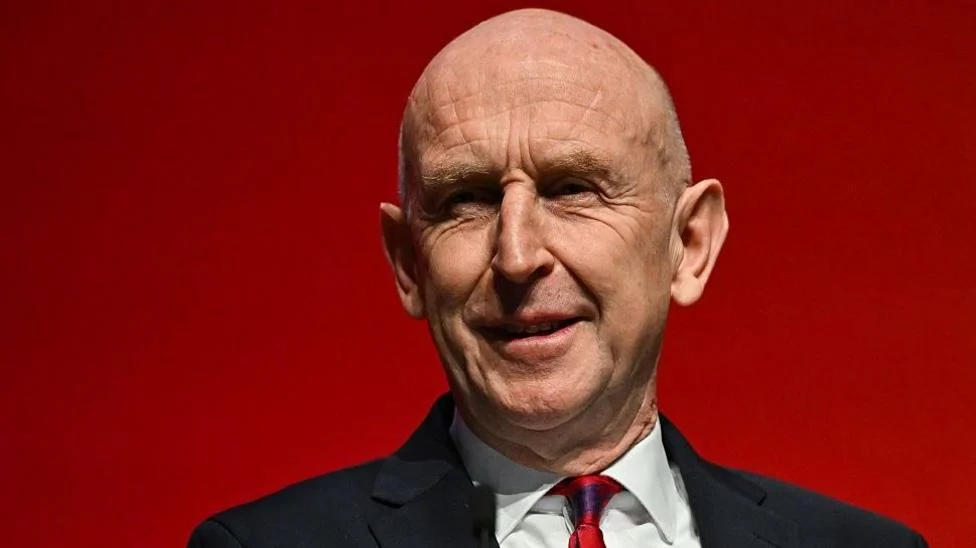
This performance pushed the three-month growth rate to 0.7% through August, following an upward revision of this year’s economic forecasts by the International Monetary Fund. Chancellor John Healey, preparing to deliver his inaugural Budget in two weeks, noted that the nation continues to display strength amid ongoing international conflicts. According to the Conservatives, The economic growth figures “conceal worrying trends in key sectors as we approach a crucial Budget”.
Production increases across manufacturing, energy supply, and resource extraction provided the primary boost in August. Meanwhile, the dominant services sector remained unchanged, and the construction industry experienced a downturn.
Liz McKeown, director of economic statistics at the Office for National Statistics, pointed to computer programming as the main driver behind the robust quarterly performance, though she confirmed contractions in both production and construction over the three-month window.
August’s unexpected expansion builds on a 0.4% increase in July, alongside an upward adjustment for June’s monthly growth to 0.4% from the prior estimate of 0.3%. Capital Economics chief UK economist Paul Dales described the domestic economy as surprisingly robust, though he cautioned that rising inflation could weigh on future momentum.
PwC senior economist Jake Finney added that infrastructure development centered on artificial intelligence is supporting the nation’s steady trajectory. While lagging behind American investment levels, the UK maintains a stronger position than many European counterparts. But it is making progress and remains ahead of many of its European peers,” he added, the UK still lags the US in both the scale of that investment and the boost it provides to growth.
The latest economic indicators arrived as Healey traveled to Bangkok for the annual gatherings of the IMF. Earlier in the week, the global financial institution commended British debt-reduction strategies, with managing director Kristalina Georgieva noting that the country’s growth outlook surpasses several G7 peers.
Responding to the data, Healey emphasized that current metrics demonstrate national resilience against global volatility. He highlighted recent IMF upgrades for 2026 and reiterated plans for the upcoming Budget to secure stability and create future opportunities. Today’s figures offer more proof of Britain’s resilience in the face of these global shocks, healey said: “Despite conflicts in the Middle East and Europe hitting people across the world. According to this week the IMF have upgraded UK growth for 2026 and, Our fiscal discipline stands out with the lowest deficit in the G7 forecast by 2029. Which were praised by the IMF, and use the Budget to “provide some breathing space for today, and offer fresh hope for the future”, he promised to build on the UK’s debt reduction plans.
Opposition critics offered a different perspective, arguing that the broad numbers obscure persistent weaknesses in vital sectors. Shadow chancellor Andrew Griffith pointed to four consecutive months of contraction in construction, particularly within private housebuilding, and urged the government to implement tax cuts and reduce regulatory burdens.