
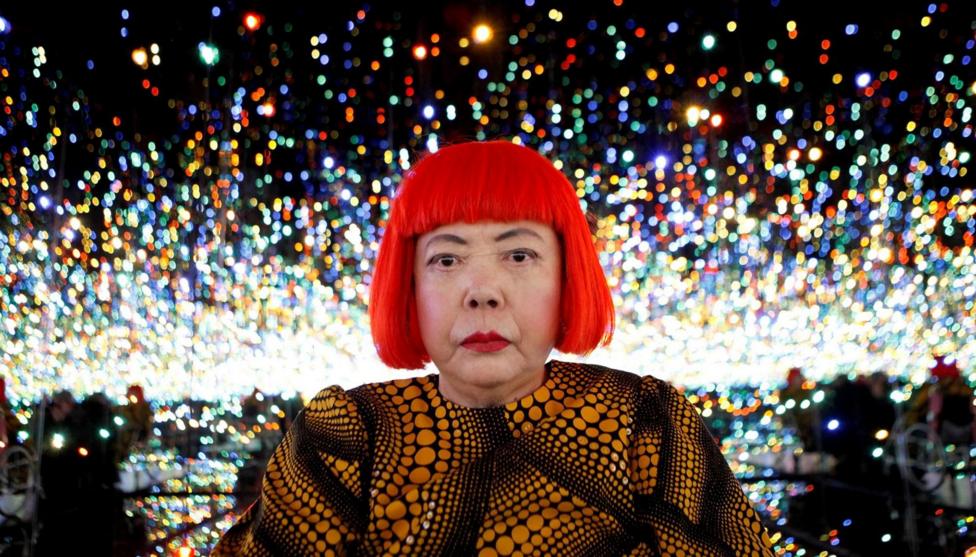
Yayoi Kusama, the influential Japanese avant-garde artist whose signature polka-dot motifs and expansive installations captivated global audiences, has died at the age of 97. Her passing marks the end of an extraordinary career that spanned decades, evolving from a misunderstood outsider in the mid-century New York art scene to a celebrated cultural icon.
A Life Dedicated to Creation
According to an official statement, Kusama died at a hospital in Tokyo on 14 August. Her company noted that she remained committed to her craft until her final days, continuing her lifelong exploration of eternal love and the soul. The organization concluded by affirming its commitment to her vision: “We will carry forward Kusama’s wishes and, through art, continue to bring hope and strength for the future to people around the world.”
Early Struggles and Artistic Origins
Born in 1929 in the rural town of Matsumoto, Nagano, Kusama’s artistic journey was fraught with early resistance. Her family, deeply conservative, viewed her creative pursuits with disdain, often telling her that her work brought shame to their household. As a child, she experienced persistent hallucinations, including visions of flashing lights and embers. She famously described a moment where a red flower pattern on a tablecloth seemed to multiply, eventually covering the ceiling, windows, and her own body—an experience she later channeled into her art to help others perceive her unique vision of the world.
The New York Years
In the 1960s, Kusama moved to New York, where she encountered a male-dominated art world that frequently dismissed her contributions. Her exhibitions—which often featured nudity and provocative phallic sculptures—drew significant controversy. She later expressed deep distress as she watched male contemporaries like Andy Warhol, Claes Oldenburg, and Lucas Samaras gain prestige and recognition for concepts she felt were heavily influenced by her own work. Feeling dejected, she eventually returned to Japan.
Finding Sanctuary and Global Success
Upon returning to Japan, Kusama voluntarily checked into a psychiatric facility, where she found a supportive environment that allowed her to focus entirely on her art. This period of stability proved transformative. Her “Infinity Mirror Rooms,” first introduced in 1965, utilized mirrors and lights to create the illusion of endless space, eventually attracting millions of visitors worldwide. Her fascination with nature also became a core theme, particularly her iconic pumpkin sculptures, of which she once remarked, “Pumpkins speak to me. They embody a sense of stability and gives me peace of mind.”
Legacy and Recognition
- Kusama became the first Japanese woman to represent her country at the 1993 Venice Biennale, a milestone that signaled her shift from obscurity to international acclaim.
- In 2001, she received the prestigious Asahi Prize for her significant contributions to Japanese culture and art.
- Her market value soared in her later years; in 2022, one of her paintings sold at auction for approximately $10.5 million, cementing her status as one of the highest-earning female artists in history.
- Her work reached a massive audience through high-profile collaborations, including a 2023 partnership with Louis Vuitton that featured a giant sculpture of the artist outside the brand’s Paris flagship store.
- Major exhibitions continued to draw crowds late into her life, including a significant 2023 retrospective in Manchester and a 2025 installation in Basel that blended her trademark polka dots with balloon art.
By the time of her death, the world had fully embraced the artist who was once overlooked. Her legacy remains defined by her ability to turn personal struggle into a universal language of color, pattern, and infinite possibility. The report also notes that miraculously, she managed to find a hospital where the doctors were interested in art therapy and checked herself in. The report also notes that her work depicted uncharacteristically dark series’ of collages in which she embraced the imagery of natural life cycles, through the 1970s and early 80s. The report also notes that she had turned up, uninvited, and laid down 1,500 mirror balls on the ground, twenty-seven years earlier. The report also notes that the roaring success of the exhibition led to a huge transformation in how she was received both in Japan and abroad. The report also notes that making her works some of the highest-earning in the world for a female artist, one of her paintings fetched about $10.5m (£7.7m) at auction in 2022. The report also notes that one day, after seeing a tablecloth with a red flower pattern on a desk, I saw the same red flower pattern all over the ceiling, windows and pillars. The report also notes that and covered my body,” she wrote in her autobiography, it filled the room. The report also notes that her parents did not support her early moves to study painting in Kyoto.






Comments