
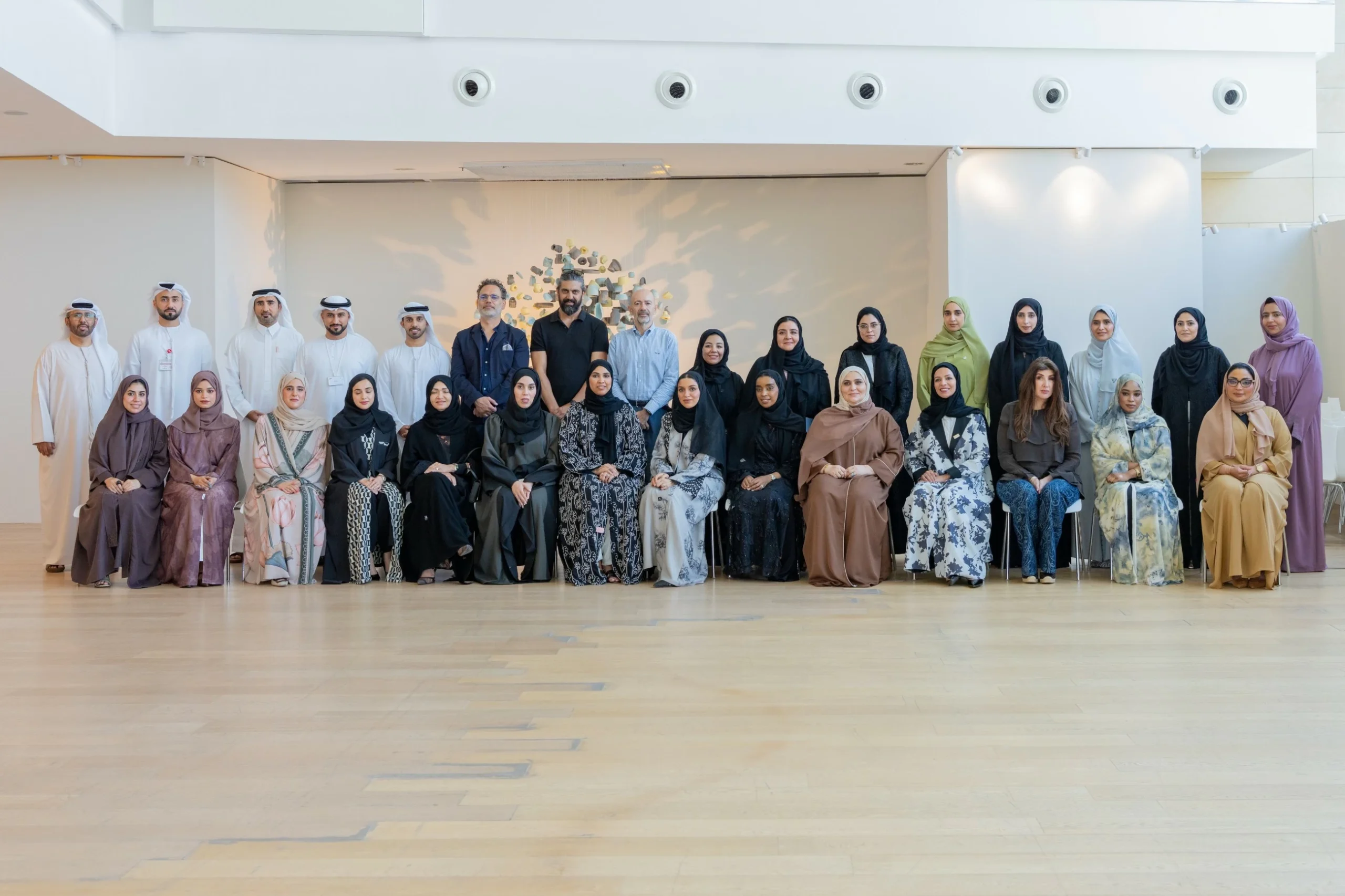
In a strategic move to bolster the role of the arts within the educational landscape, the Dubai Culture & Arts Authority (Dubai Culture) has partnered with the Knowledge and Human Development Authority (KHDA). The two entities recently hosted a brainstorming session titled ‘Innovation Lab: Integrating Arts and Design into the Educational System.’ This initiative is designed to explore practical mechanisms for embedding comprehensive arts and design modules into private school curricula, while simultaneously establishing a robust framework to identify, nurture, and empower talented students. By advancing creative education, the initiative aims to equip future generations with essential innovation skills, reinforcing Dubai’s status as a global hub for the creative economy.
The session, hosted at the Al Jalila Cultural Centre for Children, convened senior leaders and staff from both Dubai Culture and the KHDA. The participants engaged in rigorous discussions regarding the current state of arts education in schools, identifying both the opportunities and the systemic challenges involved in advancing creative learning. The scope of the discussion was broad, covering the integration of creative writing, music, theatre, visual arts, design, culinary arts, project-based learning, and extracurricular reading. The objective is to create a holistic school environment that supports the early identification and development of young talent through diverse creative avenues.
During the event, attendees reviewed existing creative programmes currently active in schools, alongside international best practices that could be adapted to the Dubai context. The session concluded with several actionable recommendations, including a commitment to conduct a comprehensive study to identify policies and programmes suitable for school-wide implementation. Furthermore, the participants agreed to map out opportunities for future collaboration with relevant stakeholders and to define priority initiatives for both short-term and long-term implementation. This collaborative approach is intended to create a learning environment that prioritizes creativity and innovation as core components of the student experience.
Ahlam Al Bannai, Director of the Al Jalila Cultural Centre for Children, highlighted the significance of the session, noting that it represents a vital step toward a shared vision for arts in education. She stated: “The arts are a fundamental pillar of an education system capable of preparing future generations with the skills of innovation, critical thinking and creative expression, enabling them to meet the demands of the future.” Al Bannai added that the session creates new opportunities for students to discover their unique talents and abilities from an early age, while ensuring the development of high-impact initiatives that deliver sustainable outcomes for the education sector.
The emphasis on arts education is supported by broader academic research, including findings from the American Academy of Arts and Sciences, which asserts that arts education is vital for the personal and professional development of citizens, as well as the economic growth and social sustainability of communities. According to the Academy, arts education builds well-rounded individuals, broadens understanding of diverse cultures and histories, and supports social and emotional development. It is also credited with building empathy, reducing intolerance, and improving school culture. By engaging with the past through art, students move beyond textbooks, gaining a deeper understanding of human history and the experiences of those living in different times and places.
The landscape of arts education in the United Arab Emirates is expanding rapidly as the nation cements its position as a global cultural hub. While basic art and music are standard in early state curricula, private international schools are increasingly providing robust facilities, including specialised design studios and immersive arts pathways. A prime example of this growth is the A.R.M. Holding Children’s Programme, operated in partnership with Art Dubai. This programme connects prominent international and regional artists with over 15,000 students across more than 100 schools nationwide. Through hands-on, creative workshops specifically designed for children aged 5 to 17, the programme demonstrates the practical application of the collaborative vision shared by Dubai Culture and the KHDA.








Comments