
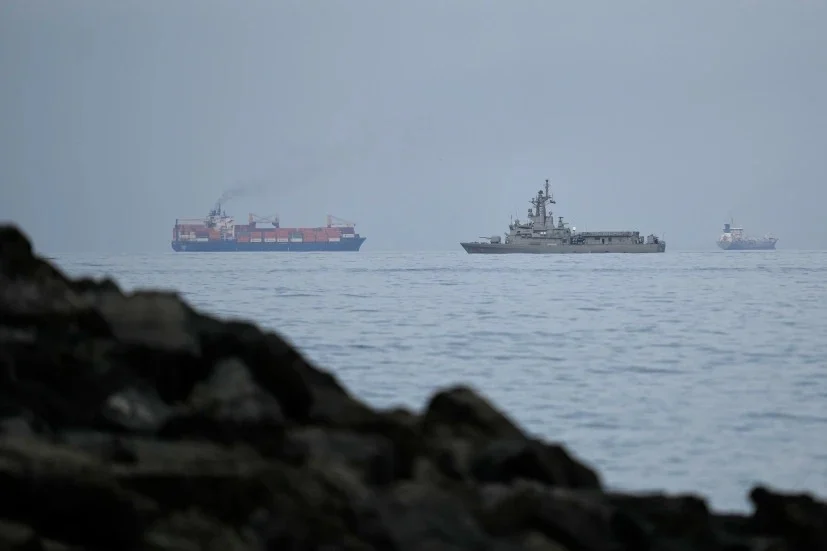
The Strait of Hormuz, a vital 21-mile-wide (34-kilometer) maritime passage connecting the Persian Gulf to the Gulf of Oman, has emerged as a central bottleneck for the global economy. Following the February 28 military engagement between the United States, Israel, and Iran, Tehran launched retaliatory strikes that effectively closed the strait, triggering a sharp spike in international oil prices.
Historically, this waterway serves as a primary artery for energy transit, with approximately one-fifth of the world’s traded oil passing through its lanes daily. Major exporters, including Saudi Arabia, Iraq, Kuwait, the United Arab Emirates, and Iran, rely on these narrow shipping lanes to navigate shallow waters and transport crude oil, as well as refined products like jet fuel, diesel, and gasoline to global markets.
While a significant portion of this energy supply is destined for Asian markets such as China, India, and Japan, the integrated nature of international oil pricing means that regional disruptions have immediate consequences worldwide. Shipping traffic has plummeted since the conflict began, driven by both a decline in regional production and heightened security risks. Iran has targeted energy infrastructure with missiles and low-cost, mass-produced drones, forcing some oil fields to halt operations.
As of March 17, Iran had directly targeted roughly 20 tankers. Although this number represents a fraction of total traffic, the persistent threat has caused insurance premiums to surge, discouraging many operators from attempting the passage. While Iran continues to move its own oil through the strait, the broader market remains constrained. Alternative pipeline routes exist to bypass the waterway, but their limited capacity is insufficient to replace the volume lost, and these facilities remain vulnerable to strikes, as evidenced by attacks on the Emirati port of Fujairah and the Saudi coastal site of Yanbu.
The resulting supply contraction has placed significant upward pressure on global fuel costs. In the United States, despite its status as a major oil exporter, the national average for gasoline has climbed above $4 per gallon—an increase of more than one dollar since the war commenced. Public anxiety is mounting, with recent polling indicating that 45% of Americans are “extremely” or “very” concerned about their ability to afford fuel in the coming months.
Governments have attempted to mitigate these pressures by releasing strategic oil reserves, yet these efforts serve only as temporary stopgaps. The long-term stability of the global energy market remains tethered to the duration of the conflict and the continued viability of this critical maritime chokepoint. The report also notes that oil prices spiked worldwide – and the oversized importance of the strait became crystal clear. The report also notes that here is a look at the strait’s significance in maps and charts. The report also notes that oil, it is used to transport a number of valuable commodities – most notably. The report also notes that the strait is roughly 21 miles (34 kilometers) wide, at its narrowest point. The report also notes that how much oil flows through the strait – and where does it go. The report also notes that disruptions in the Middle East affect prices everywhere, even in distant countries with their own resources, but because oil prices are set internationally. The report also notes that why did tanker traffic drop so much.








Comments