
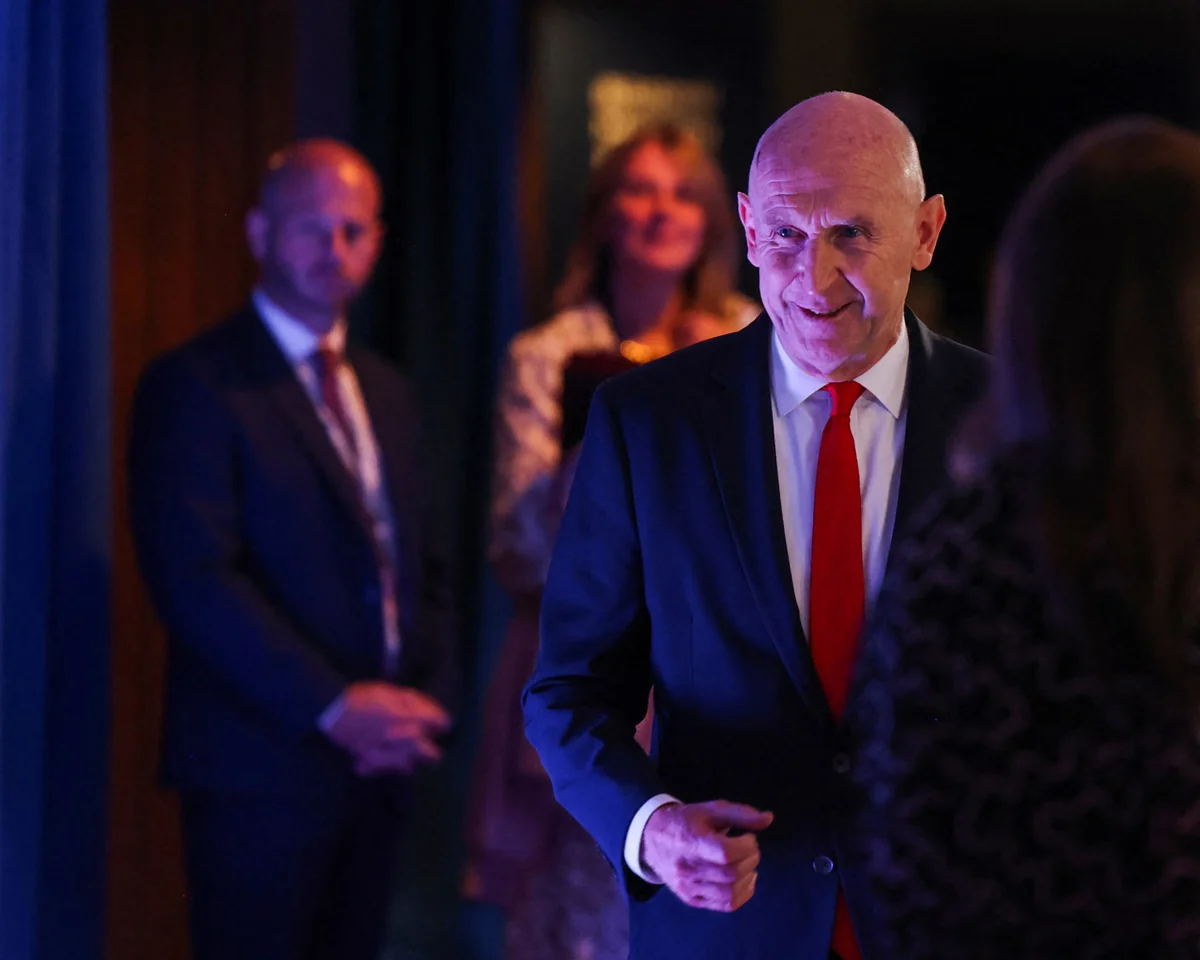
Chancellor John Healey is preparing to argue that the British economy is poised to “turn a corner,” despite significant anxiety surrounding volatile bond markets that threaten to complicate the government’s upcoming inaugural budget. In a speech scheduled for Monday in the West Midlands, the Chancellor will emphasize that fiscal discipline is “indivisible” from sustainable economic growth, particularly as the nation navigates a challenging global economic climate.
The Chancellor’s message comes amid internal concerns that his cautious fiscal stance may conflict with the more radical policy ambitions of Andy Burnham. Public finances are currently under strain due to global bond yields, which reached an 18-year high last week. This surge has increased government borrowing costs, leading Healey to warn of a difficult budget announcement on 28 October. Economists anticipate that the Chancellor, who has expressed a desire to maintain a “buffer against uncertainty,” may be forced to implement tax hikes or spending cuts to preserve the £24bn in fiscal headroom inherited from his predecessor, Rachel Reeves.
Addressing the broader economic strategy, Healey will outline plans to stimulate regional economies by reducing Treasury bureaucracy and empowering local leaders to foster innovation, skills, and business investment. He intends to argue that unlocking “huge latent potential” across every region is vital to proving that Britain is moving forward, with communities and businesses ready to leverage new technologies.
A Treasury source noted that the link between fiscal credibility and growth is critical, especially given warnings that the conflict in the Middle East—linked to Donald Trump—could exacerbate inflation and further stress public finances. While the Prime Minister has stressed that a dynamic economy requires robust infrastructure, including affordable energy and reliable transport, the government faces a setback in its reindustrialization efforts. Reports indicate that Jaguar Land Rover, a major employer in the West Midlands, is expected to announce thousands of job cuts.
During his manufacturing site visit, Healey will reiterate that growth must extend beyond major urban hubs. “The next chapter of Britain’s growth story will be written in more places,” he is expected to state, advocating for a “dual mission” where the national government works alongside the new No 10 North office to remove obstacles for local leaders. To support this, Healey will announce that the British Business Bank is allocating £150m to scale up northern enterprises, offering investments between £5m and £15m for university spinouts and innovative firms.
Healey’s focus on “place-based” growth builds on previous efforts to shift the Treasury’s gaze away from the south-east. He plans to contrast the economist’s view of growth as a mere number with the tangible reality of a young person securing a new job or a sole trader winning a contract that supports their family. Despite this, businesses remain wary of potential tax increases, and Healey has not ruled out raising levies on bank profits to address the fiscal deficit.
The Chancellor also faces scrutiny regarding defence spending targets. Business Secretary Jonathan Reynolds confirmed on Sunday that the government aims to spend 3% of GDP on defence by 2030, maintaining that the ultimate goal remains the Nato commitment of 3.5% by 2035. This follows Healey’s previous resignation from Keir Starmer’s cabinet over the timeline of these targets.
Opposition figures have been highly critical of the government’s direction. Robert Jenrick, Reform UK’s economic spokesperson, dismissed the Chancellor’s approach as lacking vision, labeling him an “empty vessel” in the wake of recent market instability. Meanwhile, shadow chancellor Andrew Griffith described the upcoming speech as a “policy-light word salad,” arguing it offers little reassurance to families and businesses. Griffith, who served as a Treasury minister during the Liz Truss administration, defended the fiscal policies of that era, including tax cuts and deregulation, as containing “lots of good things,” a stance that has drawn sharp criticism from Labour. The report also notes that “The prime minister laid out a clear diagnosis of what has gone wrong in the past,” he is expected to say. The report also notes that “The solution is a fundamental shift that starts with putting power in the right places. The report also notes that “Instead of getting in the way with complexity and red tape, we need a strong, strategic centre wired to enable local leaders and their ambitions. The report also notes that “I want to see wealth creation in this country. The report also notes that accountable state at all levels to remove blockages and create the conditions for more investment.”, and to create the conditions for that we need an active. The report also notes that the pot will offer investments from £5m to £15m to help university spinouts and the expansion of other innovative companies.








Comments