
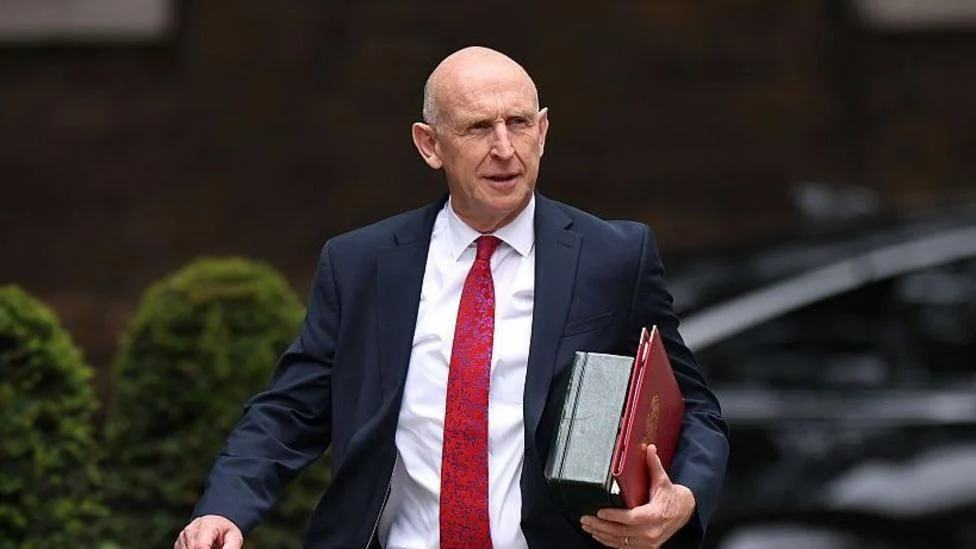
Chancellor John Healey is preparing to present an optimistic vision for the UK economy in a speech on Monday, signaling that the nation is turning a corner. Building on a recent rise in business and consumer confidence, Healey intends to outline a new narrative for a resilient economy that is prepared to capitalize on emerging technologies and innovative ideas.
As part of a broader strategy to stimulate growth across the country, the Chancellor will announce a £150m fund dedicated to companies in the north of England. This capital, drawn from existing allocations within the British Business Bank, is designed to provide investments ranging from £5m to £15m for fast-growing, innovative firms. The initiative is expected to support university spin-outs and other ambitious businesses, with Healey emphasizing that public investment will be used to unlock private capital and create necessary local jobs.
Despite this upbeat outlook, the Chancellor faces significant pressure ahead of his first Budget on 28 October. The government is grappling with rising borrowing costs and the economic impact of the war in Iran, while also managing the fiscal strain of increased defense spending. Healey has maintained that he remains committed to fiscal responsibility, echoing the stance of his predecessor.
Political Reactions and Criticisms
- Conservative Leader Kemi Badenoch: Challenged the government on how it intends to manage rising national debt, noting that borrowing costs have hit an 18-year high.
- Shadow Chancellor Andrew Griffith: Argued that the proposed plans offer little relief to families and businesses concerned about potential tax hikes and the fact that government borrowing rates are nearing a 28-year high.
- Liberal Democrat Deputy Leader Daisy Cooper: Criticized the £150m fund as insufficient, stating that re-announcing such a sum for the entire north of England would barely influence economic growth.
- Reform UK Economic Spokesman Robert Jenrick: Labeled the Chancellor an “empty vessel” and criticized the lack of direction following recent instability in government debt markets.
The government’s focus on regional growth has also faced skepticism from experts. Helen Miller, director of the Institute for Fiscal Studies, noted that while the goal of fostering growth in every postcode is ambitious, it will be difficult to achieve in practice. She suggested that while strengthening secondary and tertiary cities is a viable strategy, driving growth in every single location remains a significant challenge.
During recent parliamentary exchanges, Prime Minister Andy Burnham defended the government’s fiscal position, blaming the previous Conservative administration for current economic pressures. While the government aims to encourage investment and consumer spending by highlighting future prospects, the opposition has continued to press for more clarity on defense commitments, specifically regarding the target of reaching 3% of GDP on defense spending. The report also notes that the chancellor is expected to say: “The prime minister laid out a clear diagnosis of what has gone wrong in the past, describing a country “turning the corner”. The report also notes that the solution is a fundamental shift that starts with putting power in the right places. The report also notes that the next chapter of Britain’s growth story will be written in more places. The report also notes that with the Treasury needing to fill possible multi-billion pound gaps caused by rising borrowing costs, and the need to fund higher defence spending, recent ructions in government debt markets have made constrained public finances worse. The report also notes that i think it’ll actually be much harder to achieve in practice.
Key Job Details
- The report also notes that as well as threats to the Falkland Islands, he added: “We are facing serious threats from Russia and Iran on our doorstep.
- The report also notes that the man who resigned over defence spending, seemingly does not want to mention our armed forces or how we will reach 3% of GDP on defence, yet the chancellor.








Comments