
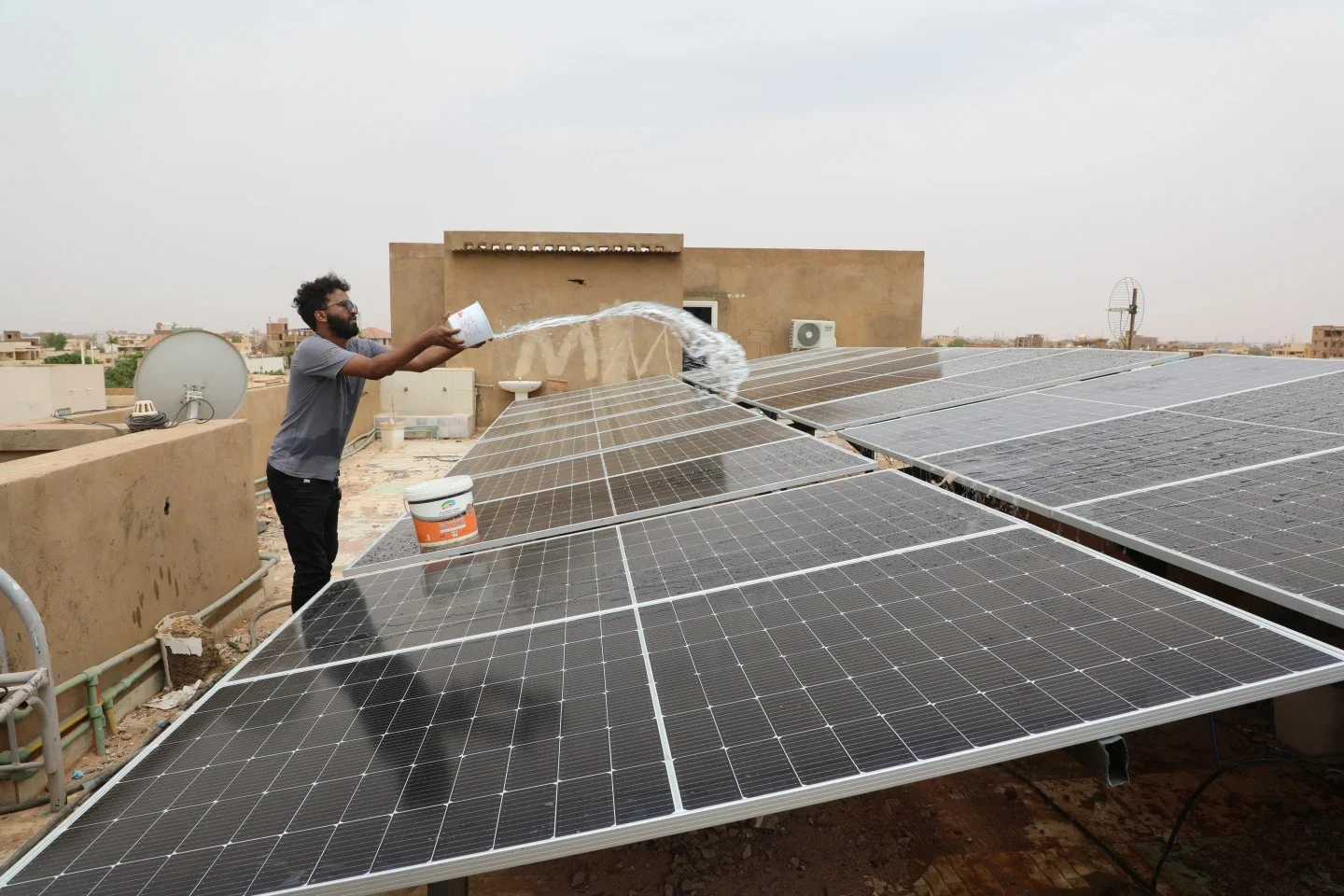
In Omdurman, 31-year-old housewife Randa al-Mansour has spent nearly a year relying on rooftop solar panels to navigate the constant blackouts plaguing her neighborhood. Living with her three children just outside Khartoum, she describes the situation as a severe struggle. With schools frequently lacking power and homes left in darkness, the intense heat makes daily life and education increasingly difficult for the younger generation.
The ongoing conflict between the Sudanese military and the paramilitary Rapid Support Forces, which began in April 2023, has resulted in at least 59,000 deaths and displaced approximately 13 million people. Beyond the human toll, the war has devastated the nation’s power infrastructure, with the United Nations Development Program estimating the damage to the electricity grid at $3 billion.
Electricity production has plummeted from 4,400 megawatts before the war to just 1,100 megawatts today. Officials from the electricity department, speaking anonymously, noted that many power plants have been damaged by drone strikes launched by the Rapid Support Forces. Furthermore, the sector has been hollowed out by a brain drain, as nearly half of the country’s top engineers and technicians have fled since 2023.
For many, the transition to solar energy has become a necessary survival strategy. In the capital, advertisements for solar panels, batteries, and inverters have become ubiquitous. However, the financial barrier is immense. Mohey Eddin Abu-Bark, a local solar business owner, explains that a standard 10-kilowatt household system costs nearly $5,000. For low-income families, this represents a massive, albeit inevitable, financial sacrifice.
The divide between those who can afford solar power and those who cannot is creating a dire health crisis. Manahel Madany, a 43-year-old civil servant living in Omdurman, is unable to afford such a system. As a diabetic, she relies on a refrigerator to keep her insulin viable, but frequent, 16-hour power outages force her to discard her medication every few days. She, her mother, and her sister are often forced to sleep in their courtyard to escape the stifling heat inside their home.
The impact extends to the broader healthcare system. Madany points out that many pharmacies cannot afford solar setups, leading to widespread shortages of essential medications. The Sudan Doctors’ Network has warned that these persistent outages threaten the lives of vulnerable patients, particularly those requiring constant care like kidney dialysis.
While the World Bank reports that at least 30% of Sudan’s population lacks access to electricity—with rural areas suffering the most—urban centers are also seeing a sharp decline in reliability. Although the United Nations highlights that Sudan possesses immense solar potential due to over 4,000 hours of annual sunshine, the combination of high import costs and a rapidly depreciating currency continues to keep renewable energy out of reach for the majority of the population. The report also notes that killing at least 59,000 people, though aid groups say the number could be higher, and displacing some 13 million, the Sudanese military and the paramilitary Rapid Support Forces have been fighting since April 2023. The report also notes that however, not everyone in Sudan can afford this solution,” said al-Mansour, who supports her family with remittances from her husband working in Saudi Arabia. The report also notes that “When kids arrive at school in the morning, they find no electricity there, so they are forced to head back home, where there is none either. The report also notes that it is very hard for them to study under such a high temperature.”. The report also notes that forcing many Sudanese to seek alternative energy sources, especially during scorching summer heat, the conflict also has strained an already weak power infrastructure.







Comments