
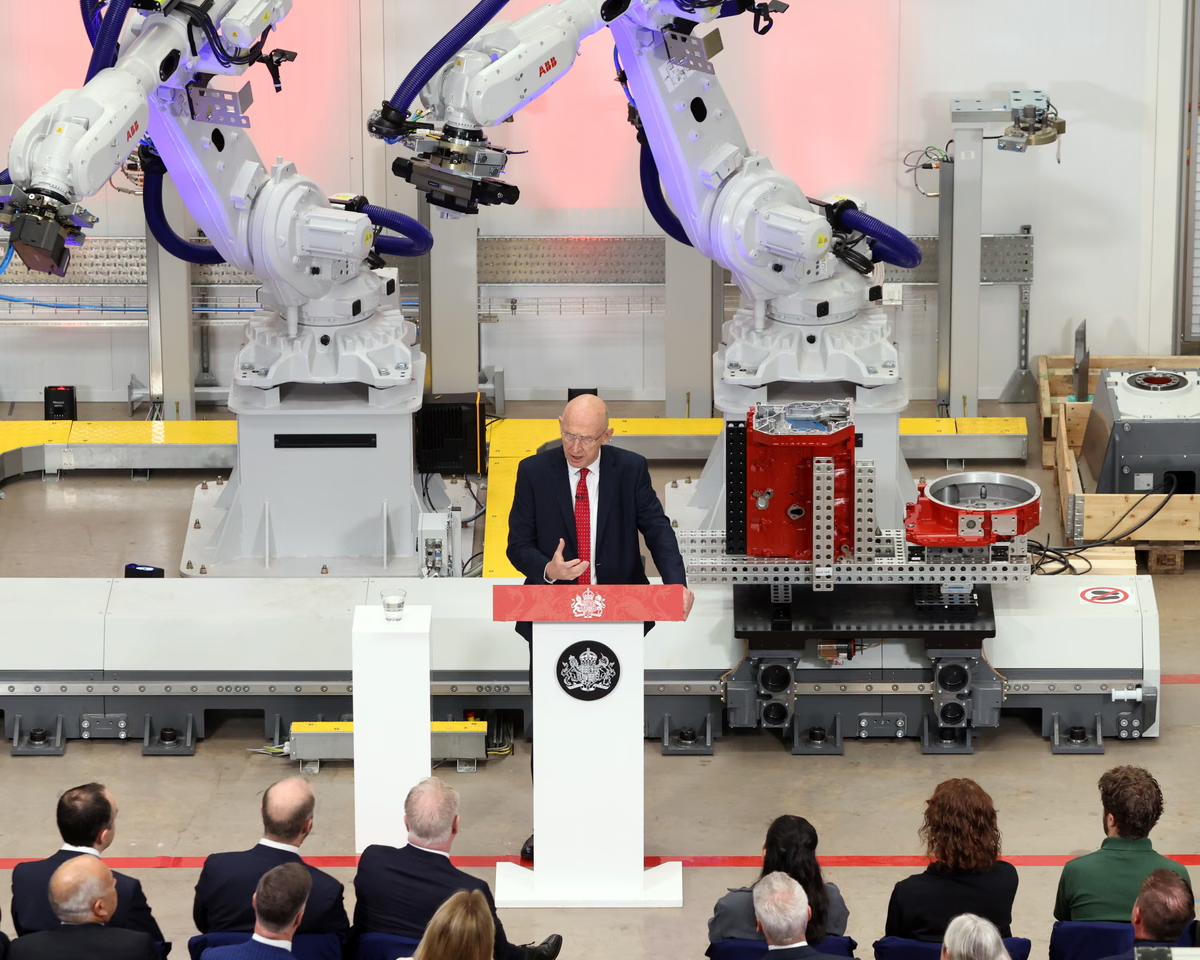
Chancellor John Healey has identified boosting economic growth as his defining mission, cautioning that the government must be honest about the need to manage public spending in the budget scheduled for 28 October. In his first major speech since assuming the role in July, Healey emphasized that his top priority is fostering stronger growth across the UK while strictly adhering to the government’s fiscal rules.
Addressing business leaders at a manufacturing hub in Coventry, the Chancellor stated, “I want to be the chancellor that gets things done and I want to see growth driven from more places across the UK.” He noted that he and Andy Burnham remain in lockstep regarding the commitment to balance day-to-day spending with tax receipts by the 2029-30 fiscal year.
The Chancellor is navigating a challenging economic environment characterized by volatile global financial markets and rising long-term bond yields, which reached an 18-year high last week. Healey argued that sustained growth is the most effective path to balancing the books, though he acknowledged that the upcoming budget will require a candid approach to controlling government expenditure.
Economists have warned that the Chancellor may face pressure to raise taxes or reduce spending due to rising costs and the economic fallout from the war in Iran, which has triggered instability in global bond markets. Healey noted that the UK continues to face a “Truss penalty” nearly four years after Liz Truss’s mini-budget caused a collapse in the government bond market. He warned that such volatility makes the task of governing and the efforts of businesses looking to invest significantly more difficult.
Amid concerns over tax and spending priorities, and following an announcement from Jaguar Land Rover regarding 4,000 job cuts, Healey reiterated the importance of fiscal discipline. While he declined to provide specific details on tax plans, he reaffirmed Labour’s manifesto commitment to avoid raising taxes on working people. Instead, the government is looking to generate savings by addressing youth unemployment.
Healey highlighted a forthcoming review on youth worklessness led by former minister Alan Milburn, which is expected to address what the Chancellor described as the “scar of youth unemployment.” He emphasized both a moral and fiscal duty to support young people in finding work, noting that transitioning individuals from benefits to employment creates a “win-win” as they begin to contribute through taxes.
The Chancellor did not respond to suggestions from the British Chambers of Commerce to scrap the pensions triple lock to fund national insurance cuts for workers under 25. However, he did outline plans for a budget that would provide a roadmap for devolving more tax and spending powers to regional mayors, including the retention of business rates and a portion of income tax.
Investment, innovation, and job creation will serve as the foundation of the budget, according to Healey. He aims to move past years of sluggish economic performance by increasing government investment and reducing business red tape. “I am deeply concerned about the cost of living and cost to business. In the long run the only way that you deal with that is greater growth. I put growth at the heart of my commitment. This is my mission as chancellor,” he concluded. The report also notes that with Labour under pressure amid questions over Burnham’s tax and spending priorities and as the UK carmaker Jaguar Land Rover – headquartered down the road from the venue for his speech – announced plans to cut 4,000 jobs, Healey said maintaining fiscal discipline was important in an uncertain and volatile world. The report also notes that however, he signalled Labour was aiming to find savings from the welfare bill by taking steps to tackle rising youth unemployment. The report also notes that and most importantly for me we have to get more of Britain working again,” he said. The report also notes that “A person coming off benefits and into work saves the taxpayer money. The report also notes that and that becomes a win-win when those people start paying tax themselves,” he said.







Comments