
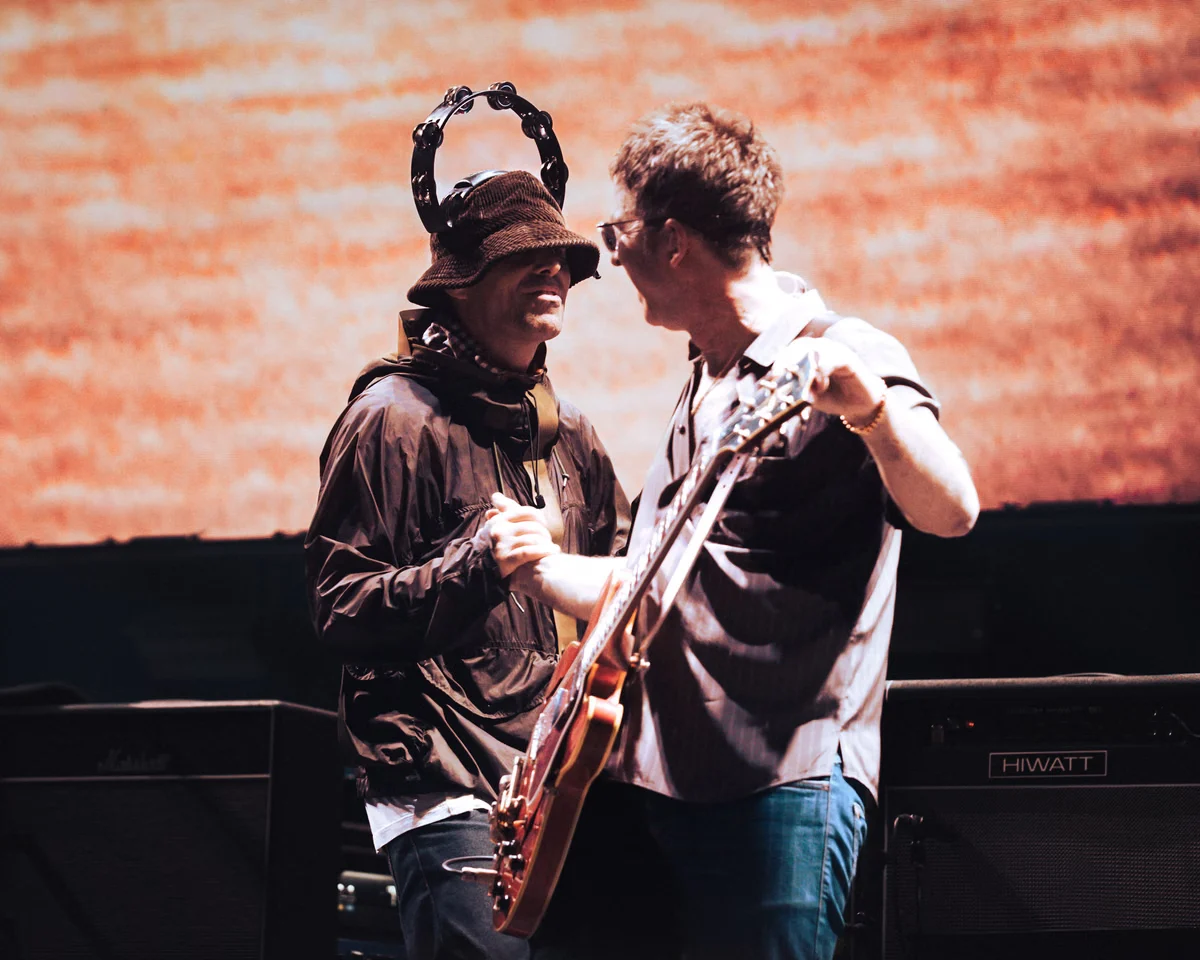
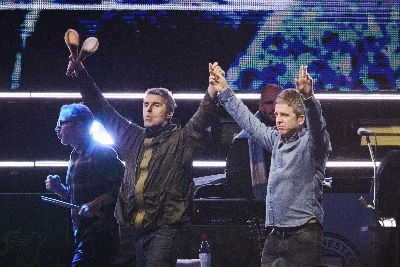
On July 4 of last year, the music world held its breath as Oasis prepared for the opening night of their long-awaited comeback tour. The stakes were immense, marking 16 years since the band’s infamous split in Paris, triggered by a physical altercation between brothers Liam and Noel Gallagher. As showtime approached in Cardiff’s Principality Stadium, the atmosphere was thick with uncertainty; 74,500 fans were packed into the venue, yet the lead singer was nowhere to be found. Noel Gallagher was seen pacing the loading bay, clearly anxious about whether the reunion would collapse before it even began.
Will Lovelace, who co-directed the documentaryOasis: Don’t Look Back In Angeralongside Dylan Southern, recalls the moment the production monitor cut out during the pre-show scramble. When the feed returned, the brothers were finally together. “Then they walked out to this eruption,” Lovelace says. The film captures Noel’s genuine shock at his brother’s sudden appearance, with the guitarist later remarking on camera, “Skip the final rehearsal, then just rock up, grab my hand, and I’m like, ‘What the fuck?’ And off he goes, sounding like he’s 30 years younger. And I’m like, ‘You absolute mad cunt.’”
The documentary chronicles the massiveOasis Live 25tour, which spanned 41 concerts across 14 countries and five continents, reaching over two million fans. While the film highlights the raw, stadium-filling power of the band, it also delves into the complex emotional reconciliation of the Gallaghers. Noel admits he was unprepared for the sheer scale of the public’s reaction, noting he “wasn’t prepared for the intense outpouring, a sense of what it meant to people.”
Lovelace and Southern, known for their work onMeet Me in the BathroomandShut Up and Play the Hitsapproached this project with a deep personal connection to the band. Lovelace grew up listening toDefinitely Maybeon a Walkman in the Fens, while Southern caught the band at the 200-capacity Hull Adelphi in 1994. Despite their experience, the duo faced significant hurdles, including strict secrecy and a lack of access to rehearsals. To circumvent this, they hid cameras within the sound equipment and monitored the proceedings from a cramped, unglamorous Portakabin for six weeks.
The directors were tasked with capturing the volatile dynamic between the brothers. “We knew we had these historically volatile characters, so you ask yourself, ‘Are they going to fight – or hug each other?’” Southern explains. “And of course they do neither. They have a job to do.” The film suggests that the healing process was not a private affair but one that unfolded in the public eye. By the end of the tour, the brothers were even conducting their first joint interview in two decades, reflecting on their shared history as older, more measured men.
To elevate the documentary beyond a standard concert film, the directors recruited high-profile cinematographers, including Haris Zambarloukos, Lol Crawley, and James Laxton. The result is a project that captures both the scale of the performances and the intimate, often painful, stories of the fans. The film features a diverse array of perspectives, from a South Korean free diver who used the band’s music to cope with depression to a survivor of the 2017 Manchester Arena bombing.
The production was bolstered by what Southern describes as “unexpected gifts.” While scouting locations in Burnage, the crew visited St Bernard’s Church, located across from the brothers’ former primary school. They happened to arrive on the exact day a local vicar was delivering a sermon centered on the theme of brotherly forgiveness. This serendipitous moment, alongside reports of police officers using Oasis lyrics in their official briefings, underscores the cultural weight the band’s reunion carried for their audience.
Ultimately, the film avoids excessive gossip, focusing instead on the power of the unspoken. As Lovelace notes, the brothers are navigating a massive chasm in front of millions, a process that seems to resonate deeply with their supporters. With Noel confirming that the pair are now in more frequent contact than ever before, the documentary serves as a testament to a reconciliation that began on stage and continues to evolve. The report also notes that o n 4 July last year, Oasis were all set to start the first gig of their hugely anticipated comeback, 16 years since the band imploded after Liam Gallagher swung a guitar in the direction of brother Noel’s head backstage in Paris. The report also notes that however, just 20 minutes before showtime, there was no sign of the singer. The report also notes that some 74,500 fans in Cardiff’s Principality Stadium were going crazy, while Noel was left impatiently pacing around the venue’s loading bay, presumably wondering if everything was about to fall apart again. The report also notes that which briefly dwells on how the fractious working-class Manchester tearaways became the biggest rock band in the world in the 1990s before concentrating on how, 30 years later, they did it all again, the Cardiff entrance is one of the more dramatic scenes in Lovelace and co-director Dylan Southern’s film Oasis: Don’t Look Back In Anger. The report also notes that “We arrived in Cardiff unprepared for this tidal wave of emotion. The report also notes that something a lot of people needed, it seemed bigger than Oasis. The report also notes that i don’t think we understood the magnitude of it.




Comments