
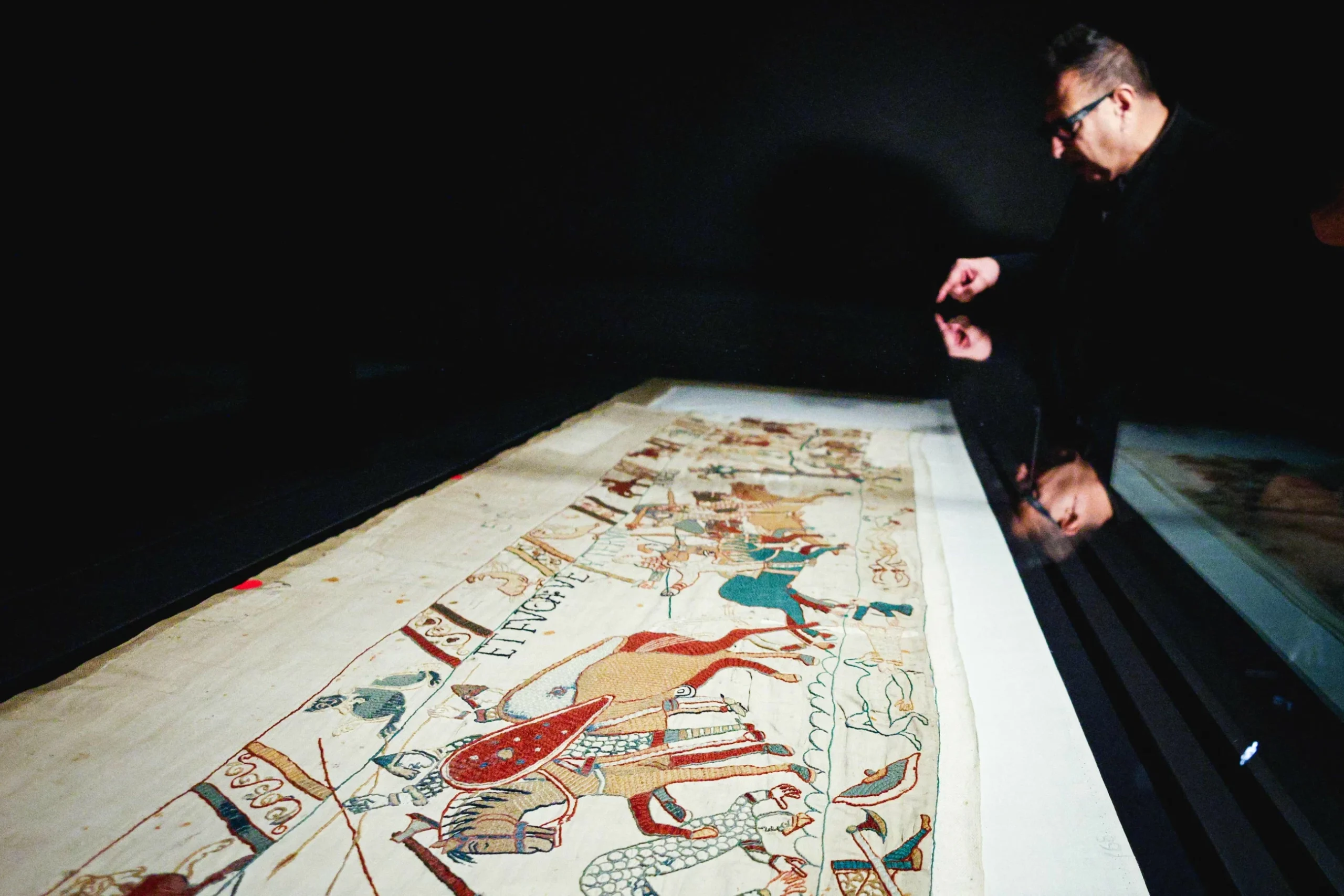
Excitement is building in London ahead of Thursday’s opening of the Bayeux Tapestry exhibition at the British Museum. The 1,000-year-old embroidery, which chronicles the 1066 Norman conquest of England by William I, has already proven to be a massive success, with initial tickets for the nine-month run selling out within hours. These early sales generated £2.5 million, cementing its status as the museum’s fastest-selling exhibition to date, with a new batch of tickets scheduled for release in October.
King Charles and French President Emmanuel Macron were among the first to view the historic artifact last week. The loan of the tapestry from France is being viewed as a diplomatic gesture aimed at strengthening ties between the two nations following the tensions surrounding the 2016 Brexit vote. During the visit, President Macron highlighted the unifying power of art, noting its ability to demonstrate the creative potential of humanity.
The tapestry, which is believed to have been stitched in Kent before being moved to France, is being displayed outside its home country for the first time. Curator Millie Horton-Insch emphasized the sheer scale of the 70-metre (230-foot) work, stating, “No matter how many times I see it, I’m still blown away by its size.” She noted that modern audiences may struggle to grasp the thousands of hours of labor required by English seamstresses to spin the wool and master the natural dyes used in the piece.
Beyond its artistic scale, the exhibition aims to confront viewers with the “brutal reality” of medieval warfare. The embroidery depicts the events leading to the Battle of Hastings and the defeat of Anglo-Saxon King Harold II. According to Horton-Insch, the work does not shy away from the devastating impact of the conflict on both sides of the struggle, which marked the final successful invasion of England.
To ensure the safety of the delicate 1,000-year-old artifact, it was transported from France to Britain in July via an air-conditioned, anti-vibration crate under a heavy police escort. Despite the complexity of the move, the curator confirmed that the tapestry appears to have survived the journey in excellent condition. The report also notes that southern England, the tapestry was subsequently taken across the Channel and is being shown outside France for the first time, generating a wave of interest in its significance to English history, thought to have been stitched in Kent.








Comments