
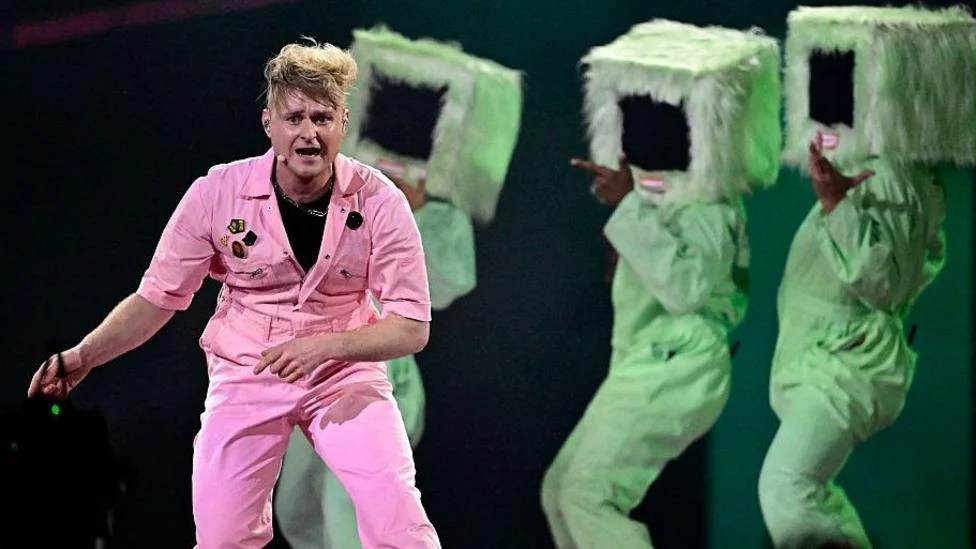
A cross-party committee of MPs is launching an inquiry into the United Kingdom’s persistent failure at the Eurovision Song Contest. The probe, led by the Digital, Culture, Media and Sport committee, seeks to understand the selection process for performers and songs that has resulted in a string of poor rankings for the nation.
The scrutiny follows a disappointing 2026 performance where artist Sam Battle, performing as Look Mum No Computer, finished in last place with his song “Eins, Zwei, Drei,” scoring only a single point. This continues a trend of underachievement; James Newman finished with “nul points” in 2021, and Mae Muller placed second from bottom in 2023. Aside from Sam Ryder’s second-place success with “Space Man” in 2022, the UK has failed to break into the top 15 in the last 15 years.
Key Inquiry Details
- Committee Objective: Investigate how entrants are selected, by whom, and the basis for these decisions.
- Witnesses: officials and music industry experts will be called to provide evidence.
- Timeline: Hearings are expected to occur over the coming months.
- Outcome: A potential report with recommendations for regarding future selection processes.
- Public Input: The inquiry is part of the committee’s “State of Play” program, which facilitates evidence sessions requested by the public.
Dame Caroline Dinenage, chair of the committee, noted that the application to investigate was prompted by the UK’s reputation for scoring “nul points” or placing at the bottom of the scoreboard despite having access to world-class musical talent. She questioned whether the current results stem from poor song selection, performance issues, or other structural problems within selection process, which occasionally involves collaboration with record labels or management firms.
Reflecting on past methods, Dinenage highlighted that previous approaches, including the “Eurovision: You Decide” televised public selection show in 2019, also failed to secure a win, as contestant Michael Rice finished last in Tel Aviv. She noted that while various strategies have been attempted, the committee is committed to understanding who decides the shortlists and evaluating if more effective processes exist.
As the competition approaches its 30th anniversary since the last UK victory—Katrina and the Waves’ 1997 win with “Love Shine A Light”—there is significant public interest in rectifying the nation’s track record. Despite the contest remaining one of the most-watched music events in the country, the UK has struggled to replicate the success seen by international counterparts. The report also notes that being held in Burgas in Bulgaria, will mark 30 years since the UK last won the contest, when Katrina and the Waves scored 227 points with their song Love Shine A Light, and next year’s event. The report also notes that sometimes with a record label or music management company, the act that represents the UK is selected by. The report also notes that the committee is also likely to receive relevant written submissions. The report also notes that over the years, produced some of the world’s most successful artists, that kind of success has rarely been repeated at Eurovision, although the UK has. The report also notes that he was beaten by Ukraine’s Kalush Orchestra. The report also notes that many countries choose their entry through a publicly televised selection process. The report also notes that speaking to, Dame Caroline referred to the televised selection process that has previously taken place, but questioned how acts were put forward to take part.







Comments