
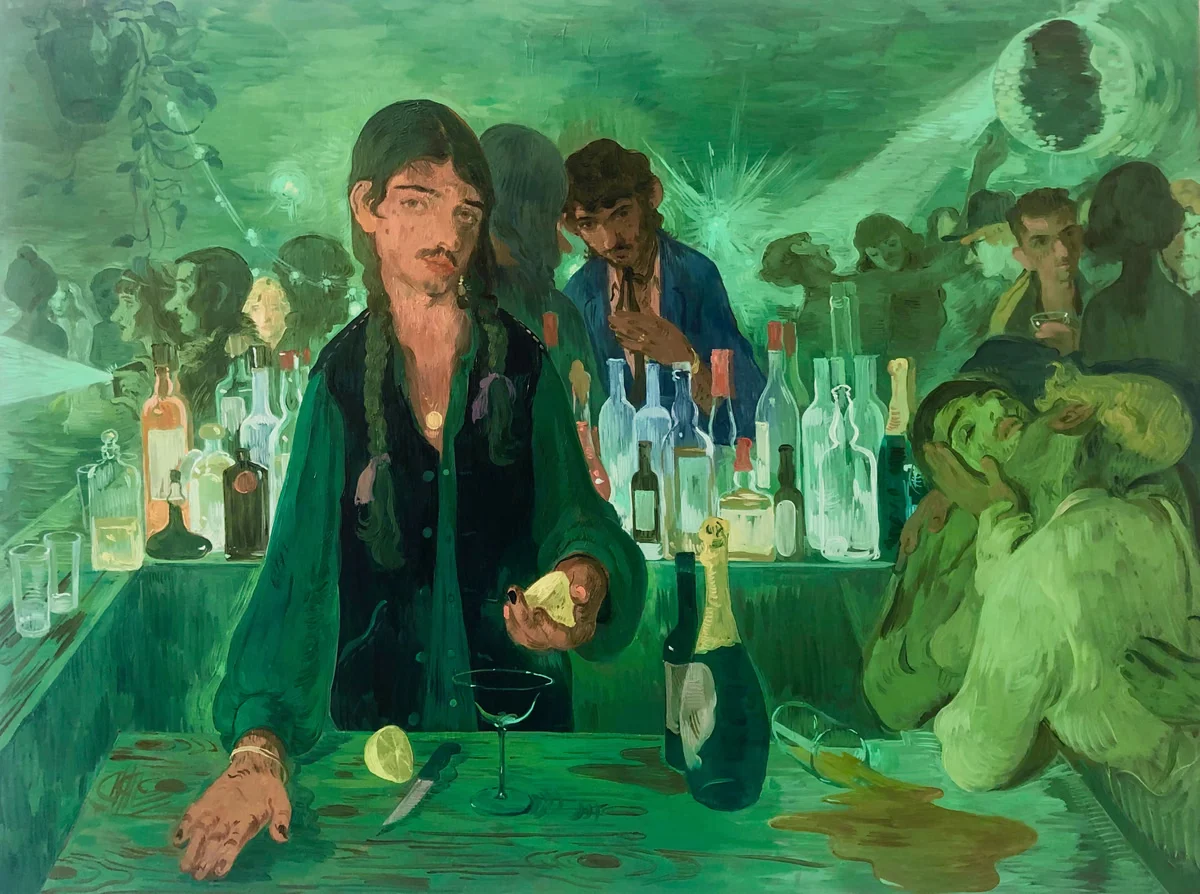
In the vibrant, expressive canvases of Salman Toor, queer South Asian men populate a world of urban nightlife, intimate domesticity, and quiet reflection. Whether they are huddled together in taxicabs, sharing quiet moments in bed, or facing the apprehension of an encounter with customs officials, these figures command the center of the frame. For the 43-year-old Pakistani American painter, placing these individuals at the forefront of his work is a deliberate act of reclamation after decades of systemic erasure and stereotyping.
Reflecting on his creative vision at his Brooklyn studio, Toor expresses a sense of liberation in showcasing the intimacy of his subjects. He notes that the cuteness and sexiness of brown protagonists are becoming increasingly familiar, emphasizing that their narratives function as the primary story rather than mere side plots within a larger family saga. This focus on the individual and the queer experience has earned him recognition as an international art star and one of the most significant painters of his generation.
This October, London’s Courtauld Gallery will host the exhibition Someone Like You, featuring a curated selection of Toor’s paintings and drawings. The artist, who spent many formative hours studying works by Rubens and Van Dyck at the Courtauld as a student, finds the upcoming show deeply meaningful. During his youth in Lahore, he was drawn to the institute’s collection, particularly Édouard Manet’s A Bar at the Folies-Bergère. He recalls the profound impact of Manet’s work, which he describes as providing a solution to his own artistic challenges.
Toor’s own evolution as an artist is frequently linked to his move to the United States in 2002. After an isolating start in Columbus, Ohio, he found community within a creative commune, eventually developing his signature style: rich oil paintings defined by a distinct emerald green palette. He chose this color for its dual nature, representing both glamour and a sense of toxicity. This aesthetic has since been used to document his personal journey and the lives of his friends as they navigate identity and culture in New York City.
The artist’s connection to London remains strong, rooted in memories of nightlife in the early 2000s and time spent at iconic spots. His work often bridges these global experiences. For instance, his piece Cross Street captures a scene observed outside Tayyabs in Whitechapel, juxtaposing a group of skaters with a passing mullah to illustrate the proximity of different social worlds. This commitment to visual storytelling allows him to contend with the chaotic, often alienating nature of contemporary life.
Currently living in New York with his partner, the musician Ali Sethi, Toor is invigorated by the city’s evolving cultural and political landscape. He views the rise of a new generation of South Asian and Middle Eastern figures, such as Zohran Mamdani, as a significant shift. Toor, who famously painted a portrait of Mamdani following the politician’s Democratic nomination, praises the fearlessness and humor of these emerging public figures. He notes that the era of invisibility is ending, telling those who are uncomfortable with this new visibility that they should get used to it.
While his work engages with complex themes of global politics and migration, Toor maintains a grounded approach to his success. His paintings have seen immense market demand, including the sale of his work Four Friends for $1.2 million at Sotheby’s in 2022. Despite this, his focus remains on the authentic depiction of his circle. He continues to reflect on his dual identity, frequently questioning his own Westernization while celebrating the creative energy found in his New York community.
The exhibition, Salman Toor: Someone Like You, will be open to the public from October 2 to January 10, marking a major milestone in the artist’s career. From his early days of sketching in his Aitchison College art department to being celebrated in institutions from Beijing to Baltimore, Toor remains dedicated to his central mission: giving life, complexity, and unapologetic presence to the brown, queer body in art history. The report also notes that queer south Asian men hang out in bars, twerk at trippy gatherings and lose themselves in phone screens, i n Salman Toor’s paintings. The report also notes that sometimes they huddle in the back of taxis or pillow-fight on beds. The report also notes that it’s crucial that these figures take centre stage, after years of being demonised and erased, for the 43-year-old Pakistani American artist. The report also notes that over the last decade, Toor has been helping to redraw the narratives around immigrants, desire, power and sex. The report also notes that solo museum exhibitions in New York, Baltimore and Beijing have earned universal praise, while in November 2022, his painting Four Friends sold for $1.2m at Sotheby’s. The report also notes that he couldn’t be more thrilled, as it’s home to many of his favourite baroque and impressionist artists. The report also notes that the Courtauld was one of the galleries he visited on his first trip to London from Pakistan. “It’s the most exciting thing that could happen,” he says, looking genuinely humbled. The report also notes that a grey sleeveless T-shirt and chunky fashion trainers, Toor is friendly and eager to talk about his art, armed with a printout of images from the show, dressed in black parachute trousers.


Comments