
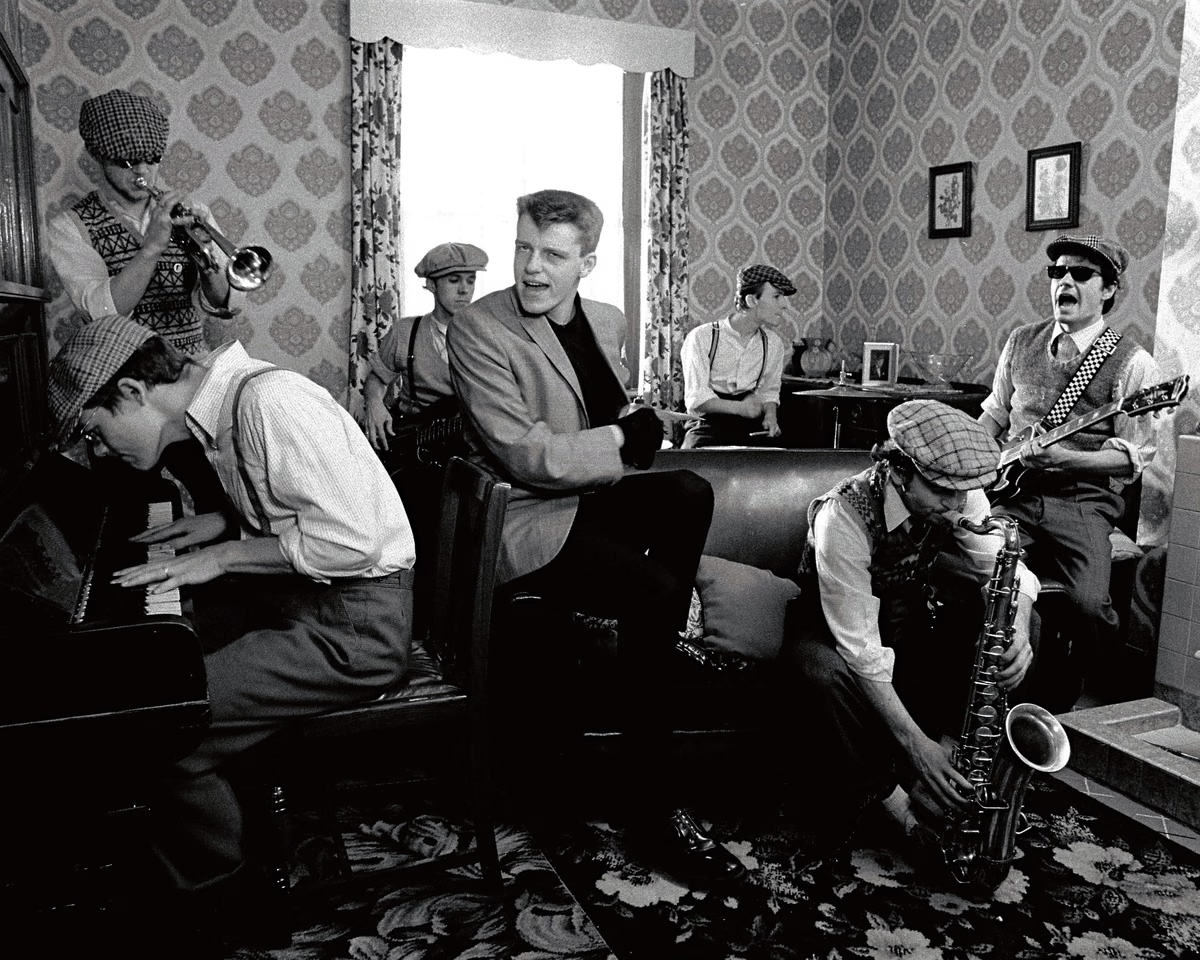
In March 1981, the band Madness embarked on an ambitious project, revisiting their past haunts with a camera crew to film what would become a semi-fictionalized account of their beginnings. Just 18 months following the release of their first single, The Prince, the seven-piece group had cemented themselves as major British stars, thanks largely to unconventional music videos that captivated viewers with surreal, flight-defying imagery on programs like Tiswas and Top of the Pops. Instead of indulging in the typical trappings of rock-star success, the band chose to funnel their resources into an origin film, blending their signature sense of nutty humor with the stark, kitchen-sink realism of their working-class London background.
The film was the brainchild of Stiff Records boss Dave Robinson, who had won a bidding war for the band in 1979 when the members were in their late teens and early 20s. Robinson, a Dublin-born executive whom the band affectionately called Uncle Dave, recognized a unique, chaotic charisma in the group that set them apart. Keyboardist Mike Barson recalls that their clowning around and youthful showing off was something Robinson actively encouraged, seeing it as more than just musical talent.
Robinson’s ability to execute impossible visions became legendary within the band. Saxophonist Lee Thompson specifically remembered requesting to play his instrument while flying through the air for the 1980 video Baggy Trousers. Upon arriving at the shoot, Thompson discovered that Robinson had actually managed to secure a crane for the stunt. When Robinson initiated the production of Take It or Leave It, critics dismissed the idea as impossible, yet he proceeded, securing funding by having the band members and manager John “Kelloggs” Kalinowski contribute £20,000 each. Robinson covered the remainder of the budget, equating the contribution to the cost of a two-bedroom home in NW5 at the time.
The production faced immediate hurdles when Robinson arrived on the first day to find a bloated, unionized crew waiting. Sensing the arrangement would drag down his fast-paced, guerrilla-style approach, he dismissed them immediately. He returned to low-budget, high-energy tactics, including using cameramen on bicycles or trolleys and having crew members dangle from ladders to capture specific shots without official permits. The film became a time capsule for late 1970s London, capturing details like 40p tube tickets and the casual freedom of parking wherever one pleased.
The movie relied on 30 scenes distilled from interviews Robinson conducted with the group. To maintain authenticity, the band performed their own songs and covered tracks by Elvis Presley and Fats Domino, often intentionally playing them roughly to reflect their early, unpolished performances. The band members ad-libbed alongside experienced actors hired to portray various authority figures. Locations were chosen for their historical significance to the group, including The Dublin Castle in Camden and the Crouch End family home of Mike Barson’s mother.
Reflecting on the visual tone, Graham “Suggs” McPherson noted that while their music videos were often psychedelic, the aim for the film was to portray the dreary reality of forming a band. He remarked that the first 20 minutes remain in black and white because that is how London felt to them during the late 70s. Despite the somber aesthetic, the film retains humor, particularly through Barson’s portrayal of the sardonic, demanding ringleader of the group.
For the band, the legacy of the film is complicated by time. Barson observes that reality has become somewhat inaccessible because the film versions of their memories often replace the actual events. Other band members have more poignant reflections; bassist Mark Bedford finds it moving to see the late drummer Gary Bovey, who played himself in the film, on screen. While McPherson admitted he initially found the project prosaic, others acknowledge that the film documented a fragile time when the band could easily have folded due to typical pressures.
The film captures the genuine stakes the group faced, noting that they were not privileged students but young men dealing with the grind of working-class life. Thompson’s struggles were particularly representative of the obstacles they overcame just to function as a band. Following his time with the group, McPherson eventually auditioned for the film Absolute Beginners, but an injury during dance training ended his pursuit of a film career. Today, the band continues its legacy, having released their 12th album in 2023 and recently wrapping a summer tour. The report also notes that in the 18 months since releasing their debut single, The Prince, the group have become the UK’s most beloved hit-makers, their ascent abetted by inventive music videos that have left viewers of Top of the Pops and Tiswas believing a man could fly – while blowing a sax. The report also notes that the seven-piece have invested in a semi-fictional big-screen telling of their origin story that tempers their trademark “nuttiness” with a kitchen-sink realism suiting their working-class roots, instead of squandering their newfound wealth on fast cars and country piles. The report also notes that a new 4K restoration has primed the film for rediscovery as a time-capsule of grimy 70s London, and perhaps cinema’s most honest depiction of the challenges involved in trying to get a band together, while Take It or Leave It sank into obscurity soon after release. The report also notes that hiring Chuck Statler – who’d made memorable clips for Devo and worked quick and cheap – to film Madness’s first promos, uncle Dave intuited this energy would flourish in the embryonic music-video format. The report also notes that working even quicker and cheaper. “I was also running a record label,” he says, “so we’d have to get the videos done in a day.”, dave took over the reins for 1980’s My Girl. The report also notes that saxophonist Lee Thompson tested the label-owner’s impressive ability to “make things happen” with 1980’s Baggy Trousers. “I told Robbo I wanted to play sax while flying through the air,” says Thompson, who arrived at the shoot to find Robinson had booked a forklift and kirby wire. The report also notes that eating bacon sandwiches”, but when Robinson arrived on set the first day he was greeted by “50 guys staring at me.




Comments