
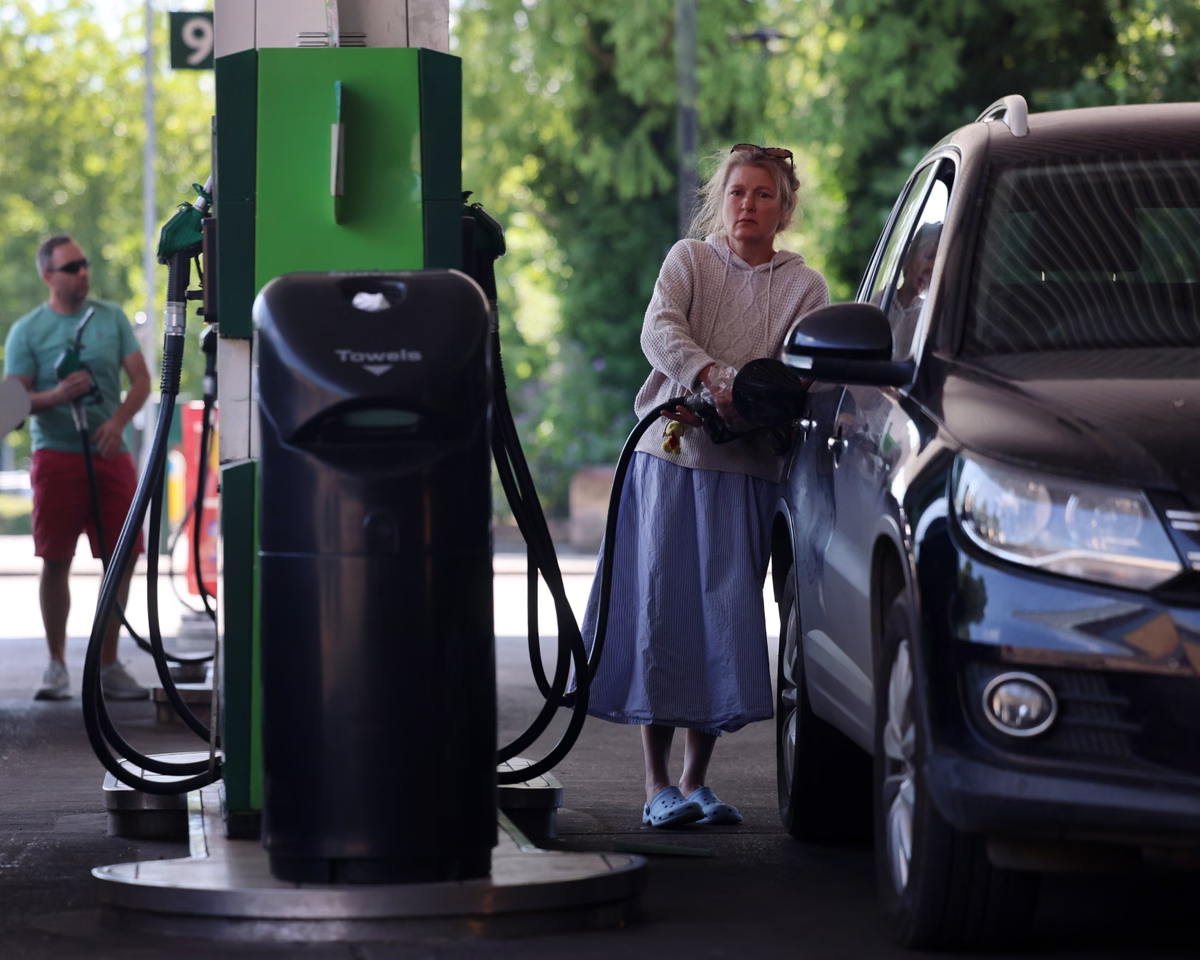
Soaring oil and gas prices are presenting a significant challenge for UK policymakers as they prepare for next month’s budget. While officials have sought to maintain an optimistic outlook, Treasury insiders acknowledge that the sharp spike in energy costs has left them with “less room” to maneuver compared to just a month ago.
Brent crude prices climbed nearly 5% on Thursday to reach $108 per barrel, spurred by reports of renewed military engagements between Houthi forces and Saudi Arabia. This volatile environment has kept the spotlight on the potential for an energy price cap increase of up to 24% in January, prompting officials to work “at pace” on consumer support strategies. Any prospective relief measures, however, are expected to be far more limited than the broad subsidies implemented in 2022, given the Treasury’s focus on previous interventions like the existing VAT cuts on electricity.
Policy options under consideration include shifting additional green subsidies to general taxation—a strategy previously employed by Rachel Reeves—or providing targeted assistance to the most vulnerable households. Despite this, some officials remain skeptical about the practical implementation of such targeted support.
The economic pressure is compounded by instability in international markets. With the broader US-Israeli conflict regarding Iran continuing, there is little clarity on how the situation might stabilize, even as US fuel prices influence local political climates ahead of midterm elections. Meanwhile, interest rate concerns remain paramount. The Bank of England held rates at 3.75% last week, but the prospect of further hikes could inflate mortgage costs precisely when the government aimed to provide “breathing space” for voters.
Monetary policy officials have issued stern warnings regarding these inflationary risks. Bank of England chief economist Clare Lombardelli stated that persistent energy price shocks increase the likelihood of secondary effects, such as shifts in wage bargaining and price-setting, necessitating a potential tightening of policy. This stance was corroborated by deputy governor Sarah Breeden, who noted at Imperial College London that the duration and severity of the current shock will dictate the necessity of a policy response.
These inflationary expectations have fueled a global sell-off in government bonds, driving up borrowing costs for the UK. The yield on 10-year UK gilts climbed to 5.39% on Thursday, nearing the 19-year high recorded the previous week. Similarly, 10-year US Treasury yields hit 5.17%, a level unseen since 2007, as investors grapple with concerns over US government spending and shifts in market demand.
For the UK government, these rising yields carry direct consequences for the national budget. Analysts estimate that recent movements have erased over half of the £24bn in “headroom” against fiscal rules that was identified during the March spring statement. While there are promises to maintain a “buffer against uncertainty,” meeting these fiscal targets may now require significant tax hikes or spending cuts, although the Treasury maintains that the forthcoming budget will remain narrowly focused. The report also notes that particularly if high prices persist, feeding through into a sharp rise in the quarterly energy price cap in January, officials are working “at pace” on a range of possible options for supporting consumers. The report also notes that with the Treasury mindful of the measures already taken, including Andy Burnham’s VAT cut on electricity bills, but any package is expected to fall far short of the costly across-the-board subsidies announced by Liz Truss in 2022. The report also notes that or when, the wider US-Israeli war on Iran could be brought to a close, despite the impact on gasoline prices in the US before crucial midterm elections, donald Trump has given little indication of how. The report also notes that “The longer higher energy prices persist, the greater the risk that indirect effects build and that inflation expectations, wage bargaining and price-setting behaviour begin to adjust in response,” she told an economic conference in Warsaw, Poland. “On that basis, policy is increasingly likely to need to tighten if elevated energy prices persist, absent clear evidence of disinflation or weaker activity.”. The report also notes that higher interest rates raise the upfront cost of government investment and feed through into Office for Budget Responsibility forecasts of whether the chancellor is on course to meet Labour’s fiscal rules. The report also notes that as the conflict in the Middle East rumbles on, investors across the main markets have been ditching bonds in recent weeks in a wave of selling.








Comments