A rapid sell-off across AI-linked technology shares has rattled global financial markets, fueled by mounting anxiety over persistent US inflation and the potential for further interest rate hikes. The downturn follows a period of intense market volatility, with traders increasingly concerned about the high levels of debt within the AI sector. Larry Elliott: the global economy is muddling through.
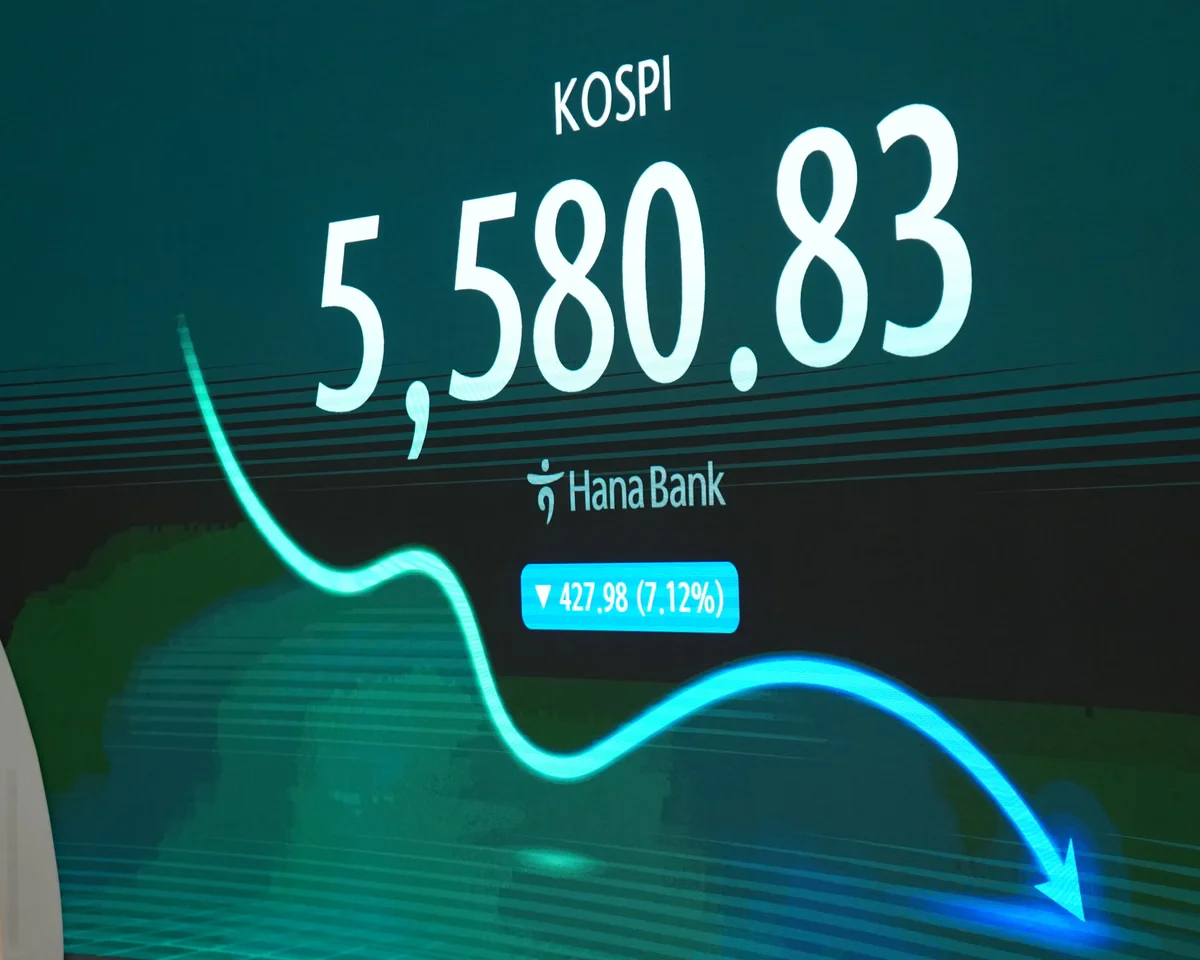
South Korea’s Kospi 200 index, which is heavily concentrated in memory chip manufacturers, plummeted more than 8% to a six-month closing low. The decline was significant enough to trigger circuit breakers, halting trading at various intervals. Major semiconductor stocks suffered heavy losses, with SK Hynix shares dropping nearly 11% and Samsung Electronics falling 9.5%.
Japan’s Nikkei 225 index also faced significant pressure, dropping 4.9% on Thursday. The slide was driven by an 11% plunge for memory chip maker Kioxia and a 10% decrease in SoftBank, a major investor in OpenAI. These regional declines mirrored a difficult session on Wall Street, where the Nasdaq Composite retreated by 1.9% and the S&P 500 slipped 1.1%, marking the latter’s weakest performance since July.
This market turbulence follows data showing US inflation reached 3.7% in September, exceeding expectations and representing the steepest price acceleration since the consumer price index hit a three-year peak of 4.2% in May. Analysts at Deutsche Bank, led by Jim Reid, described the environment as a tumultuous 24 hours, noting that the inflationary pressure was broad-based across consumer goods rather than solely driven by energy costs. “Markets have just had an incredibly tumultuous 24 hours, as a strong US CPI print was then followed up with mounting fears around the AI trade,” Deutsche Bank analysts led by Jim Reid, said. As there were broad-based moves across the consumer basket.”, reid said: “This wasn’t just an energy surge driving prices higher.
The current market climate is exacerbated by geopolitical tensions, including the ripple effects from the US war on Iran. Fears are now mounting that the Federal Reserve will implement fresh interest rate increases, with some investors betting on a rate hike as early as the end of this month.
International financial authorities have issued stark warnings regarding these trends. Earlier this week, the International Monetary Fund cautioned that an AI-driven share price correction could threaten global financial stability. The agency warned that such a crash would have global consequences, with Asian markets particularly exposed compared to the UK and eurozone.
The impact of this sentiment was visible across other major indices, as China’s Shanghai CSI 300 slipped 2.4%, reaching its lowest level since August 2025. In Taiwan, TSMC, the world’s leading chip manufacturer and Asia’s most valuable company, saw a 2% decline despite reporting six consecutive quarters of profitability.
European markets similarly trended downward at the start of trading. The Europe Stoxx 600 dropped 0.4%, while Germany’s DAX fell 0.53%, France’s CAC 40 lost 0.19%, and Spain’s Ibex dipped 0.17%. The UK’s FTSE 100 remained relatively flat, down 0.06%. Looking ahead, US stock futures for the Nasdaq 100 indicated further potential losses of 1%.