
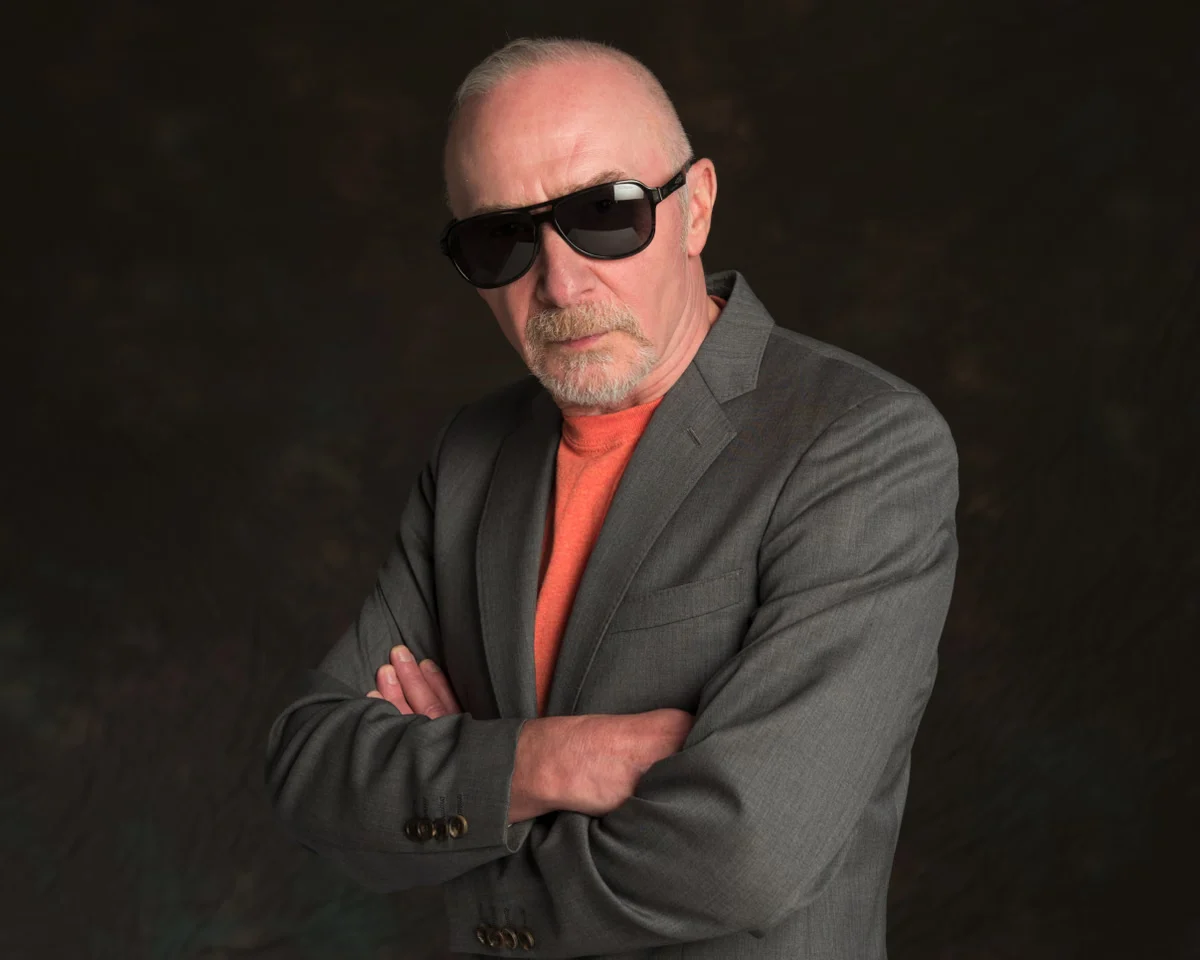
Fifty years ago, Graham Parker was widely tipped as the next titan of rock, yet he ultimately chose a path defined by cult status, a brief Hollywood detour, and a consistent rejection of mainstream fame. As he prepares for an upcoming UK tour, the singer-songwriter reflects on a career that began with a rapid ascent. His first live performance with his iconic backing band, the Rumour, took place in October 1975 at the Newlands Tavern, a pub in Nunhead, south-east London. By early 1976, he had secured a record deal and was already in the studio working on his debut.
His first record, released in April 1976, was met with significant critical acclaim, largely driven by the reggae-infused, defiant closing track, “Don’t Ask Me Questions.” The momentum continued with the October release of “Heat Treatment.” During a promotional trip to Australia, Parker encountered a media frenzy so intense that the local press, influenced by his heavy coverage in music magazines, assumed he was “as big as Bruce Springsteen, which was insane.”
Despite his status as a critical darling, Parker was an unconventional rock figure. He was a wiry, former hippie who had spent his teenage years in Morocco and performed in a band called Terry Burbot’s Magic Mud. He explains that the name was his own invention, noting that a burbot is a fish he knew had become extinct in England because the Angling Times had once offered a £100 reward for proof of its existence. Regarding his early confidence, he admits he was “brimming with confidence,” having convinced himself he was the “kiddy” destined for greatness.
Parker never quite achieved the massive commercial stardom predicted for him in 1976. Instead, he cultivated a diverse 50-year career as a cult artist. His work has included an album of obscure Lennon and McCartney covers recorded with Kate Pierson of the B-52s, as well as forays into writing novels and short stories. He has maintained strict quality control across 47 albums, including his 2023 release, “Last Chance to Learn the Twist,” which features a live-sounding blend of soul and prewar pop styles.
His career has often been marked by contrarian moves. In the late 1970s, frustrated with his label, Mercury, he released the scathing track “Mercury Poisoning,” which accused the company of being unable to “sell kebabs to the Greeks.” Decades later, in 2012, he found himself in Hollywood after being cast by long-time fan Judd Apatow in the film “This Is 40.” Parker played himself as one of several underperforming artists signed to a record label run by Paul Rudd’s character. He recalls the experience with amusement, noting that he told Apatow he could “destroy his record company instantly” if given the chance.
Reflecting on his life from his home in upstate New York, Parker admits he was likely never suited for the pressures of fame. He recalls a brief, awkward encounter with Michael Jackson, where he introduced himself and mentioned his recent cover of “I Want You Back,” only for Jackson to respond with a simple “Ooh.” Parker laughs, noting that this was the “full extent” of his conversation with the pop icon.
Today, Parker remains content with his “small-timer” career, favoring intimate solo gigs over the demands of stadium stardom. He finds that performing without a band has improved his singing and allows for a more direct connection with his audience. While he famously wrote the song “I’ll Never Play Jacksonville Again” following a disastrous gig in front of a sparse, disinterested crowd, he admits he would return if the price were right. For now, he continues to tour on his own terms, proving that his long-standing aversion to the machinery of fame has allowed him to sustain a career that remains both creative and entirely his own. The report also notes that t o say Graham Parker enjoyed a swift rise to fame is an understatement. The report also notes that the buzz around him was such that the sessions were interrupted by the arrival of a succession of stars – Thin Lizzy’s Phil Lynott among them – intrigued to hear what the fuss was about: a petrol pump attendant from Surrey who sang like Van Morrison and had written a set of smart, sharp, literate songs in between filling up cars. The report also notes that followed in October by Heat Treatment, things ratcheted up another notch, after Howlin’ Wind came out. The report also notes that he found himself backstage collared by the headline act, eager to tell Parker how much he loved his work, low down on a festival bill topped by Bob Dylan. The report also notes that with, of all people, Michael Jackson, but their meeting was apparently less successful, there also exists a photo of Parker in Los Angeles. The report also notes that “I said to him: ‘Michael, great to meet you, I did a version of [Jackson 5 hit] I Want You Back recently.’ And he just sort of said: ‘Ooh.’ So that,” he laughs, “was the full extent of my conversation with Michael Jackson.”. The report also notes that in truth, Parker seemed an unlikely candidate for a saviour of rock.
Comments