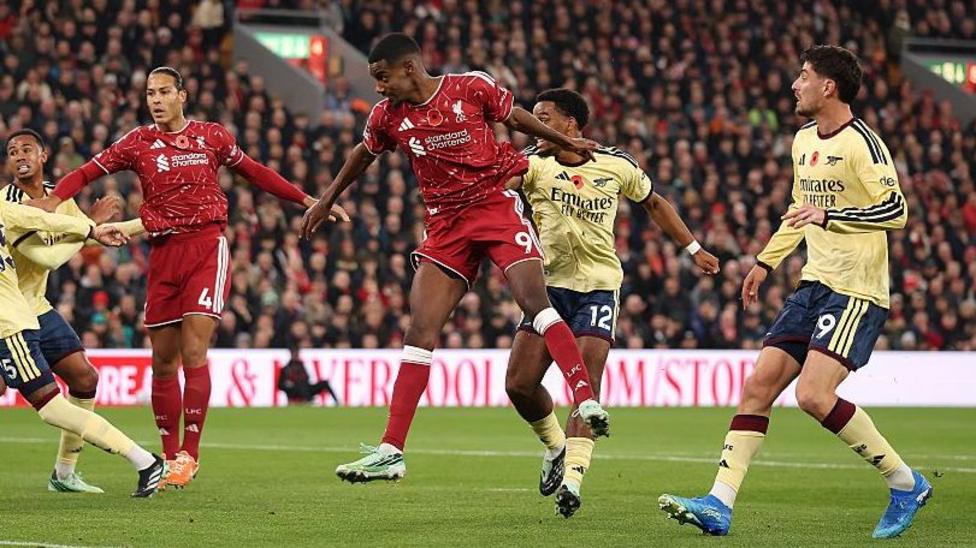
A controversial incident during Liverpool’s 1-0 defeat by Arsenal at Anfield has reopened the debate on whether football players must exaggerate contact to gain video assistant referee (VAR) interventions. Striker Alexander Isak failed to connect with a Bradley Barcola cross, returning up the pitch without appealing despite replays revealing Jurrien Timber was holding a handful of his shirt. Liverpool finished the match without registering a shot on target as Arsenal secured victory to move clear at the top of the table.
Neither referee Andy Madley nor VAR official Stuart Attwell penalized the shirt pull. Following the match, Liverpool manager Andoni Iraola expressed his frustration at the decision. “There is a clear grab of the shirt,” Iraola said. “The answer is you have to dive, if you don’t dive they won’t call it. If he goes to the floor, they call the penalty 100%. It shouldn’t be like this but it is what it is.”
Former player Danny Murphy echoed similar sentiments on Match of the Day, stating: “Arsenal got lucky. If Isak maybe makes a bit more of it. I hate to see players exaggerate, but he’s going to score. It’s a big moment in the game.” Conversely, players face sharp criticism when they do go down easily. Alexis Mac Allister was branded “embarrassing” by commentator Jamie Carragher for falling to the turf claiming Noni Madueke headbutted him during the second half of the same match.
The incident contrasts with a previous fixture between Sunderland and Fulham in February. In that match, Calvin Bassey appealed immediately to referee Craig Pawson after his shirt was pulled by Brian Brobbey during a free-kick delivered by Harry Wilson and punched clear by goalkeeper Robin Roefs. On-field officials missed the infraction, but VAR Tony Harrington recommended a monitor review, resulting in a penalty because the player went to ground and appealed.
Key Factors in Holding Decisions
- Legal DefinitionAccording to the laws of the game, a holding offense occurs only when contact with an opponent’s body or equipment impedes their movement.
- Visual CuesThe ‘coat hanger effect’, where a shirt is visibly stretched far from the body, is far more likely to trigger a penalty call.
- Perceived ImpactThe physical impact remains crucial, and if a player gives no indication of being hindered, officials are less likely to intervene.
- Official PerspectiveFormer Premier League assistant referee Darren Cann noted: “It has to be sustained holding – some will say it was sustained, some will say it wasn’t. But it’s interesting that Isak didn’t even appeal.”
- Analytical StandardsIn refereeing circles, there is frustration regarding shifting standards, such as using slow-motion replays to build a case against a player despite guidance against overusing slow motion for subjective incidents.
At full speed, the hold on Isak appeared fleeting with minimal visible impact. Given the high threshold for VAR intervention this season, the incident may be categorized as an on-field error that fell short of requiring video intervention. Officials contend that small contact without an on-field appeal is unlikely to prompt reviews, though critics question why players should be forced to appeal when non-appealed incidents like handball are routinely checked.
The push for higher intervention bars follows directives from Uefa referees’ chief Roberto Rosetti, who warned during the summer that “too many reviews” had led to players actively trying to earn video decisions. European football authorities have since focused on discouraging diving and exaggerated contact.
Historically, the Premier League maintains the lowest rate of video interventions in Europe. Nine rounds into the current season, the number of subjective reviews stands at 14, matching the exact total from the same stage last year. Furthermore, the Key Match Incidents Panel has recorded only one missed VAR intervention this season, leading officiating bodies to argue they have struck the correct balance, even if managers like Iraola remain unconvinced.