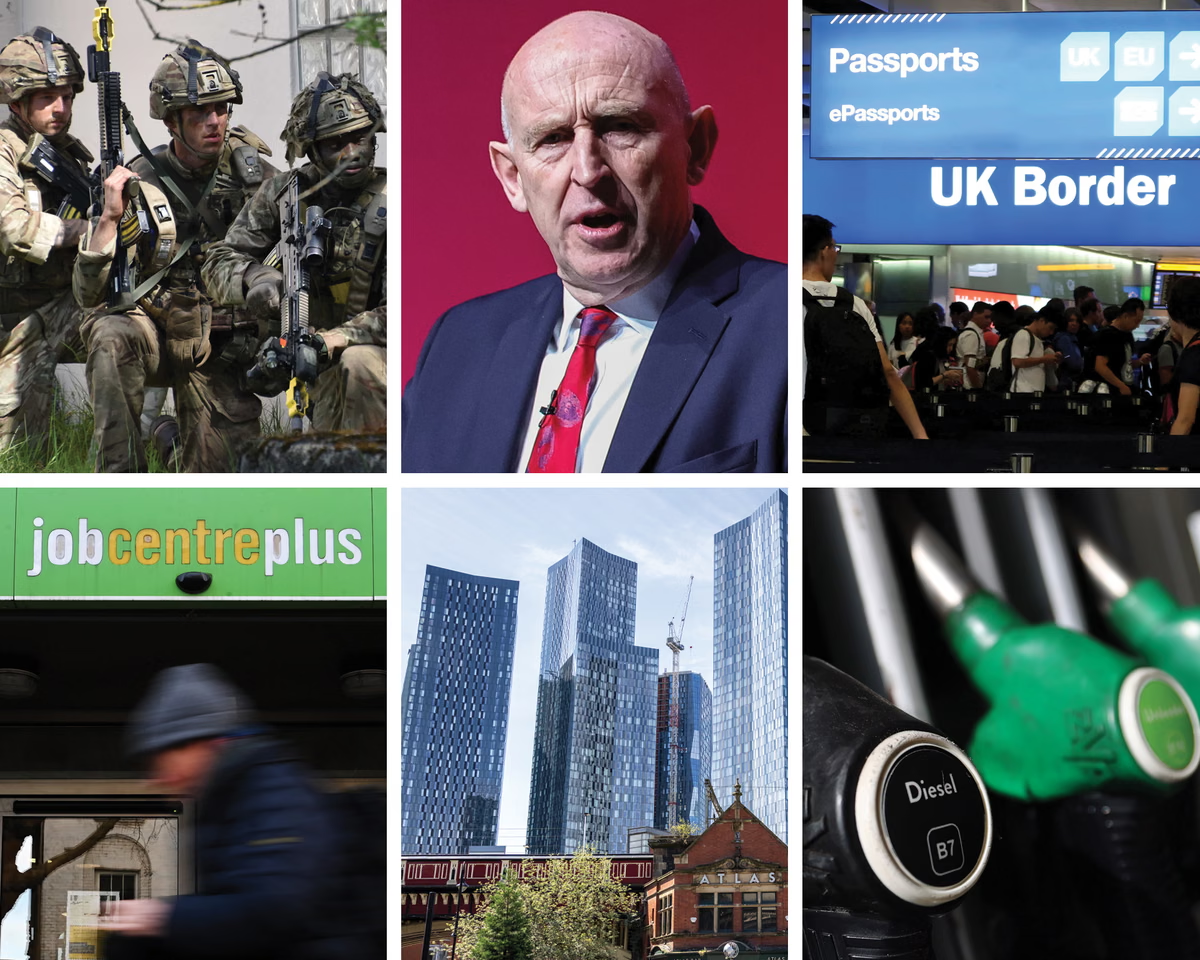
Chancellor John Healey is set to deliver his first budget this Wednesday, arriving at a time when British households and businesses face significant economic strain from the war in the Middle East. Against a volatile global market backdrop, Healey must execute a challenging balancing act: providing relief to manage the cost-of-living crisis while simultaneously fostering economic growth and adhering to strict fiscal rules. Here are six charts that will underpin the chancellor’s decisions. From tackling the youth jobs crisis to repairing Brexit’s economic damage, John Healey has his work cut out for him.
The Treasury faces a tighter fiscal position than previously anticipated. At the spring statement, former Chancellor Rachel Reeves established a buffer of £23.6bn to meet fiscal requirements, which mandate that day-to-day spending be balanced by receipts by the end of this parliament. However, the Resolution Foundation projects this headroom has shrunk to approximately £12bn, pressured by rising debt interest costs linked to the global inflation shock. While Healey may allow some reduction in the buffer, financial analysts suggest he must maintain at least £14bn to reassure bond investors and avoid market instability. The independent Treasury watchdog, which will take into account the hit from rising debt costs, but also other positive and negative developments for the public finances – including inflation, pay growth, employment and productivity, much will depend on the judgment of the Office for Budget Responsibility (OBR).
Central to the Chancellor’s immediate agenda are measures to provide “breathing space” for those hit by the energy price shock triggered by the conflict in Iran.
Current forecasts indicate annual energy bills for typical households could reach £2,000 starting in January, with petrol and diesel costs remaining near historic highs.
Since 2021, the average consumer has absorbed nearly £14,000 in additional costs for fuel, energy, water, and debt servicing.
To mitigate this, Healey is expected to allocate over £1bn in support, primarily targeted at increasing discounts for households on specific benefits, while facing pressure to extend fuel duty cuts. The bulk of which will go on increasing the discount given to households on certain benefits, healey is thought to have earmarked more than £1bn to help energy consumers. While ministers have explored options for overhauling the benefits system and making changes to apprenticeships, business leaders have pressed Healey for tax cuts and help with labour costs to encourage youth recruitment.
Prime Minister Andy Burnham’s economic vision of achieving “good growth in every postcode” will feature prominently through a devolution package. This strategy includes granting local leaders in England the ability to retain a portion of income tax and introducing a £1.5bn borrowing facility for elected mayors. Currently, the UK remains one of the most centralized and economically unequal countries in the G7; the government hopes these regional measures, including a new administrative hub in Manchester, will improve broader economic performance. And is among the most economically unequal, according to the Centre for Cities thinktank, britain is the most centralised G7 country for tax and spending policy. Based in Manchester – is to increase regional economic growth, and with it the performance of the UK economy at large, the aim of redrawing the political map – including establishing a new hub for No 10 in the north. As well as measures to support high streets and towns, burnham has also signalled that a strengthened industrial strategy will be key to his agenda. And is still awaiting recommendations from two key reviews – by the former Labour cabinet minister Alan M, the government is handling the process carefully to avoid a repeat of the welfare rebellion faced by Keir Starmer. The government is understood to favour handing local leaders more power and money to support young people as part of the solution. Burnham has also spoken of the importance of the defence sector for his reindustrialisation plans. Arguing that leaving the EU had damaged the UK economy and failed to bring the benefits promised, burnham reopened the debate over Brexit in his speech to Labour conference in Liverpool.
Youth employment remains a critical priority as the number of individuals not in education, employment, or training (Neet) has climbed to nearly 1 million. Burnham has described this trend as both an economic catastrophe and a moral failure. Healey is considering welfare reform and potential apprenticeship overhauls to address this crisis, though the government remains cautious about potential costs. Analysis from the Youth Futures Foundation notes that Neet rates are geographically concentrated, with higher risks in areas such as Blackpool, Birmingham, and Bradford compared to southern locations like Bath or Guildford.
Defense spending represents another major budgetary commitment. The government intends to fund Labour’s defense investment plan with an additional £1bn annually, aiming to reach 2.7% of GDP by 2029. Healey has signaled further ambitions to increase this to 3% by 2030, which the Institute for Fiscal Studies estimates would require an extra £11bn that year. Looking further ahead, the long-term target of 3.5% of GDP by 2035 represents a substantial £25bn increase in today’s terms. That put defence spending on track to reach 2.7% of gross domestic product by 2029, announced by Starmer in his final weeks in office. However, Healey has expressed an ambition to spend 3% by 2030. Having resigned as Starmer’s defence secretary over funding, Healey is widely tipped to use his budget to find more cash for the military.
Finally, the budget will address the ongoing economic consequences of Brexit, including shifts in migration patterns. Net migration has fallen sharply from its 2023 peak of nearly 1 million. The Office for National Statistics has revised its long-term estimates downward to 230,000 annually, down from 340,000. If the government adopts this lower migration forecast, the Resolution Foundation warns of a potential £4.7bn shortfall in tax receipts by 2029-30, further complicating the Chancellor’s fiscal calculations. The Office for National Statistics downgraded its estimate for the long-run figure to settle at about 230,000 annually, down from a previous assumption of 340,000, earlier this year.