
Modest fashion is no longer confined to a particular region, religion or community. What was once largely associated with Muslim-majority markets has steadily moved into the global fashion conversation, influencing designers, retailers and luxury brands from Paris to Jakarta.
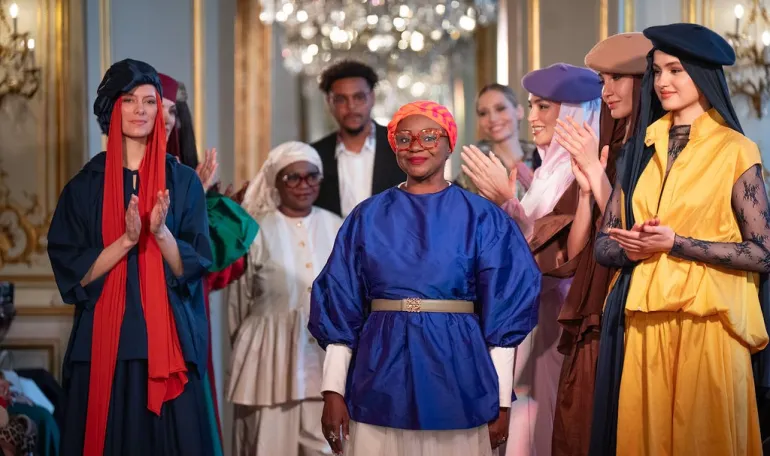
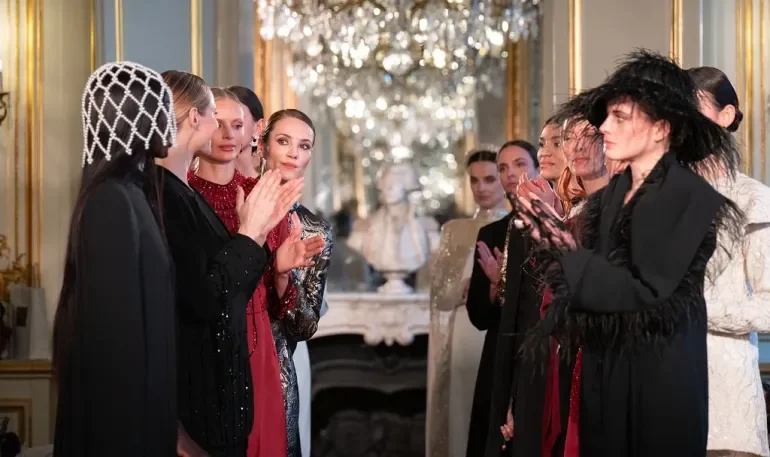
That transformation was clearly visible at Paris Modest Fashion Week last month. Inside the historic Hotel La Marois, buyers, influencers and journalists watched models walk through ornate rooms wearing embellished satin tailoring, corseted shapes and elegant full-coverage eveningwear.
One of the most striking looks came from French label Soutoura. A model appeared in a denim maxi dress with cargo pockets and a matching cropped jacket. But the real talking point was the black crochet head covering decorated with oversized crystals—a streetwear reinterpretation of the niqab, particularly provocative in France, where full-face coverings have been prohibited in public spaces since 2010.
The moment captured the complex position modest fashion now occupies: culturally rooted, commercially powerful and increasingly visible within mainstream fashion.
Over the past decade, modest dressing has become a significant force in global retail. Muslim consumer spending on fashion is projected to reach around $433 billion by 2028, according to DinarStandard’s State of the Global Islamic Economy report. That spending power has encouraged fashion houses, department stores and trend analysts to pay much closer attention to the sector.
Demographics are also playing an important role. Muslims are expected to represent close to one-third of the global population by 2030, with a large proportion of that population young. For international brands, this means a rapidly expanding consumer group with strong interest in fashion, beauty and lifestyle products.
Luxury and high-street companies began responding more visibly during the 2010s. Between 2014 and 2018, brands including DKNY, Tommy Hilfiger, Michael Kors, Mango and H&M introduced Ramadan-focused collections, many of them initially aimed at customers in the Gulf.
At first, those collections were often treated as seasonal or regional products, appearing mainly in Middle Eastern stores or during Ramadan campaigns.
But modest silhouettes were simultaneously becoming part of mainstream fashion.
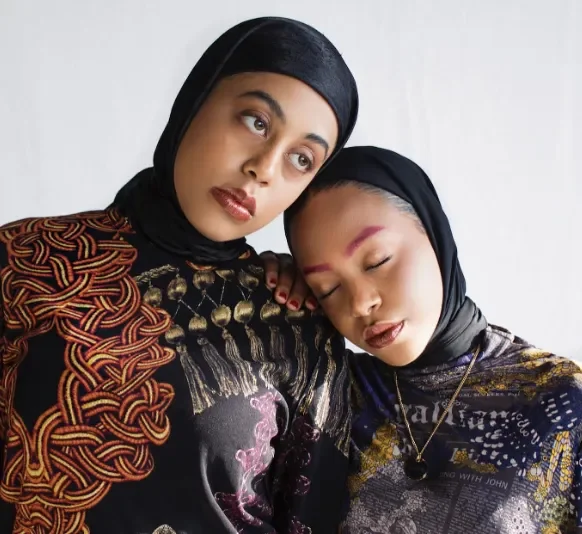
Long dresses, higher necklines, flowing tailoring, oversized layers and relaxed cuts became increasingly common on international runways. During Alessandro Michele’s years at Gucci, Victorian-style blouses, floor-length skirts and layered outfits helped push what was sometimes described as “granny chic” into the fashion mainstream.
The rise of modest fashion, however, cannot be explained by luxury brands alone.
Muslim designers, bloggers and influencers had already spent years building large online communities before many major fashion houses recognised the commercial opportunity.
By the late 2010s, hijabi influencers such as British-Egyptian Dina Torkia, Kuwaiti Ascia al-Faraj and Palestinian-Puerto Rican Maria Alia were becoming familiar faces at major fashion weeks. Brands invited them to New York, London and Milan, dressed them in designer collections and placed them alongside other prominent figures in fashion’s front rows.
Their visibility helped demonstrate that modest clothing could be contemporary, aspirational and highly diverse.
At the same time, dedicated events such as Modest Fashion Week, organised by Think Fashion, have continued to provide an international platform for independent designers and emerging brands.
Yemeni-Kenyan creative strategist and content creator Junaynah El Guthmy sees such events as particularly valuable because they offer Muslim designers and consumers a space where they feel represented.
For her, that sense of community is important if modest fashion is ultimately to become naturally integrated into the wider industry rather than being treated as a temporary diversity trend.
Yet the sector’s increasing popularity has also created questions about cultural ownership.
El Guthmy argues that modest fashion is sometimes celebrated as an aesthetic in Western fashion circles while its Muslim origins receive less recognition.
She points particularly to the Gulf Cooperation Council region, where modest dressing has long been deeply connected to culture, religion and everyday life. From her perspective, the global fashion industry has been influenced by these communities—not the other way around.
That debate becomes particularly complicated in Europe.
A long dress, covered hair or high neckline can be praised as sophisticated when worn as a fashion statement, while similar clothing worn for religious reasons can sometimes be described in political or restrictive terms.
This contradiction has been raised repeatedly by Muslim writers and activists, who argue that identical clothing can be interpreted very differently depending on who is wearing it.
Representation in advertising has also generated debate. Some critics have questioned why brands seeking to represent Muslim women frequently choose fashionable turban-style head coverings rather than more traditional hijab styles.
For El Guthmy, genuine collaboration is one way brands can avoid simply borrowing the appearance of modest fashion without understanding its cultural context.
Some companies are beginning to adopt that approach.
When German luxury brand MCM introduced its first Ramadan collection in 2024, French-Moroccan hijabi influencer Hanan Houachmi was brought in as a co-designer, giving someone from within the community a direct role in developing the collection.
Another misconception surrounding modest fashion is the idea that it represents one universal look.
In reality, modest dressing differs enormously between regions.
What Muslim consumers prefer in Europe may differ substantially from fashion expectations in the Gulf, North Africa or Southeast Asia. Climate, cultural traditions, religious interpretations and local fashion trends all shape what people wear.
This diversity has helped create a global modest-fashion ecosystem with several important regional centres.
Turkiye, for example, has become a major force in modest-fashion e-commerce, with platforms such as Modanisa connecting designers and consumers across international markets.
Indonesia and Malaysia, meanwhile, have developed into influential creative centres.
Indonesian designer Dian Pelangi is among those who helped transform Southeast Asian modest fashion by combining traditional elements with bold colours, contemporary styling and streetwear influences.
Social media has further amplified that creativity, allowing designers in Jakarta, Kuala Lumpur, Istanbul and Dubai to reach consumers worldwide without relying entirely on traditional fashion capitals.
Southeast Asia has also pushed innovation beyond clothing design.
According to UAE-based designer and industry adviser Rabia Zargarpur, the region has successfully connected modest fashion with a wider lifestyle economy that includes beauty, travel, financial technology and other consumer sectors.
Designers and manufacturers there have also experimented with lightweight, breathable and performance-focused fabrics that provide fuller coverage while remaining practical in hot and humid climates.
That innovation highlights why modest fashion’s global growth is unlikely to be temporary.
The sector is no longer simply about producing longer dresses or adding Ramadan collections to existing product lines. It is developing its own designers, digital platforms, influencers, manufacturing networks and consumer cultures.
The next challenge will be ensuring that, as the industry becomes increasingly profitable and mainstream, the communities that shaped modest fashion remain central to its future.
What began as a market often overlooked by global fashion has now become one that major brands can no longer afford to ignore.


Comments