
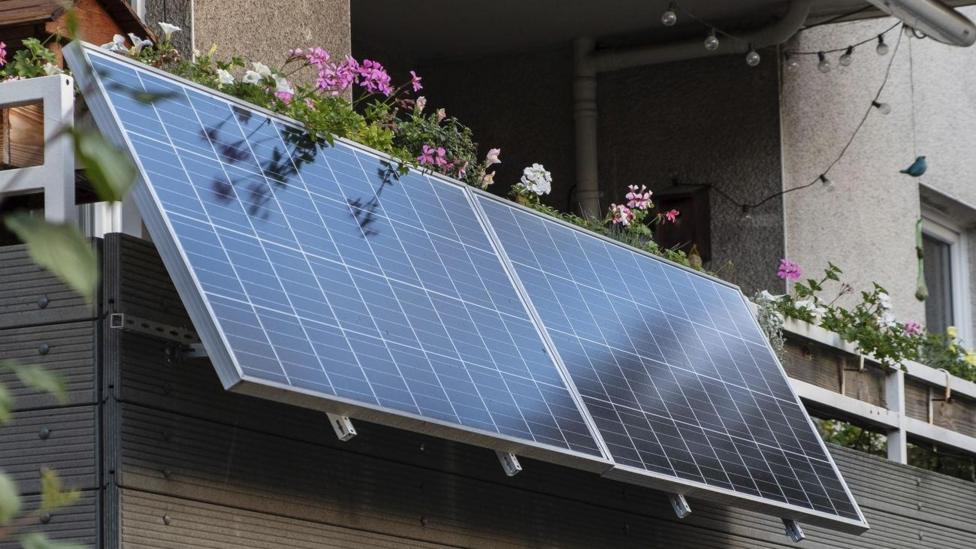
Plug-in solar panels are becoming available at DIY stores and major retailers across the UK following a government regulatory update that permits their legal sale. These systems provide a more accessible entry point into renewable energy than traditional rooftop installations, as they do not require professional electrical installation and are suitable for properties with outdoor space, such as balconies.
Retailers like Argos are beginning to stock these units, with the government anticipating a wider rollout across the high street. Officials hope these panels will help households lower their energy costs and reduce dependence on imported fuel sources, which have seen price volatility due to international conflicts. While these systems are significantly cheaper than roof-mounted alternatives, they generate less power, meaning the potential financial savings are more modest.
Current pricing for these kits varies, with UK solar firm UKSOL listing a single-panel kit at £699 and a two-panel kit at £1,089. As competition grows and product development matures, the government expects market prices to eventually settle between £400 and £600. Research indicates that households could see annual energy bill savings of between £70 and £110, depending on factors like panel orientation and sunlight exposure. Optimal results are achieved in unshaded, south-facing locations, and households that consume more energy during daylight hours will see the greatest benefit, as the electricity must be used as it is generated.
Unlike rooftop solar, these plug-in systems do not require certification under the Microgeneration Certification Scheme (MCS). Consequently, they typically do not qualify for the Smart Export Guarantee, which compensates homeowners for excess energy fed back into the grid. Any unused electricity will flow back to the national network, though households are unlikely to receive payments for this surplus.
Safety remains a central focus for the government and industry experts. Each kit includes a microinverter that limits the power output to 800 watts, a deliberate cap intended to ensure safety while covering the needs of “always-on” appliances like refrigerators and standby devices. While this will not power an entire home, British Gas noted that it can meaningfully reduce the amount of electricity purchased from the grid during the day. For larger appliances like kettles, which require 3 kilowatts, the system will supplement the 800-watt solar output with power from the national grid.
The microinverter also serves as a safety mechanism, constantly monitoring the grid connection. If a power cut occurs or the device is unplugged, the system is designed to shut down within milliseconds to prevent live electricity from entering dead wiring. To be sold legally in Great Britain, these panels must meet the industry’s G98 standard and specific government product requirements. Consumers are advised to verify that a product appears on the Energy Networks Association’s public register before making a purchase.
The charity Electrical Safety First has urged buyers to purchase only from established retailers and their official websites, warning against third-party sellers on online marketplaces that may not be legally accountable for product safety. The charity also advises homeowners to have their electrical systems inspected by a registered electrician before installation, particularly in older properties where the condition of wiring is uncertain. This is because plug-in solar can interact with older residual current devices (RCDs) designed to protect against electric shocks.
Strict usage guidelines apply to these devices. Regulations currently limit households to one plug-in solar device per property, and users must never connect them via extension leads, cable reels, or plug-in adaptors, as these components can overheat. Once mounted, the system should ideally be connected to a weatherproof external mains socket. While professional installation is not required, homeowners may need permission from landlords or freeholders before proceeding.
Finally, there is a formal notification requirement: households must inform their local electricity Distribution Network Operator (DNO)—the company responsible for the local cable network—within 28 days of plugging in the device. Residents can identify their specific DNO using the National Grid’s online postcode tool. The report also notes that and the government expects other shops to follow suit, retailers including Argos will be stocking products from Thursday. The report also notes that experts say, customers should get their wiring checked by a professional to ensure it is safe before parting with cash. The report also notes that its research shows a household could save between £70 and £110 a year on their energy bills. The report also notes that the precise amount will depend on how the panels are orientated and how long they run. The report also notes that the panels will make a difference to a household’s power consumption but it is deliberately modest for safety reasons. The report also notes that the government says it should power about a fifth of the average household’s electricity use while the sun is shining. The report also notes that such as the kettle which needs 3 kilowatts of electricity, will be powered through a mix of the 800 watts flowing from the panel with the rest coming from the national grid, other essentials. The report also notes that government tests found sample systems could operate with no unacceptable heating or unsafe energy flows.







Comments