
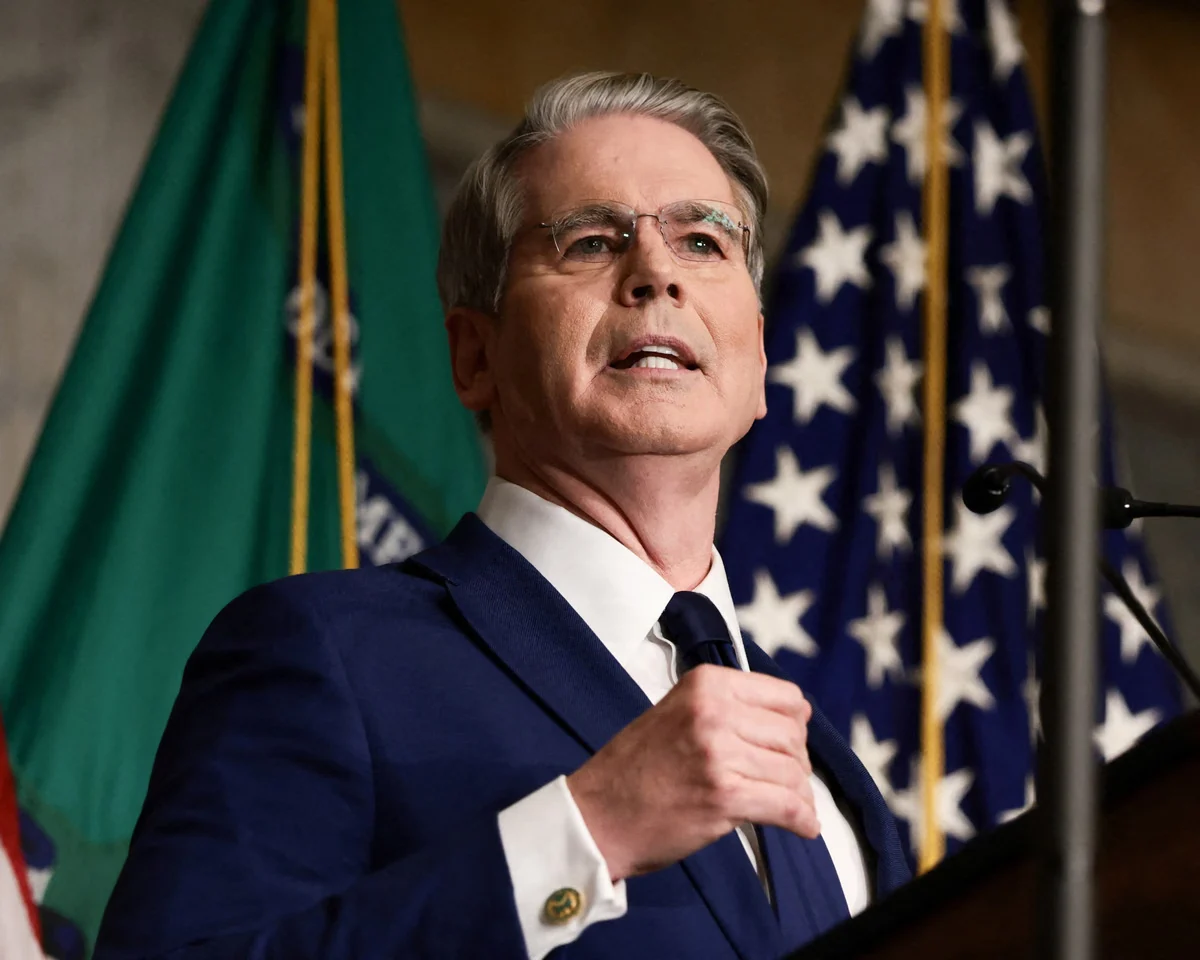
US Treasury Secretary Scott Bessent is facing sharp criticism from his former mentor, billionaire investor Stanley Druckenmiller, over his efforts to influence the bond market. Druckenmiller, who mentored Bessent during their time at George Soros’s firm in the 1990s, warned that attempting to artificially suppress US bond yields is a dangerous strategy that will ultimately fail.
Writing in the Wall Street Journal, Druckenmiller argued that the government should “let the bond market speak” rather than intervening to manipulate prices. He cautioned that “governments defending prices against fundamentals always lose,” noting that the only real uncertainty is how much capital they will exhaust before eventually conceding to market forces.
The tension follows Bessent’s recent decision to double the Treasury’s bond buyback operations from $2 billion to $4 billion. While the move was intended to manage liquidity, Druckenmiller characterized it as a failed attempt at price management. He noted that the market’s reaction was swift and correct, with any initial dip in yields quickly reversing.
Reports from CNBC suggest that Bessent may be considering further intervention by utilizing the Treasury’s General Account, a fund held at the Federal Reserve containing nearly $1 trillion. Analysts at IG, including chief technical analyst Axel Rudolph, suggest these actions indicate that Washington is becoming increasingly uneasy about the rising costs of long-term borrowing.
The economic backdrop remains challenging, as the US national debt surpassed $40 trillion last week, with the annual deficit projected to reach $2 trillion this year. Druckenmiller emphasized that long-term Treasury yields serve as the world’s most critical price and act as the primary fiscal disciplinarian for the nation.
According to the billionaire investor, neither political party has shown a willingness to address entitlement reform or curb spending, choosing instead to ignore fiscal arithmetic. He argued that the only sustainable way to lower long-term yields is to address the primary deficit directly.
Druckenmiller concluded that a credible fiscal package would be significantly more effective than any buyback program, even one 1,000 times larger than the current effort. He urged policymakers to focus on structural fiscal reform rather than attempting to override the signals sent by the bond market. The report also notes that both have spent the past decade expanding commitments while ignoring arithmetic,” he wrote. The report also notes that from $2bn (£1.5bn) to $4bn, druckenmiller’s intervention comes after Bessent decided to at least double the maximum size of the Treasury’s buyback operations. The report also notes that and vice versa, bond yields fall when prices rise.









Comments