
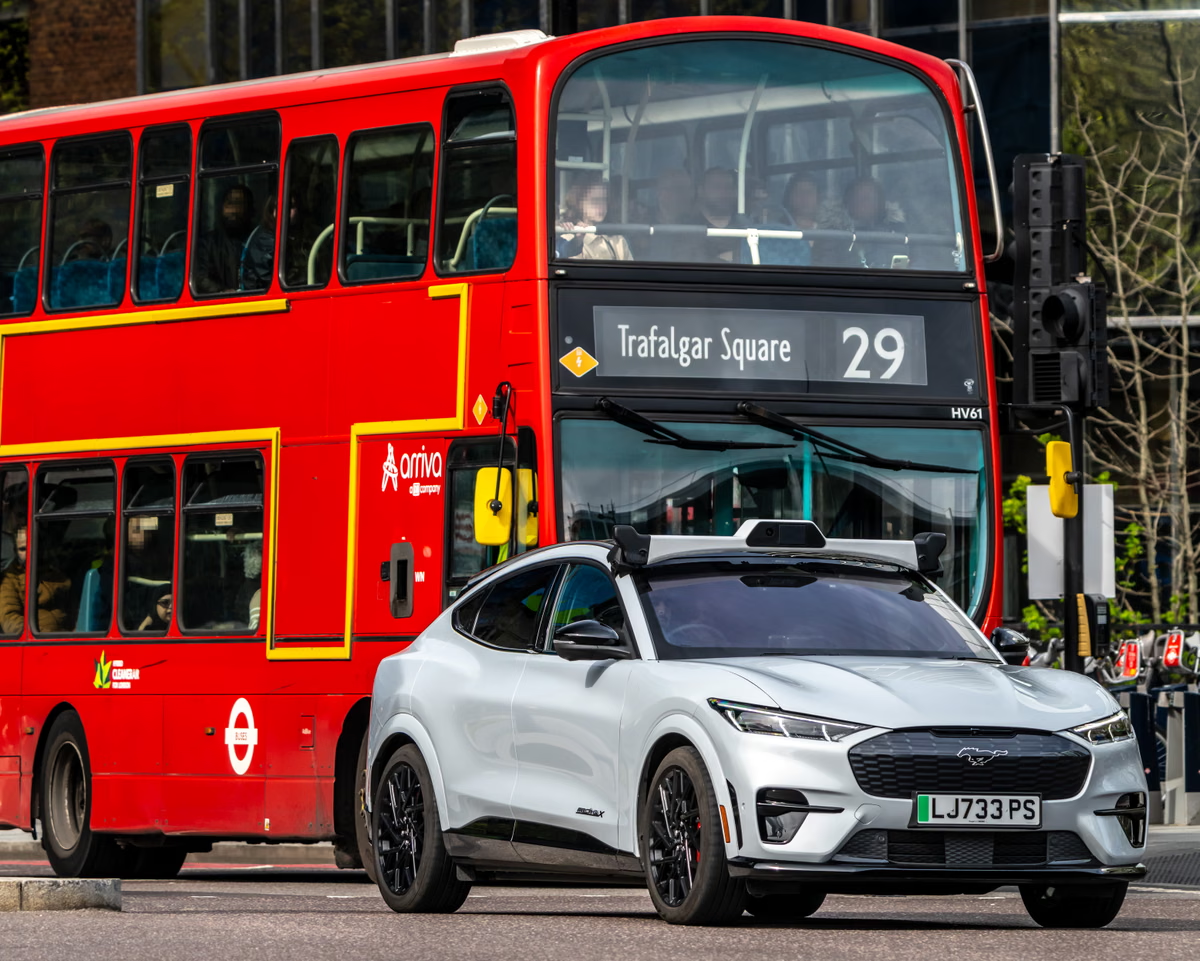
The introduction of robotaxi services in London appears unlikely to occur this year, as the city faces significant regulatory and technical delays. Despite initial projections that operations would commence during the summer, the absence of finalized guidance from local authorities has slowed progress for major industry players.
Only weeks ago, Uber and the London-based firm Wayve secured the first minicab licenses in the capital. These permits allow for self-driving taxi services to transport paying customers, provided a human safety driver remains behind the wheel. While the companies previously indicated they would begin these trips “later this summer,” a full-scale public launch remains elusive.
The current uncertainty follows an accelerated timeline announced in 2025 by Transport Secretary Heidi Alexander, who had targeted the spring of this year for the start of commercial driverless trials. However, Transport for London (TfL) has yet to release the necessary regulatory framework for companies to follow.
Christina Calderato, TfL’s director of strategy, recently informed the London assembly’s transport committee that the transit authority is not prepared to accept applications “for some time.” She stated that the agency is not rushing the process, noting that there is a significant amount of work occurring behind the scenes to ensure safety.
The demand for these services is high, with Uber and Wayve reporting that over 100,000 Londoners have joined a waiting list. These firms are competing against global rivals, including Google-owned Waymo and China’s Baidu, to capture the market. While robotaxis are already operating in more than 20 cities across the US, China, and the Middle East, London’s regulatory environment remains a distinct challenge.
Waymo is currently navigating the safety approval process with the UK government and is awaiting TfL’s specific guidance. Ben Loewenstein, Waymo’s head of policy for the UK and Europe, confirmed the company is working toward a fully autonomous service by the end of this year, though he declined to confirm if paid public rides would be available within that timeframe.
For its part, Wayve has received 15 private hire vehicle licenses for Ford Mustang Mach-E cars equipped with its proprietary artificial intelligence, radar, and camera systems. While these vehicles will feature a licensed driver to intervene when necessary, Wayve plans to transition to a new, purpose-built Nissan Leaf model for its future driverless operations.
Wayve CEO Alex Kendall emphasized that the company never committed to a fully driverless operation for 2026. He noted that the firm is prioritizing the regulatory process, describing London as a significantly more complex environment than cities like Phoenix or San Francisco. Meanwhile, Baidu has begun testing in London and aims to launch public services next year.
To operate without a driver, companies must secure an automated passenger services permit from the Driver and Vehicle Standards Agency. To date, no vehicles have successfully cleared this regulatory hurdle. While Zagreb recently became the first European city to offer autonomous rides—utilizing a human monitor—London’s path to a similar milestone remains under development. The report also notes that she said: “I do not think we are in a rush to get [the guidelines] out. The report also notes that “I don’t want to put a timeline on it because we want to make sure we pass through [the regulatory process],” he told the FT. The report also notes that as regulatory and technical hurdles push back the ambitious schedule set out by the UK government, the rollout of robotaxis on the streets of London is unlikely to happen this year. The report also notes that so far, no vehicles have been approved by the DVSA.





Comments