
The first officially recognised T20s were almost three months away from being played when Australia hammered India in the 2003 men’s World Cup final at the Wanderers. Ten county teams lined up at the Oval and in Worcester, Taunton, Southampton and Chester-le-Street to begin a competition whose very name now sounds old-fashioned: the Twenty20 Cup.
When Ricky Ponting’s undefeated 140 set the Aussies up for a thumping 125-run win, cricket was almost 14 months away from its first T20I. That was a women’s match between England and New Zealand at Hove in August 2004. It took men more than six months to catch up; New Zealand met Australia at Eden Park in February 2005.
As those 10 county XIs took to those five grounds to play the first proper T20s, we were almost five years — 1,772 days — from seeing Praveen Kumar, in the colours of the team then called Bangalore Royal Challengers, bowl the first ball of the first match of the first IPL to Kolkata Knight Riders’ Sourav Ganguly at the Chinnaswamy on April 18 2008.
And here we are, more than 18 years after that momentous date, contemplating a game far removed from what it was in 2003. So far removed that T20 itself is starting to look dated in a world that has made room for T10 and The Hundred. We must also consider the context of national pride, which the Namibians would have felt when they played their inaugural World Cup match against Zimbabwe in Harare on February 10, 2003.
On that same day, Zimbabweans would have felt genuine patriotism when Andy Flower and Henry Olonga took the field wearing black armbands to mourn the death of democracy in their country. In Namibia, democracy has functioned since March 1990, which is almost 10 years after Zimbabwe took the same step and more than four years after South Africa. Yet, little seems to have moved in men’s World Cup terms in Africa since 2003, the only time the tournament has been played on the continent.
Kagiso Rabada was eight at the time of the 2003 World Cup. It is a joyously happy accident that one of the game’s finest fast bowlers has grown into his stellar career in the midst of the biggest boom in cricket history. Should he help South Africa win the 2027 World Cup, which will be played in his country, Zimbabwe and Namibia in October and November next year, he would leap several places up the pecking order of all-time greats.
When asked how he has seen cricket change since 2003, Rabada told reporters, “There’s a wider audience; that’s the most obvious factor. And a bigger variety of players. People of different ethnicities are playing and supporting the game. There’s more money in the game and more teams.”
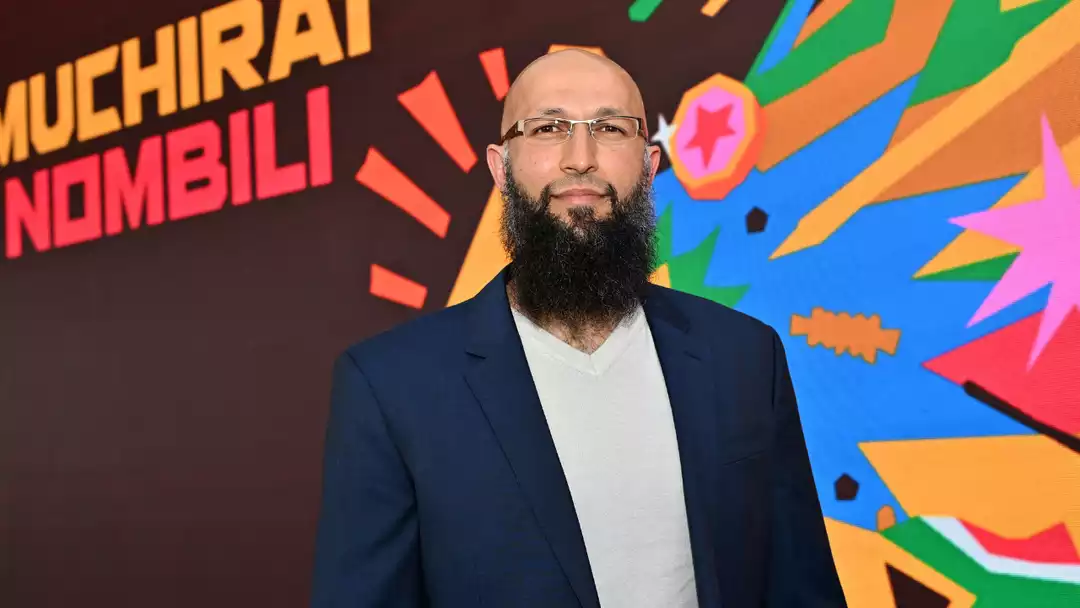
Hashim Amla, from a generation 11 years older than Rabada, reflects on the evolution of the sport. He had played 16 first-class matches and no T20s when the 2003 World Cup ended. “The game has evolved so much,” Amla told. “It’s been speeded up.”
Statistical trends support this shift. Thirty-three centuries were scored in the 68 men’s ODIs played this year before August 13. While a strike rate higher than Ponting’s 115.70 has been recorded in only 10 of those, the volume of scoring remains high. If the centuries keep coming at the 2026 rate, we will see over 71 hundreds in 147 ODIs this year, significantly more than the 58 recorded in 2003.
Amla, despite being an out-and-out batter, expressed hope for the bowlers ahead of next year’s tournament: “I hope the conditions give them more to give us a show and make the games more close.” Having played in three World Cups without a win, Amla remains optimistic about the host nation’s chances in 2027.
“The Test team are the champions, they’ve got close to winning the T20 World Cup and they’re almost there in the ODI World Cup,” Amla noted. “Hopefully having the World Cup at home is their moment. It could be our prime time to win it. Imagine, after all the disappointments of previous World Cups, winning it at home. That would be a massive boost for cricket and for the country in general.”
Rabada looks toward the tournament with a focus on the fans, stating, “I just want the fans to have fun, and for people coming to the stadiums to enjoy the experience.” Ultimately, the 2027 World Cup will serve as the definitive gauge to see how far T20, along with T10 and The Hundred, has pushed cricket’s boundaries across the African continent.
He had played 16 first-class matches, nine list A games and no T20s — and not a single of his 349 senior internationals — when the 2003 World Cup ended.
But the whole of 2003 yielded 58 hundreds from 147 ODIs.
If the centuries keep coming at the 2026 rate, we will see 71.34 in 147 ODIs this year — 13 and a bit more than in 2003.
Surprisingly for an out-and-out batter whose bowling would have roused international cricket’s chucking police had he dare deploy it more often than for 54 Test deliveries, Amla wished the bowlers well for next year’s tournament: “I hope the conditions give them more to give us a show and make the games more close.”
All of 829 ODIs have been played since Amla earned his last cap in the format at the 2019 World Cup in England and Wales.
Despite that he remains, famously, the fastest batter to reach 3,000, 4,000, 6,000 and 7,000 runs in ODIs.
Neither did they get over the line in any of the other six World Cups they contested.
The nearest they’ve come to claiming the latter trophy was in Barbados in June 2024, when they lost the final to India by seven runs.
Rumours of democracy’s resurrection in Zimbabwe have been greatly exaggerated.
Comments