
During the Royal Shakespeare Company’s 65-year history, numerous portrayals of King Lear have descended into madness, and countless Caesars have met their end at the hands of their own courts. Now, a new tyrant faces both fates on the RSC stage: King Aerys II Targaryen. He is the ancestor of a primary warring bloodline in Game of Thrones, the dramatization of George RR Martin’s A Song of Ice and Fire fantasy novels that fueled the rise of global streaming dominance across eight HBO seasons from 2011 to 2019.
Some critics may question an institution named for England’s greatest playwright staging an American pop-culture franchise. However, there is a compelling economic imperative at play. Rising production costs, exacerbated by current global conflicts—a theme familiar to Martin’s ancient oligarchs—and the burden of Covid-era debts and government loans, mean the RSC requires a major commercial transfer. With the long-running musical Matilda potentially nearing the end of its immortal status, this production serves a vital financial purpose.
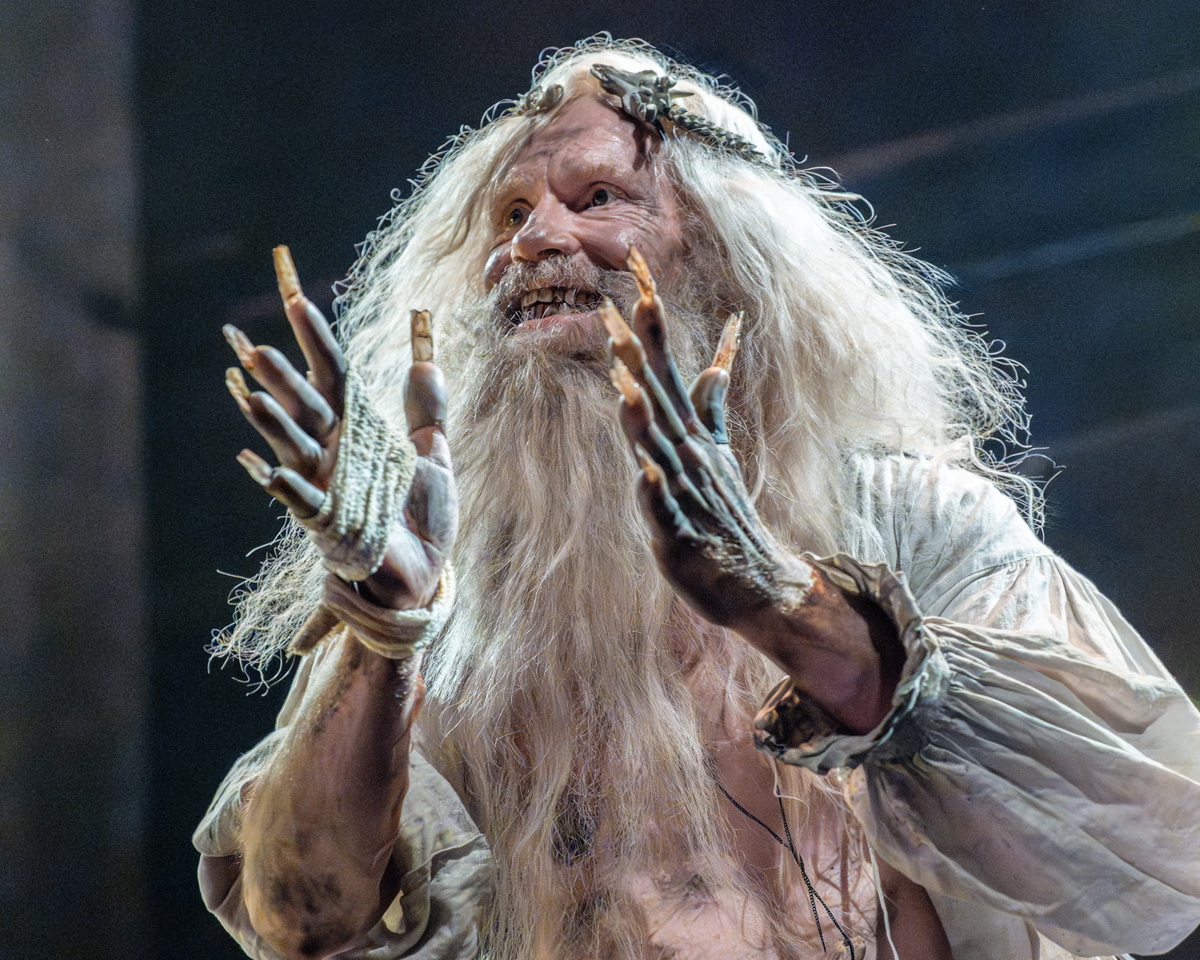
Beyond the economics, there is a clear artistic rationale. Martin has consistently cited Shakespeare’s English history plays as a primary influence. Dramatist Duncan Macmillan, drawing from an unexplored reference in the novels to a pivotal tournament in 281AC (After Conquest), and director Dominic Cooke lean heavily into this Shakespearean lineage. Michael Shaeffer’s portrayal of King Aerys, complete with a long white beard and flower-braided hair, bears a striking resemblance to Laurence Olivier’s iconic television Lear.
One does not need to consult the entrails of a raven to identify the target of the title The Mad King. The various Brutuses plotting his downfall conclude that the “paranoid and delusional” monarch is destined to destroy their civilization. The narrative focus extends beyond simple political instability; Macmillan weaves in broader international crises, including the volatility of heads of state and environmental instability, alongside the specific British concern regarding the endurance of a royal bloodline. It is a production that the RSC’s own patron, King Charles III, might choose to avoid.
While HBO has already produced two prequels, House of the Dragon and A Knight of the Seven Kingdoms, those are set up to 200 years before the main series. Macmillan’s work serves as a much closer prologue, which presents a more difficult challenge in aligning with the established continuity of the first season. Fans will be drawn to the backstories of legendary characters; one young man is addressed as Eddard Stark but pleads to be known as Ned. By the end of the three-hour and 45-minute performance, two of the main TV show’s leads are still only infants.
Macmillan’s dialogue utilizes a quasi-Shakespearean structure with a rough iambic beat. A heavily pregnant princess is described as being “overloaded with the hopes of the realm,” while one of many violently bereaved characters tells another: “If a beloved has been wrenched from you, then we are fellow countrymen.” The production encounters friction when this plausible pastiche of Elizabethan political maneuvering collides with the supernatural elements inherent in Martin’s world.
The production relies on the puppetry and movement direction of Nick Barnes and Finn Caldwell, featuring vast skeletal frames manipulated by squads of actors to stage numerous jousts and battles. Dogs and dragons are simulated with similar techniques. Despite the significant budget and effort, the stage cannot fully replicate the high-fidelity atmospherics of television. However, Chloe Lamford Lamford’s set design is effective, notably featuring a striking sacred tree that rises to meet descending foliage. Real flames and artificial fog swirl across a cruciform walkway that bisects the stalls of the Royal Shakespeare Theatre, creating a visceral environment of dry ice and fire.
In adaptations of screen material, actors must decide whether to mimic their television predecessors or forge new paths. Here, the performers act as plausible precursors to their future counterparts. Maxim Ays as Jaime Lannister, Michael Abubakar’s Ned Stark, Daisy Franks’s Cersei Lannister, and Hughie O’Donnell’s Lord Varys offer early portraits of these famous figures, yet their youth allows for individual interpretation. The most profound impact, however, comes from characters who appeared in the TV series only via dialogue or flashback: Princess Elia Martell and Prince Rhaegar Targaryen, portrayed with intensity by Elizabeth Ayodele and Noah Ritter.
The play concludes by leaving a 14-year gap before the events of the television series, a choice that intriguingly leaves room for potential future installments. While purists may argue that the RSC should prioritize the works of its house dramatist over populist spin-offs, the counter-argument remains that engaging with a global cultural juggernaut provides essential revenue and attracts new audiences to the theatre. The report also notes that numerous Lears have lost their minds and frequent Caesars been slaughtered by their courts, d uring the RSC’s 65 years. The report also notes that perhaps allowing for more instalments, the play’s end intriguingly leaves a 14-year gap until the TV series. The report also notes that the focus, though, is not just Trumpian.

Comments